


 BBC News
Borrowing was £17.4bn last month, the second highest October figure since monthly records began in 1993.
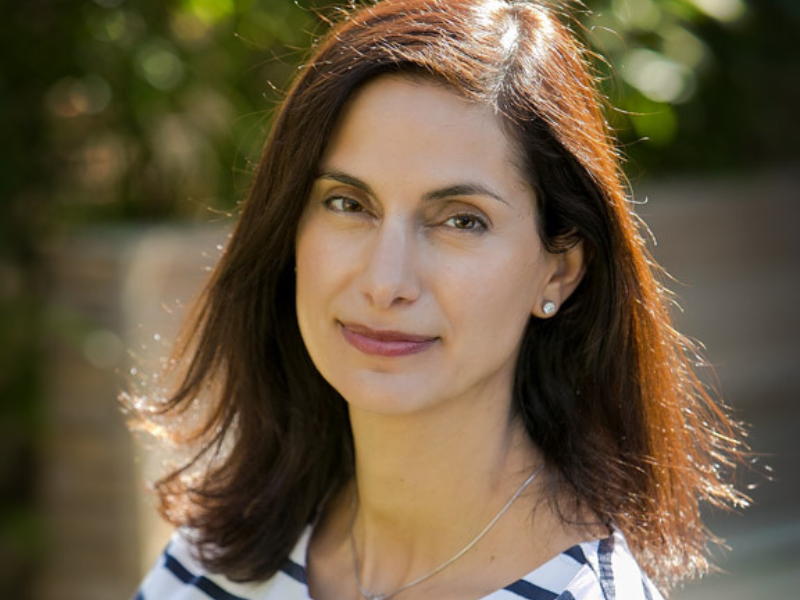
Jazmin Atkins
My parents deeply questioned my decision to read philosophy at university. They were refugees who believed firmly in building a new life by entering a profession or a business that would enable security and safety. They understood that a degree in philosophy was interesting but it was vocationally a non-starter. Looking back, I sympathise with them and wonder if my degree did help or hinder my career in building a successful property search and acquisition business.
Higher education is simply not just a degree, it’s sowing the seed of enduring curiosity. My enjoyment of history started with stories of Kings and Queens and evolved into an interest in the history of thought and society; the great western civilisations versus eastern ones. How neighbouring countries became democracies and others dictatorships, all this fascinated me. All very well.. but Philosophy is not going to get me a job and where, my parents asked, am I going with this?
A non-vocational degree in history or English would have had my parents seal of approval. They understood my interest but also knew that abstract books and long analytical essays would test me. So to answer my parents’ question, I had no firm idea where my degree would lead me.
In the early 90’s there wasn’t the intense competition to get university places. Further education was funded and some students received a government grant. Student debt wasn’t an issue then, quite the opposite. After three years, I left with a degree, which I had enjoyed, little debt, and my head filled with idealism and enthusiasm. I wish I knew how lucky I was.
My parents were, of course, right. Philosophy didn’t pave the way to a profession or a job, let alone a decent wage. The long nights reading and writing about Machiavelli and Hobbs, analysing utilitarianism, ethics, liberalism or the social contract was fantastic, but left me without a career focus.
Why the interest in political philosophy? I was born in Iran to a Jewish family. After the Islamic revolution in 1979, my parents sold everything and left. We eventually settled, via a brief stop in Israel, in London. We were alone.
London in the 80’s was an exciting time politically. Strong western capitalist democracy propounded by Thatcher and Reagan and the crumbling of communism dominated the headlines. For me, politics was not abstract, it was real. It wasn’t something I watched on TV from the comfort of an armchair, it entirely changed our lives. It caused fierce arguments, created family fissures and heightened tensions. Friday night dinner was a platform for serious debate. I learned early on, how to hold my own.
My interest in political thinking had to find an outlet, I needed to justify my degree and if possible, monetise it. I joined the Conservative Party at 16, and at 22, I was the youngest councillor to get elected. I continued to represent the Garden Suburb ward in the Borough of Barnet for twelve years.
Being a councillor was challenging and enjoyable but it wasn’t enough to live on, so started working as an estate agent. Not quite the expected continuum of my degree. Dealing with people in the property world, tested my theories on human nature and ethics. Theories quickly turned into practise. Negotiating and closing were becoming highly honed skills with both house buyers and council bureaucrats.
Quite randomly, philosophical concepts and quotes I had studied would pop up in conversation at work. Theories of governance would facilitate my thought process whilst chairing the education committee. Plato’s exploration of the art of ‘rhetoric’ would influence my negotiations with international and increasingly wealthy buyers and sellers. Marx’s dialectic would ring in my ears whilst dealing with the opposition during council debates. Machiavelli’s notes on the ‘dangers of neutrality’ would prevent me from laying low on contentious policy issues and speak up.
From time to time I would revert to Edmund Burke when I felt I was losing my way as a conservative. In my last year as councillor, I re-read much of Adam Smith’s ‘The Wealth of Nations’ to better understand how the Tories managed to create its own unique form of capitalism that helped shape the UK into one of the greatest countries in the world.
After twelve years I stood down as councillor. I was ready for the hardest and most rewarding job. With parenthood came my toughest test in the practise of the social contract, let alone physical endurance. I also moved to south- west London, worked at the buying arm of Savills Plc, invested in a buy to let portfolio and then set up a property search and acquisition company.
To come full circle, my children, now teenagers, are considering their options for university. It amuses me how I find myself repeating my parents words. Now there is the added consideration of cost, debt, intense competition for university places, AI, a weaker economy and reduction in job availability. My children ask if it is worth it? Good question.
What is the cost/benefit trade off of a degree exactly? We know that degrees are essential to qualify if you choose a profession like medicine or law. However, if my children don’t choose that path, they still need to be competitive in the market place. They must have a baseline degree qualification and a possibly a Masters, if they wish to have a higher earning capacity and be globally mobile.
However, 3-4 years study takes you out of the workforce, you can’t earn, have little work experience and you’re in debt. A degree in an interest-only subject like philosophy, linguistics or social sciences seems like an indulgence. There is also a burgeoning market for apprentices, which is gaining traction as well as a good reputation.
But is it an indulgence? Interestingly, non-vocational degrees doesn’t tie you into one industry and sectors such as management consultancy, civil service or banking roles often appreciate the intellectual capability developed by non-vocational degrees. Which is why Oxbridge subjects like PPE are heavily oversubscribed. Many lawyers did not study law at university prior to converting. There can be advantages of a wider educational background.
A degree, deemed high/low brow or completely abstract can be useful. If JRR Tolkien didn’t study classics and English literature and didn’t read ancient Germanic and Old Norse languages, the world would have missed the magic of Lord of the Rings. Alan Turing’s study of Mathematics specialising in abstract probability theory and logic became essential in decoding Nazi messages during the war and established the first computer.
Would I encourage a child to take a degree in philosophy? Yes, of course. It is not an obvious stepping stone for an ambitious career- minded person, but it elevates your appeal as an employee. It instils a lifelong interest in critical thinking and a deep inquiry of the fundamental truths about the way we live and our existence.
Seneca wrote in his Letters for a Stoic “no man is good by chance. Virtue is something which must be learned”. Meaning that one’s ability to be good is intrinsic but needs to be taught and developed. This has stayed with me as a powerful reminder in humanity’s capacity to do good and its thirst to achieve great things. Seneca believed this even though his personal life was filled with betrayal and sorrow. It’s a great life lesson to keep in your pocket.
The writer is the founder of Atkins Property Search