




 BBC News
Borrowing was £17.4bn last month, the second highest October figure since monthly records began in 1993.
Finito World
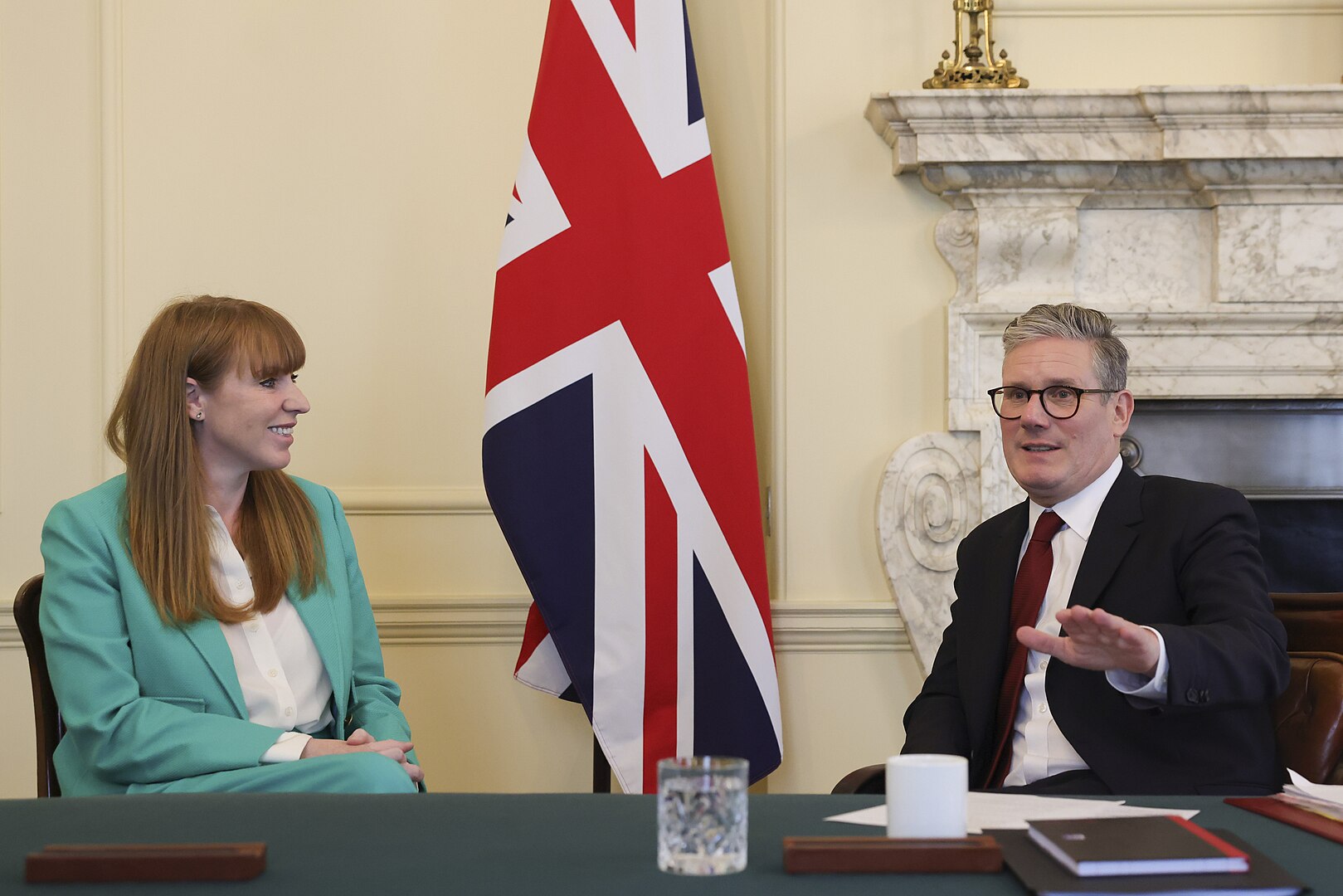
Westminster thrives on psychodrama – and never more so than this week. But employers, markets and households are usually more prosaic. Their question is not who sounds most authentic or outraged, but who can make Britain richer without destabilising it. If Keir Starmer were to resign this year, Labour’s leadership contest would quickly become a referendum on jobs, productivity and the economic competence of the state.
Leadership elections are rarely won on personality alone. They are won on credibility — on whether candidates can point to real administrative experience and argue that it translates into growth. In that sense, a Labour contest would look less like a rally and more like a CV sift. Four figures would dominate the early field: Wes Streeting, Shabana Mahmood, Ed Miliband and Angela Rayner. Each represents a different answer to the same question: what does a pro-worker, pro-growth Labour government actually do?
Wes Streeting’s case would rest on a deceptively simple proposition: the NHS is not just a moral mission, it is the central economic constraint on the British state. Long-term sickness, waiting lists and workforce absence weigh directly on productivity and public finances. Streeting has framed his tenure as Health Secretary around reform rather than reverence — technology, data, measurable targets and clearer ministerial control. The proposed reintegration of NHS England into the department is emblematic of this approach: less arm’s-length management, more direct accountability.

Supporters see in this a recognisably modern Labour offer — protecting universal services by making them work better, not by endlessly expanding their footprint. Critics note that NHS reform has destroyed many political careers and that productivity gains in healthcare are slow, politically painful and fiercely resisted. A Streeting leadership bid would therefore translate health policy into labour-market language: fewer days lost to sickness, faster returns to work, and a health service that stops acting as a drag anchor on growth.
Shabana Mahmood would come to the contest from a very different departmental terrain. Home Office leadership bids are always risky, but Mahmood’s emerging pitch is about control rather than spectacle. Her approach to asylum and borders has leaned towards speed, enforcement and clarity — reducing hotel use, accelerating decisions and restoring what ministers like to call “order”. This is sold internally not as culture-war politics but as fiscal discipline: a state that cannot control its borders struggles to control its budgets.

05/09/2025. London, United Kingdom. Shabana Mahmood is appointed Home Secretary as Prime Minister Keir Starmer reshuffles Cabinet in 10 Downing Street. Picture by Lauren Hurley / No 10 Downing Street
Mahmood’s appeal to the wider electorate would rest on the argument that visible order underpins economic confidence. Businesses care about predictability; communities care about fairness. The danger is that tougher systems collide with labour shortages in growth sectors and create confusion for employers who rely on migrant workers. A Mahmood leadership campaign would therefore need to reconcile two truths: that public consent for migration matters, and that growth economies need people. Her bet would be that credibility on enforcement creates space for a more rational labour settlement.
Ed Miliband remains the most intellectually coherent “mission” politician in Labour, and also the most ideologically loaded. His case would be built around energy as industrial strategy. Clean power, grid investment and domestic supply chains are framed not simply as climate policy but as a jobs engine and a hedge against volatile global markets. Great British Energy sits at the centre of this vision: an active state shaping markets rather than merely regulating them.
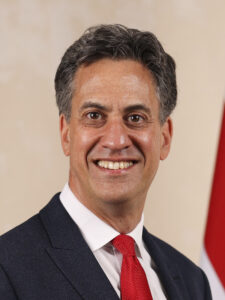
05/07/2024. London, United Kingdom. Secretary of State for Energy Security and Net Zero, Ed Miliband poses for a photograph following his appointment to Cabinet by Prime Minister Sir Keir Starmer in 10 Downing Street. Picture by Lauren Hurley / No 10 Downing Street
For Miliband, climate has become economics. Lower bills, energy security and reindustrialisation are presented as one joined-up project. Admirers see seriousness and long-term thinking. Critics see a familiar risk: high capital costs, heavy state involvement and a planning system already close to breaking point. A Miliband leadership bid would divide opinion sharply between those who believe transformation is unavoidable and those who fear it unsettles investors and voters alike.
Angela Rayner occupies a more ambiguous position. Her departmental record is interrupted, and her recent resignation following a ministerial-code finding complicates any immediate return. Yet British politics has always allowed for second acts, and Rayner retains a distinctive political asset: an instinctive connection to work, wages and dignity. Her appeal has never rested on technocratic mastery but on a sense that Labour should speak plainly for those who feel managed rather than served.

Economically, Rayner’s strongest ground would be housing, pay and place — the argument that growth without homes, security and pride is brittle and politically unsustainable. The challenge she would face in a leadership contest is reassurance: convincing markets and middle-income voters that emotional authenticity can coexist with fiscal discipline and administrative competence.
What would unite these candidates is the underlying fault line in modern Labour politics. On one side sits reform: making existing systems work better, faster and cheaper. On the other sits rebuild: using the state more actively to reshape markets, energy and labour itself. Streeting and Mahmood lean towards reform; Miliband and Rayner towards rebuild. Any contest would be fought along that axis.
There is also a procedural reality often ignored in speculation. Leadership challenges are not mood swings; they require numbers, nominations and discipline. But polling among party members already suggests that this is not a vacuum field. There are plausible successors with recognisable constituencies inside the party.
Ultimately, the next Labour leader — if there is one — will inherit not just a party but an economy marked by low growth, strained services and an exhausted workforce. The decisive question will not be rhetorical brilliance or ideological purity. It will be whether a candidate can credibly say that, in their own department, they have already begun to fix the operating system.
That, in the end, is the only CV that matters.