



 BBC News
Borrowing was £17.4bn last month, the second highest October figure since monthly records began in 1993.
Our tribute to the great playwright who made thinking feel like play
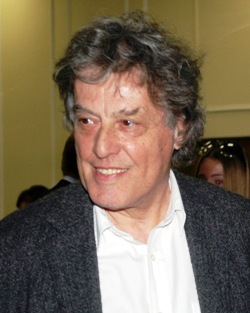
Tom Stoppard died peacefully in November at his home in Dorset, surrounded by family, leaving behind what King Charles called “a majestic body of intellectual and amusing work.” He was 88 – but there was always a sense that the end had come five years beforehand in the last scene of his last play.
At the end of Leopoldstadt, when the surviving characters unearth the names of those who never returned, the stage becomes a ledger of absence — a roll call of lives erased, families shattered, and stories cut short. For Stoppard, that final revelation was more than dramaturgy: it was a belated admission of the heartache that had always lived beneath his cultivated, gentlemanly exterior. The play’s reckoning with Jewish identity, loss, and survival was his own long-deferred confrontation with history, a recognition that the lightness of his wit had for decades floated above a silence too deep and too painful to name. In those closing pages, as the ghosts of Vienna’s great assimilated Jewish families gather invisibly around the last descendants, Stoppard allowed something profoundly private to surface — the grief of a man whose childhood was saved by a flight into exile, at the cost of nearly everyone he came from.
From there, to tell his story, we must rewind. Born Tomáš Sträussler in Zlín, displaced first by war and later by the tides of empire, he arrived in Britain not as a prodigy but as a boy who needed a country. The 8-year-old Tom would later say he “put on Englishness like a coat,” growing up to be a quintessential Englishman who loved cricket and Shakespeare. And Britain — its eccentricities, its ironies, its appetite for argument — suited him. He adopted the UK with the steadiness of someone who understood the fragility of belonging. The English language, with all its textures and contradictions, became a home of its own. In that language he found refuge, possibility, and eventually genius. As he would later have the lead character Henry say in many people’s favourite Stoppard play The Real Thing: “Words are sacred. If you get the right ones in the right order you can nudge the world a little.”
Journalism was his apprenticeship — a training ground where he sharpened his observational instincts, learned compression and clarity, and discovered the rhythm of a sentence as surely as a composer discovers tempo. At age 17, Stoppard left school to become a journalist, saying: “I was delighted to not go to university. I couldn’t wait to be out of education. I wanted to be a reporter, and I had a wonderful time doing it.”
He worked for the Western Daily Press, then moved to the Bristol Evening World as a feature writer, humour columnist and drama critic. He often wrote under the pen name “William Boot,” a self-deprecating homage to Evelyn Waugh’s hapless journalist in his 1938 novel, Scoop. One of his favourite descriptions of Rosencrantz and Guildenstern, he later said, was as two beat reporters trying and failing to make a story stand up. Reporting demands speed, accuracy, and curiosity; Stoppard added mischief, philosophy and a lyrical precision that made even his earliest columns crackle. Journalism taught him how to listen, how to interrogate ideas, and perhaps most importantly, how to keep the outside world present in his writing. “I still believe that if your aim is to change the world, journalism is a more immediate short-term weapon,” he once said. When he turned fully to drama, he carried the journalist’s restlessness with him — the instinct that a story is never about only one thing.
But entering the theatre in the 1960s meant stepping into a landscape dominated by two monumental shadows: Beckett and Pinter. Stoppard revered them but refused to be trapped by their gravitational pull. Rosencrantz and Guildenstern Are Dead premiered at the Edinburgh Festival Fringe in 1966 and is in part a dialogue with them both. Compare it to Waiting for Godot: the same sense of hapless figures caught in a cosmic joke, the same looping conversations about uncertainty and meaning. Yet where Beckett pares language to bare existential bone, Stoppard multiplies it — turning circular despair into fireworks of logic, wordplay, and philosophical pratfalls. And beside Pinter’s The Caretaker, with its silence that thickens like dust in a closed room, Stoppard’s silences crack open into thoughts, probabilities, and dazzling rhetorical acrobatics. His worlds are no less absurd, but they are warmer, more curious, more alive with possibility.
When Rosencrantz and Guildenstern Are Dead debuted in London and on Broadway in 1967, it was hailed as a masterpiece. At 30, he became the youngest playwright to get a staging at the Royal National Theatre. When asked what the play was about, he famously replied: “It’s about to make me very rich.” In the interstices of those influences, he forged something genuinely new: drama that could be intellectually rigorous without being punitive, comedic without being frivolous, and philosophical without floating away from deeply human stakes. As one of his most enduring lines puts it: “Look on every exit as being an entrance somewhere else.”
From the play itself comes that perfect articulation of theatrical absurdity: “We’re more of the love, blood, and rhetoric school. Well, we can do you blood and love without the rhetoric, and we can do you blood and rhetoric without the love, and we can do you all three concurrent or consecutive. But we can’t give you love and rhetoric without the blood. Blood is compulsory. They’re all blood, you see.” And the quietly devastating meditation on mortality: “Whatever became of the moment when one first knew about death? There must have been one, a moment, in childhood, when it first occurred to you that you don’t go on forever. It must have been shattering, stamped into one’s memory. And yet I can’t remember it.” There’s Rosencrantz’s perfect one-liner too: “Eternity’s a terrible thought. I mean, where’s it all going to end?”
From the linguistic exuberance of Jumpers to the emotional intricacies of The Real Thing, from the sprawling intellectual voyages of Arcadia and The Coast of Utopia to the historical excavation of Leopoldstadt, his trajectory was one of continual expansion. He refused to repeat himself. Each play opened a different set of doors — mathematics, politics, love, chaos theory, Russian revolutionary history, the structure of memory, the nature of truth. His curiosity was inexhaustible; his craftsmanship, relentless.
On Jumpers, Stoppard gave us the definition of tragedy as only he could phrase it: “The bad end unhappily, the good unluckily. That is what tragedy means.” And from that same play, a perfectly Stoppardian line about credibility: “How the hell do I know what I find incredible? Credibility is an expanding field… Sheer disbelief hardly registers on the face before the head is nodding with all the wisdom of instant hindsight.”
The Real Thing gave us one of his most beautiful meditations on language: “Words… They’re innocent, neutral, precise, standing for this, describing that, meaning the other, so if you look after them you can build bridges across incomprehension and chaos. But when they get their corners knocked off, they’re no good any more… I don’t think writers are sacred, but words are. They deserve respect. If you get the right ones in the right order, you can nudge the world a little or make a poem which children will speak for you when you’re dead.”
Then came Arcadia in 1993, perhaps his most perfect play, where he offered this vision of time and existence: “Because children grow up, we think a child’s purpose is to grow up. But a child’s purpose is to be a child. Nature doesn’t disdain what lives only for a day. It pours the whole of itself into each moment. We don’t value the lily less for not being made of flint and built to last. Life’s bounty is in its flow, later is too late. Where is the song when it’s been sung? The dance when it’s been danced?” And that perfect line about science and certainty: “It’s the best possible time to be alive, when almost everything you thought you knew is wrong.” And on love and fate: “It is a defect of God’s humour that he directs our hearts everywhere but to those who have a right to them.”
When Arcadia opened in New York, Stoppard insisted his plays were always about people, not abstract ideas. “I’m not some kind of intellectual who’s importing very special ideas into the unfamiliar terrain of the theatre,” he said. Yet somehow his people were always thinking — gorgeously, complicatedly, hilariously thinking.
The Coast of Utopia, his epic nine-hour trilogy about 19th-century Russian intellectuals, debuted on Broadway in 2006. Movie star Ethan Hawke gave up seven months of more lucrative work to perform in it, saying the chance to read Stoppard’s lines was worth it: “We’re used to being talked down to. We’re used to very simple ideas. We’re used to people not challenging us. I feel the great thing about watching Tom Stoppard — when you watch it, it makes you feel incredibly intelligent. Because you do get it. The ideas aren’t that complicated.”
From that trilogy comes this extraordinary passage about utopia and meaning: “We persuade ourselves that the universe is modestly employed in unfolding our destination. We note the haphazard chaos of history by the day, by the hour, but there is something wrong with the picture. Where is the unity, the meaning, of nature’s highest creation? Surely those millions of little streams of accident and wilfulness have their correction in the vast underground river which, without a doubt, is carrying us to the place where we’re expected! But there is no such place, that’s why it’s called utopia.”
His diversification into film was no detour but a natural extension – although Stoppard often felt guilty when he wasn’t working on a play. Stoppard brought theatre’s love of structure to cinema’s love of image and motion. Steven Spielberg noted that for Indiana Jones and the Last Crusade, “Tom is pretty much responsible for every line of dialogue.” His screenplays — whether the introspective elegance of The Romantic Englishwoman, the philosophical intensity of Brazil, or the Academy Award–winning wit of Shakespeare in Love — showed an instinctive understanding of how words and visuals converse. He could compress an argument into a glance, or stretch a joke into a revelation. On writing Shakespeare in Love, he said: “Marc had broken the ice. He’d invented this very charming story, so it was much easier to just ignore what posterity had made of him and just deal with him as a young man. The thing I like about our movie is that it’s also the agony and the ecstasy but without the quote marks. It’s a comedy.”
Stoppard, who considered himself “a theatre writer who sometimes does other stuff,” also worked as a Hollywood script doctor, adding sparkle to Sleepy Hollow, Schindler’s List, and Star Wars: Revenge of the Sith. Film allowed him to reimagine his love of language for an art form where a single cut can function as a punchline, and where narrative architecture must be at once invisible and immaculate.
And through it all, his defining signature remained his wit. Not the brittle or exclusionary wit of the show-off, but something more generous — a wit that makes audiences feel clever, not belittled. The adjective “Stoppardian” entered the Oxford English Dictionary in 1978, meaning to employ elegant wit while addressing philosophical concerns — in the style of Tom Stoppard. Though Stoppard himself once joked that for him personally, it meant “another hapless, feckless, fatuous episode in my life, brought on by my own forgetfulness or incompetence.”
He gave us gems like these: “We give advice by the bucket, but take it by the grain.” And: “A healthy attitude is contagious but don’t wait to catch it from others. Be a carrier.” On art and skill: “Skill without imagination is craftsmanship and gives us many useful objects such as wickerwork picnic baskets. Imagination without skill gives us modern art.” On theatre itself: “Theatre is a series of insurmountable obstacles on the road to imminent disaster.” And the deliciously cynical: “It is better to be quotable than to be honest.”
In a Paris Review interview, he confessed: “I hate first nights. I attend out of courtesy for the actors and afterwards we all have a drink and go home.” He was self-deprecating about his process too, admitting: “I don’t really have a system or set of principles. It’s kind of common sense mixed up with instinct.”
Stoppard trusted his audience. He didn’t simplify; he invited people upward. His humour carried the implicit compliment that you would catch up, that you could follow him across the stepping stones of an argument, that intelligence is not a gate but a shared playground. Even at his most dazzlingly erudite, he wrote with the warmth of a man who believed that ideas are communal — that thinking together is one of the great pleasures of being alive. In 1995, he said: “Things are done well, or they’re done not so well. And that’s the only distinction which matters in the theatre. I think that I consider myself to be at some place in the spectrum of entertainers.”
Yet beneath the pyrotechnics lived deeper currents. Stoppard only discovered after his mother’s death in 1996 that many members of his family, including all four grandparents, had died in concentration camps. “I wouldn’t have written about my heritage — that’s the word for it nowadays — while my mother was alive, because she’d always avoided getting into it herself,” he told the New Yorker in 2022. “It would be misleading to see me as somebody who blithely and innocently, at the age of 40-something, thought, ‘Oh, my goodness, I had no idea I was a member of a Jewish family.’ Of course I knew, but I didn’t know who they were.”
In 1998, following the deaths of his parents, he returned to Zlín for the first time in over 50 years. He expressed grief both for a lost father and a missing past, but stated: “I feel incredibly lucky not to have had to survive or die. It’s a conspicuous part of what might be termed a charmed life.”
And that may be why his loss feels so profound. His work stretched from the comic to the cosmic, from farce to tragedy, from wordplay to wounds. But in the end, it is Leopoldstadt that frames the magnitude of his legacy: the laughter, the intellect, the virtuosity — all of it now seen against the quiet sorrow that shaped him, and which he finally allowed himself to reveal.
Tom Stoppard leaves behind not only a body of work but an entire way of thinking about theatre — curious, compassionate, restless, and luminous. He gave us plays that challenge the mind while enlarging the heart, stories that speak to history while refusing to surrender the human capacity for joy. His agents remembered him “for his works, for their brilliance and humanity, and for his wit, his irreverence, his generosity of spirit and his profound love of the English language.” His genius was formidable; his spirit, unmistakably kind. And the mark he leaves is not only indelible — it is immeasurable.
As he once wrote: “We cross our bridges when we come to them and burn them behind us, with nothing to show for our progress except a memory of the smell of smoke, and a presumption that once our eyes watered.” What bridges he built. What fires he lit along the way.