



 BBC News
Borrowing was £17.4bn last month, the second highest October figure since monthly records began in 1993.
Finito World
There is something both inspiring and faintly troubling about the return of Luiz Inácio Lula da Silva to the Brazilian presidency for a fourth term.
Inspiring, because few political biographies offer such an extraordinary illustration of the possibilities of human advancement. Troubling, because one wonders whether the country which produced Lula could produce another.
Born into poverty in 1945, Lula sold peanuts as a child and only learned to read at the age of ten. He became a metalworker, lost a finger in an industrial accident, entered the trade union movement and eventually founded the Workers’ Party. After several unsuccessful attempts, he became president in 2003. Now, more than two decades later, he has won again.
It is a life which ought to give pause to anyone inclined to make easy assumptions about the relationship between education, class and ability.
There are, after all, plenty of people who have enjoyed the finest education money can buy and achieved very little. Lula, with almost none of those advantages, has become one of the most consequential politicians of his generation.
But there is another way of looking at his story. It belongs, in important respects, to a world which has disappeared.
The industrial economy into which Lula entered as a young man was certainly harsh. His own injury testifies to that. Yet it also provided a recognisable ladder. A worker might become a union representative, a union leader, a national political figure. The factory was not simply a place of employment. It was a place in which people learned to organise, negotiate, speak publicly and exercise authority.
One wonders where precisely those opportunities exist today.
The young Brazilian entering the workforce in 2026 confronts a very different landscape. Industrial employment remains important, but the economy is increasingly dominated by services, technology and forms of work which offer neither the stability nor the collective identity of the old factory floor.
Meanwhile, artificial intelligence threatens to remove some of the routine tasks through which inexperienced workers have traditionally acquired knowledge and confidence.
The danger is not simply that jobs disappear. It is that the first rungs of the ladder disappear with them.
This is a problem much larger than Brazil. Across the developed and developing worlds, governments have become rather good at talking about opportunity while being less successful at explaining how a young person is supposed to obtain it.
We tell people to acquire skills, but the skills required are changing. We encourage university education, but degrees do not necessarily lead to employment. We celebrate entrepreneurship, while making it difficult for small businesses to survive their earliest years.
Brazil presents these contradictions in particularly acute form.
It is a country of extraordinary natural wealth, agricultural sophistication, industrial capacity and entrepreneurial energy. It has the potential to become a major beneficiary of the global transition towards cleaner energy. Its technological sector is increasingly significant, and its vast domestic market offers opportunities which many countries would envy.
Yet millions of Brazilians continue to work informally, without the security, training or prospects associated with stable
employment. Educational opportunities remain profoundly unequal. Geography and family background still exercise an enormous influence over what a young person can reasonably hope to achieve.
Lula’s own life is evidence that these barriers can be overcome. It is not evidence that they have been overcome.
His previous presidencies placed considerable emphasis on poverty reduction, most famously through Bolsa Família, which helped poorer households and encouraged school attendance. Such programmes matter enormously. Poverty is not merely an economic condition: it consumes attention, restricts choices and can prevent talent from developing in the first place.
But there is an important distinction between protecting people from poverty and enabling them to advance beyond it.
The first requires an effective social safety net. The second requires an economy capable of generating worthwhile work, an education system connected to the realities of employment and institutions which allow ability to flourish regardless of background.
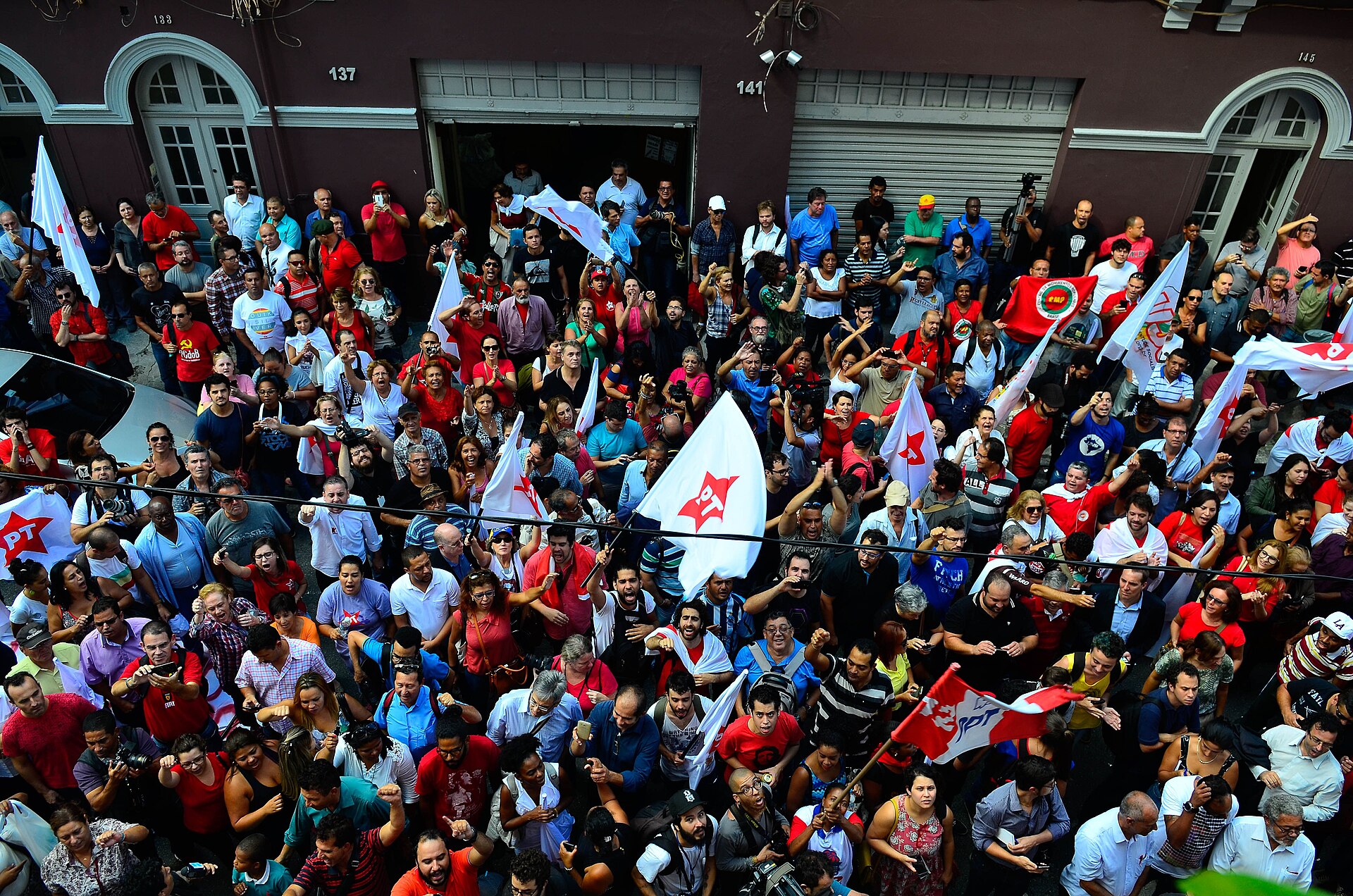
In his fourth term, Lula must somehow pursue both objectives. He will not find it easy. His victory over Flávio Bolsonaro, by 51.79% to 48.21%, leaves him presiding over a deeply divided country, with a Congress considerably to his right. There will be fierce arguments about spending, taxation, regulation and the proper relationship between the state and private enterprise.
These are legitimate arguments. Social mobility requires economic growth, and growth depends in part on the confidence of businesses and investors. But it also requires that the rewards of growth reach people who have historically been excluded from them.
Neither the state nor the market can solve the problem alone. I suspect that one of the great political challenges of the coming decades will be to restore the connection between effort and advancement. People need to believe that acquiring skills, taking risks, working conscientiously and showing initiative can lead
somewhere.
When that connection weakens, something more serious than economic disappointment occurs. Trust in institutions begins to dissolve.
There is also an uncomfortable question here for those of us who write about employability. We are inclined to think in terms of qualifications, CVs, interviews and professional development. These things matter, of course. But Lula’s story suggests that employability is not simply a matter of preparing individuals to fit the opportunities which already exist. It is also about ensuring that society creates opportunities sufficiently varied to accommodate the different forms human talent can take.
A boy who only learned to read at ten would not necessarily look promising on a modern recruitment platform. An algorithm assessing his educational background might have rejected him before he had even entered the room.
Yet that boy became president of Brazil. This does not mean we should romanticise educational disadvantage, still less suggest that Lula’s exceptional achievements make education unnecessary. Quite the opposite. It means we should be wary of systems which confuse conventional credentials with human potential.
Brazil’s future depends partly on whether it can recognise that potential among the millions of young people who have not enjoyed an easy start in life.
Lula is now 80. His extraordinary political journey is approaching its final chapter. It would be a pity if his legacy were measured chiefly in electoral victories, political confrontations or even the considerable social programmes associated with his name.
The more interesting measure will be whether the next generation of Brazilians finds it easier to travel the distance he travelled.
Not everyone will become president. Nor should they wish to. But millions should have the opportunity to discover what they might become, without having their possibilities determined prematurely by poverty, geography or the circumstances of their birth.
Lula has demonstrated what one remarkable individual can achieve against the odds. His greatest achievement now would be to change the odds themselves.Brazil has elected Lula four times. But could it produce another Lula?