



 BBC News
Borrowing was £17.4bn last month, the second highest October figure since monthly records began in 1993.
Finito World
There are certain pieces of government policy which acquire, over time, the status of holy writ. Politicians may grumble about them privately; economists may produce papers explaining why they are increasingly difficult to afford; but nobody quite wants to be the person who touches them.
For more than a decade, the pensions triple lock has been one of these.
Andy Burnham has now touched it.
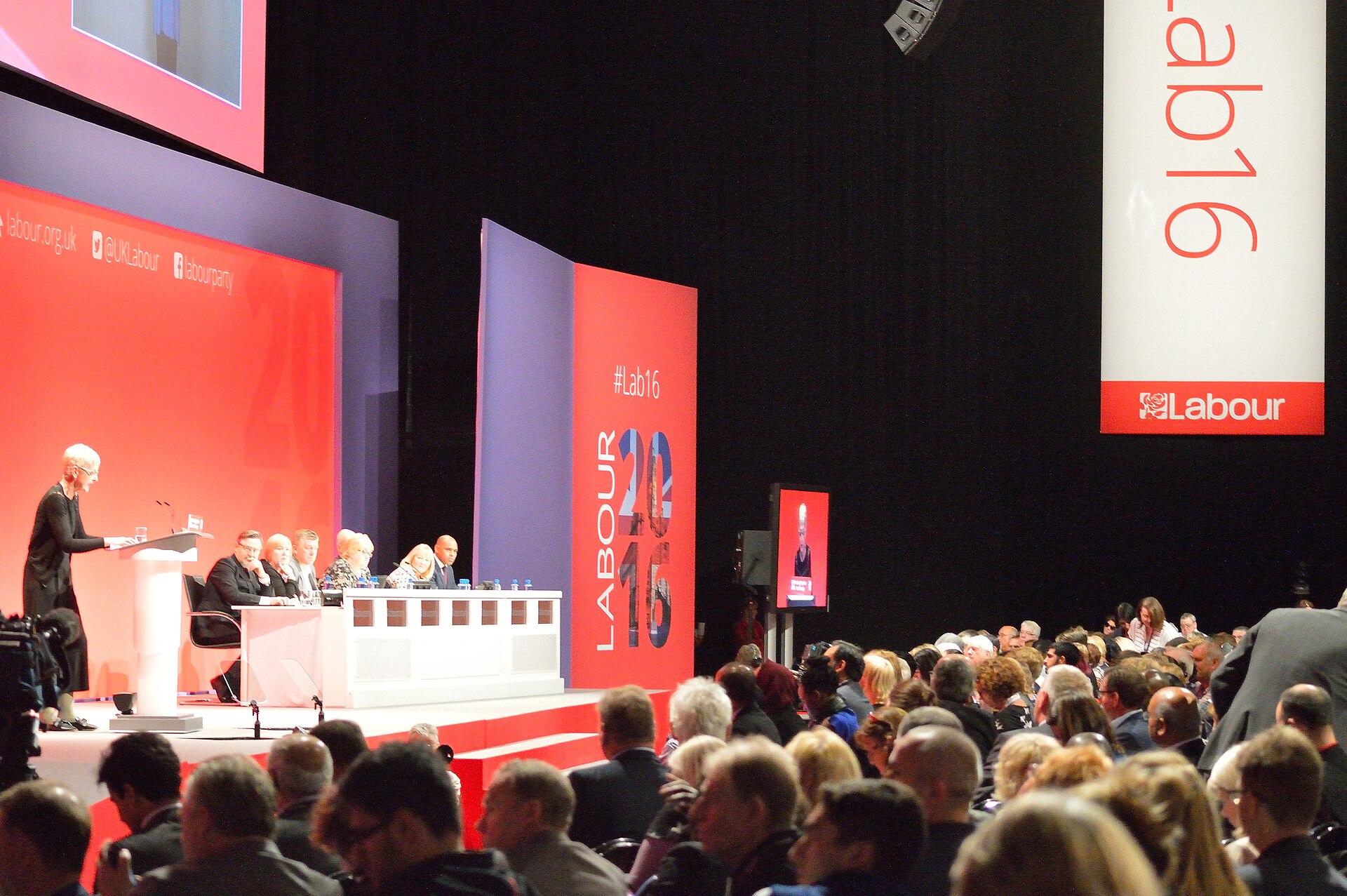
In his first Labour conference speech as Prime Minister, Burnham announced that the existing triple lock will remain until April 2030, honouring Labour’s manifesto commitment for this Parliament. After that, the system will change. Instead of the state pension rising each year by whichever is highest of inflation, earnings growth or 2.5 per cent, it will rise by at least inflation or 2.5 per cent, with a further mechanism designed to prevent its value falling behind earnings over time.
The distinction matters. This is not the abolition of annual pension increases, nor even a straightforward severing of pensions from earnings. It is an attempt to remove what economists sometimes describe as the “ratchet”: the capacity of the existing formula to push pensions upwards relative to earnings after unusual movements in wages and inflation. The Institute for Fiscal Studies has argued that removing that effect should make the state pension system more predictable and sustainable.
But the political significance is larger than the technical change.
For years Britain has been conducting an increasingly uncomfortable conversation about work without quite connecting it to the other side of the ledger.
We ask why younger people are economically inactive. We worry about the number of people receiving working-age benefits. We talk about productivity, housing costs, student debt, childcare, skills shortages and the difficulty employers have recruiting. We ask workers to save more for their own retirement while simultaneously funding today’s pensions through taxation.
Yet the state pension has enjoyed a particularly powerful guarantee.
That arrangement had a clear historical justification. The triple lock was introduced against a background in which the state pension had declined dramatically relative to earnings, leaving pensioners increasingly exposed to relative poverty. The policy helped reverse that decline.
But circumstances change, and Burnham’s announcement raises a legitimate question about the social contract between generations.
What should the state promise someone who has finished working? And what can it reasonably demand from someone who is still working?
Burnham’s answer is intriguing because he is not proposing simply to take money away from older people and give it to younger ones. Instead, he wants to exchange one form of security for another.
His proposed National Care Service would provide free personal care according to need, introduced during the next Parliament. The government argues that savings generated by changing the triple lock would help finance it, although the precise scope, timing and funding model remain to be worked out. Baroness Casey’s commission is due to report in summer 2027.
That is an important caveat. Social care is extraordinarily expensive. Government projections put the eventual pension saving at around £15 billion annually by the end of the 2030s, while estimates of the cost of comprehensive care reform vary according to what is actually included. Critics have therefore questioned whether changing the triple lock can finance Burnham’s ambitions without additional taxation or spending choices.
But there is nevertheless an economic logic to the exchange.
For an older person, a slightly smaller future pension increase may matter less if it comes alongside substantially greater protection against catastrophic care costs. For a working-age taxpayer, meanwhile, controlling the long-term escalation of pension spending potentially reduces one source of pressure on the public finances.
And for employers, there is another dimension.
Britain badly needs a functioning care system because social care is also a work policy.
When care fails, the consequences do not remain conveniently inside the Department of Health. They arrive in offices, factories and small businesses. Employees reduce their hours to look after elderly parents. People in their fifties and sixties leave employment altogether. Hospital beds remain occupied because patients cannot safely be discharged. Families attempt to improvise a care system while simultaneously trying to remain productive members of the workforce.
A better care system therefore has consequences for labour supply as well as human dignity.
There is also a deeper cultural question here. For much of the past decade, British politics has tended to divide the population into protected groups and paying groups. That cannot indefinitely be the basis of a coherent economy. Every generation both contributes and receives, only at different points in its life.
Today’s 30-year-old taxpayer is tomorrow’s pensioner. Today’s pensioner was yesterday’s taxpayer.
The interesting part of Burnham’s proposal is therefore not that it declares war on pensioners. It is that it attempts to redefine what security in old age consists of.
Is security simply a pension whose value repeatedly ratchets upwards? Or is it a combination of a dependable pension, protection against inflation, participation in rising national prosperity and confidence that becoming frail will not financially devastate you or your family?
That is the argument Burnham has chosen to have.
There are substantial questions still unanswered. The new care service does not yet have a settled design. The funding arithmetic will be scrutinised. Future governments could inherit economic circumstances very different from those imagined today. And pensioners who have organised their finances around the existing settlement will understandably want to know precisely what the new guarantee means for them.
But something important has happened nonetheless.
For years Westminster’s debate about work has concentrated overwhelmingly on how to get more from the working-age population: work longer, save more, retrain, become more productive, return from economic inactivity.
Burnham has widened the discussion.
The question now is not merely how Britain gets more people into work. It is how the proceeds and obligations of work are distributed across an entire lifetime.
That is a harder conversation than defending the triple lock indefinitely or abolishing it outright.
It may also be the conversation an ageing Britain eventually had to have.