



 BBC News
Borrowing was £17.4bn last month, the second highest October figure since monthly records began in 1993.
In our current moment, there is an increasing suspicion that meaningful work isn’t really possible at all. If we ask why this might be, we can alight on management consultancy and productivity culture as explanations – but only partially. It is no coincidence that at the same time that work has become increasingly atomised and measured, we have lost our capacity to imagine labour that transcends the immediate, the profitable, the trackable.
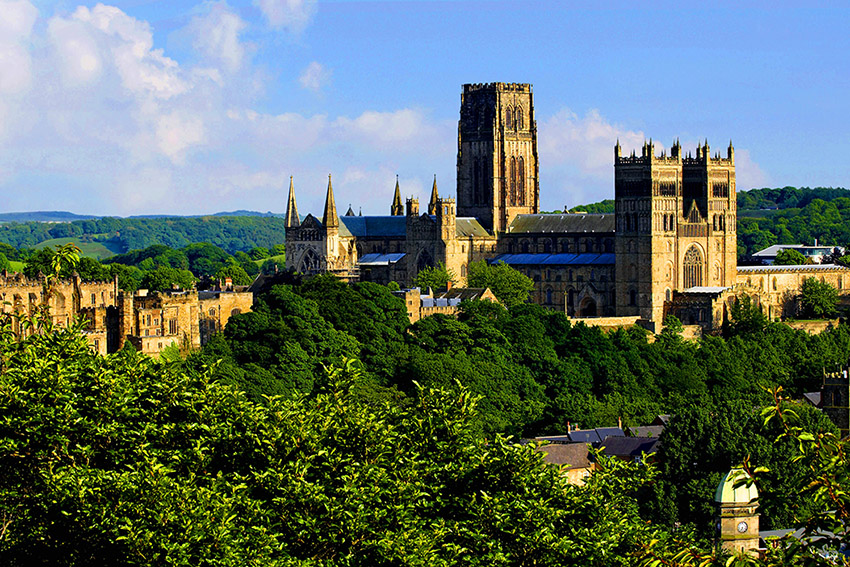
Yet every December, something remarkable happens. Cities across Britain and Europe experience a quiet alchemy as cathedrals – those ancient monuments to impossible ambition – step gently into the limelight. Whether you’re in Durham or Ely, Salisbury or St Paul’s, the Christmas season belongs to these old buildings. But more than just a seasonal backdrop, cathedrals offer a devastating critique of contemporary work culture, one that becomes particularly acute when contrasted with our modern Christmas frenzy of deliverables and deadlines.
This is the paradox of the cathedral at Christmas: they feel timeless, but they’re really time machines. They were built over lifetimes, by labourers who knew they’d never see the finished product. Yet at Christmas, cathedrals host some of the most time-sensitive events in the calendar. Midnight Mass. Nine Lessons and Carols. The final descent into the Gregorian crescendo of Christmas morning. It’s in this collision of eternity and the now that cathedrals whisper to us something profoundly subversive about the work we do –and how pitifully little of it we truly finish.
Patient Capital
Take Ely Cathedral, known as the “Ship of the Fens.” Its octagonal lantern tower – a masterpiece of medieval engineering that modern architects still struggle to comprehend – was begun in 1322 after the collapse of the original Norman tower. The men who started this project would have been dead for decades before the first light filtered through its completed windows. This was labour offered upwards, not outcomes measured downwards.
One might legitimately ask: what kind of economic system produces such monuments? The answer is troubling for anyone wedded to quarterly reporting cycles. Cathedral construction operated on what we might call “sacred time” – a temporal framework that made patience not just a virtue but a fundamental requirement. The stained glass in York Minster took generations to complete, with techniques passed from master to apprentice across lifespans. Durham’s revolutionary ribbed vaulting was experimental architecture conducted at geological pace.
And here’s the thing – they’re still standing. Not as museum pieces, but as functioning buildings that continue to serve their original purpose seven centuries later. Compare this to the average office building, designed for obsolescence within thirty years, and you begin to see the critique embedded in every Gothic arch.
Within the world of project management, cathedral construction represents something close to heresy. Modern business culture has taught us that time is money, that delay is waste, that everything must be optimised for speed and efficiency. But cathedral builders understood something we’ve forgotten: that the most enduring work is often the slowest work, and that true craftsmanship requires submission to rhythms that transcend human impatience.
The Visionary Paradox
But here we encounter something troubling for our narrative of collective, transgenerational labour: the uncomfortable reality of individual genius. Consider Abbot Suger of Saint-Denis, whose revolutionary architectural vision in the 1140s essentially invented Gothic architecture and changed the trajectory of European building for centuries. Suger wasn’t a master mason or an engineer. He was an administrator, a politician, even – by some accounts – a social climber who had risen from peasant origins to become one of the most powerful men in France. Yet his personal aesthetic obsession with light –what he called “the wonderful and uninterrupted light” – transformed how an entire civilizstion thought about sacred space. His innovations at Saint-Denis, just outside Paris, created the template that would be copied at Chartres, at Notre-Dame, at virtually every great Gothic cathedral that followed.
This presents a paradox that modern management theory struggles to accommodate. On one hand, cathedral construction embodies everything we’ve celebrated about collective work: multigenerational collaboration, shared purpose, labour that transcends individual contribution. On the other hand, the Gothic revolution began with one man’s intensely personal vision of what divine light should look like when filtered through stone and glass.
Suger’s own writings reveal someone who was simultaneously mystical and pragmatic, a monk who understood both spiritual transcendence and political power. He wrote extensively about his architectural innovations, describing them not as practical solutions but as theological arguments made in stone: “The dull mind rises to truth through that which is material.” His vision was deeply individual, even idiosyncratic – yet it required thousands of craftsmen across centuries to realize.
What makes Suger’s story particularly unsettling for contemporary work culture is how it refuses our usual categories. We’re comfortable with individual genius in creative industries, and we’re comfortable with collective labour in manufacturing. But Suger represents something more complex: visionary leadership that acknowledges its own dependence on collaborative implementation, personal inspiration that can only be realised through communal effort spanning generations.
Perhaps this is what we’ve lost in our atomized work culture: not just the capacity for collective labour, but the ability to hold individual vision and collaborative realisation in productive tension. Suger couldn’t have built Saint-Denis alone – but without his particular obsession with light, the Gothic cathedral as we know it might never have existed.
The Liturgy of Labour
Work and rest weren’t always in mortal combat. In cathedral culture, particularly during Advent and Christmas, rest wasn’t absence from work – it was a different kind of work entirely. The monks who built and staffed these cathedrals were far from idle. Their days were governed by the “Divine Office,” a regimented series of prayers and chants from matins to compline that would make a modern productivity guru weep with envy.
But their Christmas celebrations – sometimes spanning twelve days or more – represented what the medievals called jubilatio, meaning to shout with joy. At Winchester Cathedral, one of the largest in Europe, the medieval Christmas included elaborate liturgies, communal feasts, and musical traditions that continue to this day. As historian Eamon Duffy observes, “In the medieval imagination, Christmas was a time when the boundaries between heaven and earth blurred – and work became worship.”
This is a concept almost impossible to square with the inbox-zero mentality that defines December 2024. We’ve created a culture where Christmas becomes another project to manage, another deadline to meet, another performance to optimise. The cathedral offers a different model: work as devotion, labour as liturgy, rest as active participation in something larger than individual productivity.
Creative Collaboration
We often think of Christmas as a time to step away from work – but cathedrals remind us that some kinds of work only happen in December, and that this seasonal labour reveals truths about collaboration that modern management theory can barely comprehend.
Just ask the vergers at St Paul’s Cathedral, who must transform a space designed for contemplation into a venue capable of hosting dozens of carol services for thousands of worshippers. Or consider the organists at Wells Cathedral, who spend months rehearsing intricate settings of Vaughan Williams and Britten, their work invisible until that moment when voice and stone unite in perfect acoustics. Or the stonemasons at Lincoln Cathedral, still doing essential restoration work every winter, 950 years after construction began – their labour a continuation of conversations begun by medieval craftsmen whose names we’ll never know.
“The work never really stops,” says one Lincoln archivist. “You’re not preserving a monument – you’re participating in a living building.” This is project management as medieval theology: work that transcends individual contribution, labour that serves purposes larger than personal advancement.
At Christ Church Cathedral in Oxford – one of my favourite buildings – the location serves the remarkable dual function of college chapel and diocesan seat, this seasonal labour becomes particularly visible. Porters polish marble floors that have been walked by eight centuries of worshippers. Choristers rehearse descants in acoustics designed by architects who understood something about sound that we’re still discovering. Gardeners tend rose beds in December fog, their work invisible to Christmas congregations but essential to the cathedral’s year-round beauty. There are no performance reviews, no KPIs, no productivity metrics. Yet somehow, miraculously, it works.
Cross-Functional Teams
In our current business culture, specialisation has become synonymous with expertise. You’re a data analyst, or a UX designer, or a product manager. We’ve created professional identities so narrow that cross-departmental collaboration requires dedicated facilitation and carefully managed stakeholder alignment sessions.
But cathedrals resist this logic entirely. They are places where disciplines don’t just converge – they become indistinguishable. Architecture serves theology, which serves music, which serves community, which serves the ineffable. To enter a cathedral is to walk into a space where collaboration isn’t a methodology implemented through Slack channels and stand-up meetings – it’s the fundamental condition of existence.
This becomes most evident at Salisbury Cathedral, home to Britain’s tallest spire and one of the most audacious engineering projects of the medieval period. The original builders, working without computer modelling or stress analysis, simply filled the foundations with hundreds of tons of stone and gravel, hoping it would absorb the enormous vertical load. It worked – just – and the spire still stands, though it leans slightly and requires constant monitoring through digital laser surveys and a full-time team of craftspeople whose skills bridge medieval stonework and modern conservation science.
The spire becomes, in this sense, a perfect metaphor for contemporary work: elegant and inspiring above ground, but stable only because of unglamorous, persistent, collaborative labour that most people never see.
Liturgical Rebellion
In our age of managed Christmas experiences – corporate holiday parties with carefully calibrated diversity and inclusion messaging, retail seasons that begin in October, family gatherings choreographed around travel logistics and dietary restrictions – cathedrals offer something genuinely radical: Christmas as it was meant to be experienced.
Not as a deadline to be met or a project to be managed, but as an interruption. A pause in ordinary time that creates space for wonder, for reflection, for the kind of rest that isn’t just absence from work but presence to mystery.
Cathedrals are the original slow architecture, and they offer a devastating critique of everything we think we know about work, time, and value. At
Christmas, when this critique becomes most pointed, they help us remember that not all labour must be measured in productivity metrics, and not all rest must be earned through exhaustion.
Most subversively of all, they suggest that the ultimate rebellion against contemporary work culture might not be finding better work-life balance or more flexible schedules, but rediscovering work that serves purposes beyond the self – work organized around what we might call sacred rather than secular time.
This December, as we rush to close out another year of managed outcomes and optimised deliverables, the cathedrals stand as monuments to a different possibility: that good work takes time, that beautiful work requires collaboration across generations, and that the most enduring work of all might be the kind that no one person ever finishes, but that somehow, miraculously, gets completed anyway.
Perhaps that’s the real Christmas miracle – not that these impossible buildings were ever completed, but that they continue to teach us, century after century, what work looks like when it serves something larger than ourselves.