



 BBC News
Borrowing was £17.4bn last month, the second highest October figure since monthly records began in 1993.
Costeau
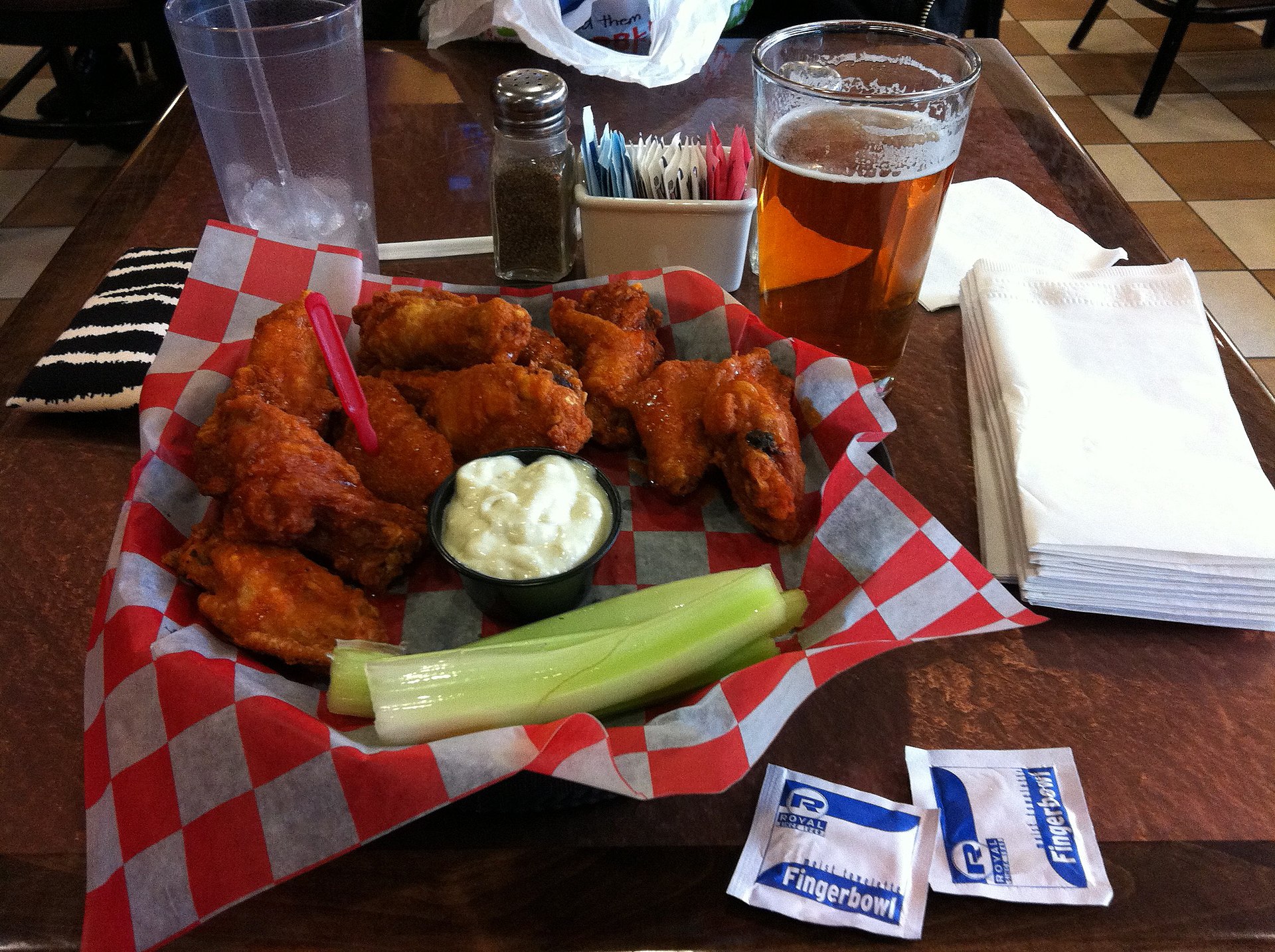
There is a particular kind of jet lag that has nothing to do with time zones. It happens the first time an Englishman, fresh off a flight, sits down in an American diner and is handed a plate the approximate size of a hubcap, on which a stack of pancakes rises like a small geological formation, with a side of bacon that would constitute a week’s ration in most of the rest of the world. The first reaction is delight. The second, slower reaction, somewhere around the third bite, is a kind of economic curiosity. Why is the food here so large. And why, in particular, is it large in this specific way, a way that has almost nothing to do with hunger and almost everything to do with the architecture of a business model that took roughly a century to build.
It is worth saying at the outset that the largeness of American food is not an accident of culture or a simple matter of national appetite. It is, in the most literal sense, an economic invention, with a traceable history, identifiable inventors, and a business logic that, once you see it, you cannot stop seeing on every plate placed in front of you from Maine to California.
The starting point, and the one that surprised me most when I went looking into it, is how recent this all is. Researchers who study the food environment have found that American portion sizes did not really begin their dramatic expansion until the 1970s, rising sharply through the 1980s in close parallel with rising body weights, and that for hamburgers, fries and soft drinks the standard size sold today is between two and five times larger than the original. For most of American history, in other words, portions were not especially large. They were constrained, as they are everywhere, by the basic facts of cost, labour and the physical limits of a kitchen. What changed was not the American stomach. What changed was the price of the calorie.
This is the part of the story that the food writer Michael Pollan has told better than anyone, and it is worth pausing on, because it explains everything that follows. Pollan observed that what makes the modern practice of selling oversized portions such an effective business strategy is, simply, the cheapness of basic foodstuffs in America, a cheapness that is itself the product of decades of agricultural policy designed to encourage farmers to grow as much corn and soybean as the land could possibly yield. Once you have an enormous, subsidised national surplus of corn, much of which becomes the cheap starches, sweeteners and oils that bulk out a fast food meal, the marginal cost of making a portion bigger becomes almost trivial. A bit more bun, a bit more high fructose corn syrup, a few more fried potatoes, costs the seller pennies. What it does to the perceived value of the meal in the eyes of the customer, however, is enormous. This is the central, slightly uncomfortable economic truth of American food: it got bigger not because anyone particularly wanted more food, but because more food became, almost by industrial accident, astonishingly cheap to provide relative to what a customer could be persuaded to pay for it.
But cheap corn alone does not explain the cultural mechanism, the actual psychological lever that the food industry learned to pull. For that you need the story of a man almost nobody has heard of, despite having shaped the eating habits of more people than perhaps any single individual in modern history: David Wallerstein. In the nineteen fifties and sixties, Wallerstein worked for a chain of movie theatres in Texas and Illinois, where his job, in essence, was to sell more popcorn and more soda, the two items on which a cinema’s profitability has always quietly depended. He tried the obvious things, two for one deals, matinee specials, and none of them worked. Eventually he worked out why. Customers did not want to buy a second bag of popcorn or a second drink, because going back for seconds, as one account of his research put it, makes people feel like pigs. Nobody wants to be seen at the counter a second time. But, Wallerstein discovered, those same customers would happily pay considerably more for a single, much larger serving, because a bigger cup carries none of the social shame of a second one. There is no walk of gluttony back to the counter. There is just one transaction, one moment of choice, and an enormous tub of popcorn that nobody has to feel embarrassed about.
Wallerstein later took a seat on the board of McDonald’s, where he tried to sell Ray Kroc on the same idea, and where, according to McDonald’s own official history, Kroc was initially sceptical, on the entirely reasonable grounds that if people wanted more fries, they could simply buy a second bag. So Wallerstein did what any good consultant does when faced with a sceptical client: he went and watched the customers himself, staking out McDonald’s restaurants around Chicago, and noticed something that should embarrass the entire field of nutrition science for having missed it for so long. People were finishing their small bags of fries and then digging around in the bottom of the empty bag for the last salty crumbs. They wanted more. They simply would not, as a matter of social etiquette, go and buy more. Kroc relented. The larger single portion, sold as a single transaction, became the model not just for McDonald’s but for the entire industry that followed it, and it rests on a piece of behavioural insight so simple it is almost embarrassing: humans are bad at portion control, but they are catastrophically, reliably bad at it specifically when the larger portion arrives in a single, dignified, unembarrassing serving.
What is striking, looking back at this from the vantage point of nutrition science fifty years later, is how thoroughly the science has since confirmed what a cinema concessions manager worked out by simply watching people eat. Repeated studies on what researchers call satiety, the science of when and how we feel full, have shown that people presented with a larger portion will reliably eat up to thirty per cent more than they would have eaten from a smaller one, almost regardless of how hungry they actually were to begin with. Our sense of being full, it turns out, is not a fixed, reliable internal gauge. It is profoundly influenced by the size of the container in front of us. Wallerstein did not discover a marketing trick so much as a genuine, exploitable flaw in human appetite regulation, decades before anyone in a laboratory had bothered to measure it.
So far, this is a story about fast food. But it does not, on its own, explain the deeper cultural feature of American eating that the visiting Englishman notices on his first morning in a diner: the sense that bigness itself has become a kind of civic value, a marker of generosity and abundance rather than simple greed. For that you need the diner itself, which has its own quite separate economic history, and one that is, in its way, even more interesting, because it begins not in abundance but in genuine scarcity.
The American diner was born in 1872, in Providence, Rhode Island, when a printer named Walter Scott, who had been supplementing his income for years by selling sandwiches and coffee from a basket to night shift newspaper workers, finally quit his printing job and converted an old freight wagon into a mobile food cart, which he parked outside the offices of the Providence Journal. His customers were the people every other business in the city had given up on feeding: pressmen, late shift workers, theatregoers, the people whose hours did not match the opening times of any respectable restaurant. This was not an industry built on abundance. It was built on a gap in the market created by the rigid working hours of an industrialising city, and on the simple, durable economic insight that there will always be hungry people awake at three in the morning whom nobody else is willing to serve.
What followed was a slow, very American process of industrialisation applied to a humble idea. Other entrepreneurs copied Scott’s wagon. Manufacturers in Worcester, Massachusetts and New Rochelle, New York began building larger, sturdier lunch wagons specifically for sale to operators, men like Thomas Buckley, who became known, with a certain unmistakable American relish for self-mythologising titles, as the Lunch Wagon King, and who worked out something every diner owner since has intuitively understood: that there was more reliable money to be made building and selling the wagons than running them. By the early twentieth century, the wagons had become stationary, prefabricated, and increasingly elongated, deliberately built to resemble the dining cars of long distance trains, partly because manufacturers shipped them by rail and partly because the railroad dining car carried a certain glamour that the old, disreputable night lunch wagon badly needed. A journalist writing about one manufacturer’s booming business in the 1920s is generally credited with coining the shortened name that stuck: diner, borrowed from the railroads, attached to a humble roadside cart that had absolutely nothing gourmet about it, but which benefited enormously from the association all the same.
The diner’s golden age, the Edward Hopper-esque image most people now carry in their heads, arrived properly in the postwar boom of the late 1940s and 1950s, when the same forces reshaping the rest of American consumer life, cheap credit, new highways, rising suburban incomes, durable new materials, remade the diner from a workingman’s curiosity into a genuinely mass institution. There were, by some counts, over five thousand diners operating across the country within a decade. And it is here that the diner’s particular economics, distinct from the supersizing economics of fast food, becomes visible. A diner has never made its money on the eggs. It has made its money on volume, on turnover, on the coffee cup that gets refilled four times for the price of one, on the customer who comes in for a ten minute breakfast and the customer who lingers for two hours over pie and conversation, both of whom occupy roughly the same stool and contribute, in their different ways, to a thin but dependable margin built on extremely high foot traffic and extremely low prices. Restaurant economics generally runs on famously slender margins, often in the low single digits for a full service establishment, and the diner survives within that margin not by extracting more money per customer but by serving an enormous number of customers, repeatedly, at almost every hour of the day, in a building cheap enough to construct that the capital cost could be recovered within a few profitable years.
This is, in its way, the opposite economic logic to the McDonald’s supersize. The fast food chain makes its extra money by enlarging the single transaction, the cinema bucket strategy applied to a burger. The diner makes its money by multiplying the number of transactions, keeping the price low enough and the welcome warm enough that the same customer returns three times a week for forty years. Both strategies, curiously, produce the same visible symptom on the plate: a great deal of food for what feels, to the customer, like remarkably little money. But one is a strategy of scale through portion, and the other is a strategy of scale through loyalty, and any honest economic history of why American food looks the way it does has to hold both of these models in mind at once, because together, quite by accident, they produced a national expectation. The expectation that abundance is simply what a fair price looks like. That a plate which is not generously, almost embarrassingly full has somehow shortchanged you.
It is a powerful piece of cultural conditioning, achieved not through any grand design but through the accumulated, decentralised decisions of a popcorn salesman in a Texan cinema, a printer with a freight wagon in Providence, and an agricultural policy designed in Washington to solve an entirely different problem, namely what to do with too much corn. None of these people set out to reshape the national diet. They were simply solving, each in turn, the narrow economic problem in front of them: how to sell more popcorn without making customers feel greedy, how to feed night shift workers nobody else would serve, how to support farm incomes through a glut of grain. And between them, over the course of a single century, they built something that every visiting Englishman now encounters within an hour of landing: a culture in which the size of the plate has quietly become a substitute for the price of the meal, a culture in which more is not an indulgence but, somehow, the default. It is, when you trace it all the way back, a remarkably tidy piece of economic history. It is also, I would gently suggest after the third bite of those pancakes, a great deal more food than anyone actually needs for breakfast.