



 BBC News
Borrowing was £17.4bn last month, the second highest October figure since monthly records began in 1993.
Finito World
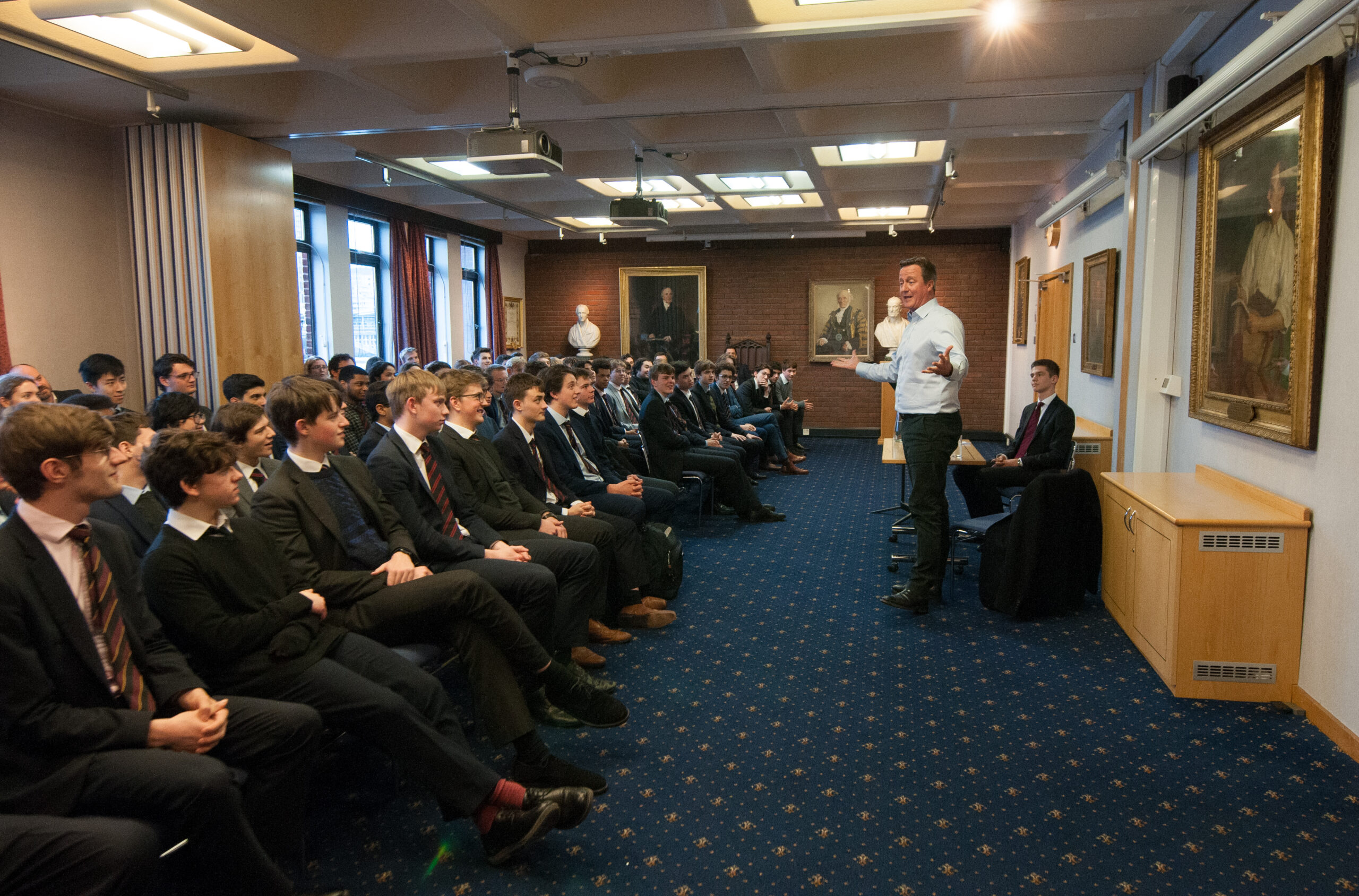
When Lord Cameron returned to the fray last week, penning a rare and fiery Telegraph column, it was with one aim: to salvage what remains of the free schools revolution he launched more than a decade ago. “Spite-laden wrecking ball,” he called Labour’s decision to axe 46 of the next wave of free schools—18 of them earmarked for special or alternative provision.
To some, this may sound like standard political theatre. A former Prime Minister defending his legacy; a new government making fiscal choices in austere times. But what’s being contested here goes deeper than party lines or departmental budgets. This is – in part at least – a fight about the future of curriculum, and who gets to shape it.
Labour’s Education Bill isn’t just a cancellation of bricks and mortar—it’s a philosophical consolidation. The reforms bring academies and free schools back into the embrace of the national curriculum, back under the national pay scale, and back towards uniform oversight. The government frames this as restoring equity and accountability. But to many in the educational vanguard—tech, engineering, arts organisations, creative industry leaders—it sounds like curriculum capture.
Here’s the problem: the national curriculum itself is struggling to keep pace. Despite earnest attempts at reform, it remains structurally cautious, overly rigid, and slow to respond to fast-changing skills needs. The Institute of Engineering and Technology (IET) has called for far greater STEM integration. Arts groups have long decried the marginalisation of music, drama, and design. Tech educators point to a yawning gap in digital literacy, AI fluency, and enterprise training.
In that context, free schools offered a rare zone of permission—a structural release valve that allowed for experimentation, agility, and locally responsive innovation. Some failed, yes—but others forged ahead with pioneering curricula that simply wouldn’t have survived in a traditional local authority structure. Whether it was Mandarin immersion, engineering-led sixth forms, or creativity-first primary schools, the point was not uniformity, but possibility.
By tethering all state-funded schools back to a centralised curriculum, Labour risks snuffing out one of the few active laboratories left in British education. And this at a time when the business world is begging for more experimental, multi-disciplinary, problem-solving graduates.
It’s worth noting that the savings involved—£600 million—aren’t small. It forms part of a wider £3 billion plan to fund 50,000 new places for children with special educational needs. That’s a noble objective, and few would dispute the urgency. But the decision to fund it by amputating future-facing schools may prove to be a false economy. After all, if we fail to modernise our curriculum, we simply embed future inequalities by different means.
Cameron, for all his faults, intuited something important: that systems need slack to evolve. Education cannot remain in amber. The free schools model—messy, inconsistent, often controversial—nonetheless offered a zone where educators could dream, and children could be taught in ways that pointed beyond the outdated boundaries of Key Stages and attainment targets.
If Labour truly wants to build a curriculum for the future, it will have to stop thinking solely in terms of what it can control—and start thinking more courageously about what it can unleash.