

 BBC News
Borrowing was £17.4bn last month, the second highest October figure since monthly records began in 1993.
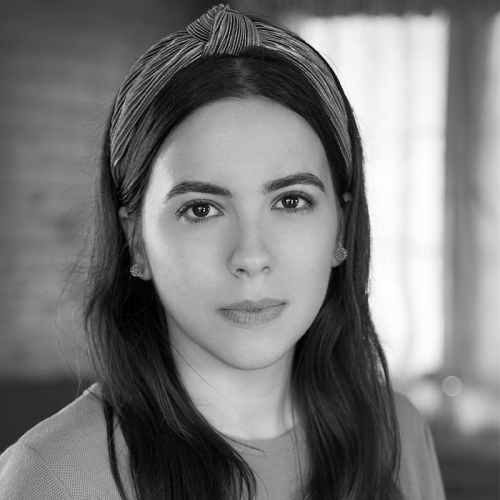
Angelina Giovani-Agha
The entrepreneur on art, research – and why she loves setting up businesses
I like setting up businesses that solve very specific problems. We co-founded Flynn & Giovani Art Provenance Reach with Dr Tom Flynn in 2017 to fill a gap in the art market. I then setup the Art Market Academy to make provenance and due diligence training available to everyone. It remains the only digital resource of its kind, offering pre-recorded lessons translated into more than a dozen languages. In the two years since its foundation we have had hundreds of course completions from all continents.
The main issue we seem to constantly face is access, which is a rather ridiculous issue to have in 2026. On an everyday basis, researchers across disciplines struggle to access archival material around the world. It turns out that everything is not online, and Google is limited. Over the past few months alone, I have needed access to resources that exist only in physical form in Chile, St Petersburg and Cyprus. I am still waiting on this information.
Certain research cases have been on my desk for much longer. Twelve years ago I embarked on solving the mysterious case of a couple dozen modern British paintings sent to France on a travelling exhibition in 1940 which were never to return. Some progress has been made but the mystery has not been solved yet. And as I persist more mysteries have followed. Where has the body of work produced by British artist Christopher Bledowsky been scattered and what does this market look like? How did a lost masterpiece by Francois Gerard survive the Russian Revolution to end up in a glitzy department store in Argentina? Happy to say, this last mystery has since been solved!
Much of the world’s knowledge still lives on shelves. Libraries, archives and private collections hold material that will never be digitised in full, nor should they be expected to. Digitisation is expensive, selective and slow. In the meantime, research continues. Claims need evidence. Students need sources. Facts need verification. The assumption that information is universally accessible has simply not caught up with reality. So how do we solve an information access problem in the era of supercomputers?
The obvious answer would be to outsource it to artificial intelligence. That answer does not work. AI is useful for pattern recognition, summarisation and prediction, but it does not replace access to primary material. It cannot retrieve a page from a book that has never been scanned. It cannot verify an archive it has never seen. And it is frequently confident about information that is simply wrong.
So in a way we had no option but to create Source. Source addresses access as a logistical problem rather than a technological fantasy. The premise is straightforward. If information exists somewhere, then someone can physically access it. Source connects people who need specific material with people who can retrieve it. Requests are matched only with users who are able to fulfil them. This avoids noise and focuses on execution. All providers get paid for their time, and all requesters get factual information.
London is the best place from which to launch a startup while juggling existing businesses and motherhood because it offers density without isolation. Being able to fit research appointments, fundraising meetings and museum visits before doing the school run is a gift. We are spoiled for options when it comes to choosing museum exhibits and shows. From the latest rendition of The importance of being Earnest at the Noel Coward theatre featuring the inimitable Stephen Fry in the role of Lady Bracknell to the Cecil Beaton Fashionable World exhibition at the National Portrait Gallery, the opportunities to cleanse the palette are as accessible as they are essential.