




 BBC News
Borrowing was £17.4bn last month, the second highest October figure since monthly records began in 1993.
Finito World
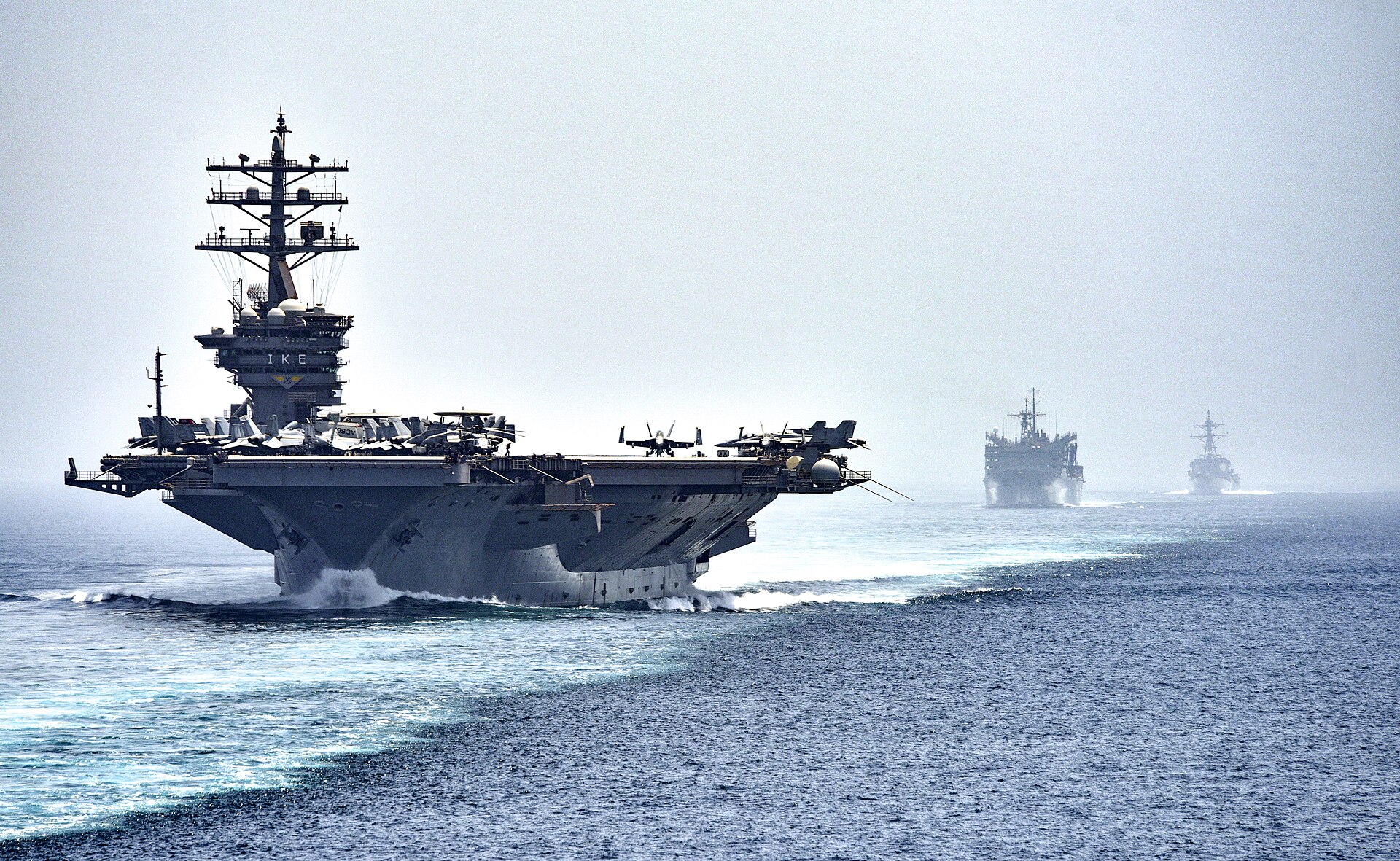
When presidents order air strikes, the first maps we see are military. Carrier groups. Missile arcs. Red diamonds over cities. The second map — slower, less dramatic — is economic.
It begins in the Strait of Hormuz.
About a fifth of the world’s oil and gas passes through that narrow channel. When Iran warns vessels not to transit it, markets do not wait for confirmation. They price the risk. Oil jumps. Traders hedge. Insurers re-rate. And somewhere in Britain, a driver looks at the petrol pump and wonders if the numbers will start rising again.
At the moment, petrol averages around 133p a litre, diesel nearer 143p. Not crisis territory. But oil does not need to explode to cause discomfort; it merely needs to rise and stay there.
Analysts sketch the thresholds. If crude sits at $80 a barrel, petrol edges up. At $90, it pushes higher. At $100, the psychology shifts.
The important word is “persist”.
A brief spike is noise. A sustained elevation is policy.
And this is where Trump’s decision to strike Iran intersects with everyday employability in ways that are subtle but real.
Start with households. Fuel is not just a line item. It is mobility. When petrol prices climb, discretionary travel shrinks. Commuting costs bite. People think twice about job offers that require longer journeys. In regional economies — particularly in rural Britain where car dependency is non-negotiable — higher fuel acts as a tax on opportunity.
Mobility underpins employability. Raise the cost of movement and you narrow the labour market without changing a single hiring rule.
Now the sectors.
Logistics and haulage feel it first. Diesel is their oxygen. If oil rises materially and lingers, transport firms face a familiar dilemma: absorb costs and squeeze margins, or pass them on. Either way, hiring plans become cautious. Wage increases become harder to justify. Temporary contracts replace permanent ones.
Retail follows. Supermarkets operate on slender margins. A few pence per litre multiplied across fleets of lorries and distribution networks becomes meaningful. Add to that the fertiliser effect — elements of crude oil feed into agricultural inputs — and the chain extends to food production.
If the shock is short-lived, most firms will ride it out. If not, price rises seep into shelves. Inflation, which had been easing, begins to feel sticky again.
And when inflation sticks, central banks hesitate.
The Bank of England has been cutting rates. The trajectory was toward relief — cheaper borrowing, looser credit, a little more oxygen for businesses that have endured two tight years. But if oil-induced inflation lingers, prudence prevails. The rate-setters pause.
For small firms, that pause matters. Higher-for-longer borrowing costs delay expansion, stall recruitment, and make risk-taking expensive. The graduate scheme that might have reopened in autumn remains closed. The hospitality chain delays refurbishments. The construction project is phased rather than launched.
It is here that geopolitics becomes workplace reality.
Hospitality, already weakened, is vulnerable. Fuel affects supplier costs and consumer
confidence simultaneously. When households feel squeezed at the pump and the checkout, discretionary spending suffers. Restaurants trim hours. Hotels reduce seasonal hires. The very entry-level roles young people rely on become scarcer.
Manufacturing faces a double exposure: energy input costs and transport costs. Energy-intensive sectors — chemicals, metals, certain forms of food processing — operate on finely balanced equations. A few percentage points in energy can tip the arithmetic. Employers do not announce mass layoffs on the back of one oil rally. They freeze. They review. They wait.
Freezing is quieter than firing. But for jobseekers, it feels the same.
Energy producers, of course, experience the opposite impulse. Higher oil prices boost revenues. Investment conversations resume. Exploration, servicing, engineering — these roles benefit. Yet in the UK context, the energy workforce is specialised and geographically concentrated. Gains in Aberdeen do not necessarily offset losses in Birmingham.
Financial services sees it through volatility. Traders thrive on movement; lenders do not. If inflation expectations tick upward, bond yields shift. Mortgage rates become uncertain again. Housing transactions slow. Estate agencies hire cautiously. Construction firms rethink pipelines.
All of this from a narrow waterway thousands of miles away.
There is also a psychological dimension. Trump’s strike may prove decisive militarily. It may not become the “endless war” his administration dismisses. But markets respond less to rhetoric than to risk.
If insurers judge Hormuz genuinely unstable, shipping premiums rise. If shipping premiums rise, the price of moving goods increases even before crude itself changes hands. Risk becomes embedded.
For employers, the problem is not merely cost; it is unpredictability. A stable high price can be planned around. A volatile one cannot. And unpredictability is the enemy of recruitment.
There is a paradox here. Trump’s foreign policy posture projects strength and decisiveness. Markets, however, price uncertainty more than resolve. A bold strike may be strategically coherent, yet economically destabilising in the short term.
The UK sits downstream of that dynamic. It does not control the Strait of Hormuz. It does not set US policy. But it absorbs the aftershocks through inflation, rates, and sectoral confidence.
Will petrol and diesel prices rise? Possibly. Probably, if oil remains elevated. Dramatically? Not unless crude holds above the higher thresholds for months rather than weeks.
The deeper question is not what happens next Tuesday at the forecourt. It is what happens if energy volatility becomes the new background condition.
In such an environment, employability shifts subtly. Sectors tied to physical infrastructure and energy gain relative security. Consumer-facing industries grow more fragile. Regional disparities widen. Entry-level hiring becomes more cautious.
Geopolitics is often described as distant from daily life. In reality, it travels by tanker.
From the Strait of Hormuz to the M6, from an aircraft carrier in the Arabian Sea to a supermarket distribution centre in Kent, the chain is shorter than it looks.
When oil moves, work moves with it.