


 BBC News
Borrowing was £17.4bn last month, the second highest October figure since monthly records began in 1993.
Christopher Jackson
Anyone who has visited St Peter’s is struck by its theatrical enormity. Everything about it is probably a bit too big – not least the queues, which can be so long as to make you exhausted before you’ve even glimpsed Michelangelo’s Pietà. This is religion as public spectacle, as wealth generator – as box office. A visit there can be enough to bring out one’s inner Lutheran: we sense a shininess and a splendour which seems a long way from “Blessed are the poor”. It was Goethe who noted the disparity between the finery of Catholic priests and the barefoot humility of Jesus himself.
But this scepticism only gets us so far. For a start, there really is a very good chance that Peter—the very same Peter whom Jesus himself called “the rock”—is buried here. If you book well ahead for the Scavi tour, you can enter the necropolis: to be transported downwards is simultaneously to be escorted back in time and to enter a rawness of experience which seems to have nothing to do with the bling upstairs.
And this fact alone brings you nearer to what the whole enormous claim of Christianity is about. Peter. The two syllables resonate across history because of the vivid, sometimes blundering nature of the disciple: the one who, in the Bible, always reacts so directly to the authority and strangeness of Jesus. Of all the people in the ancient world, with the possible exception of Paul, we feel him as both a recognisable human type – someone who acts from the gut – but also as an unrepeatable individual who functions as a central component of what George Stevens famously called The Greatest Story Ever Told.
Now imagine entering a role which goes all the way back to him. We ought to be able to feel the weight of that chain along umpteen Clements and Piuses and Leos, leapfrogging an especially famous Francis, all the way to now—and then you can begin to feel why this place transformed so radically during the spring last year.
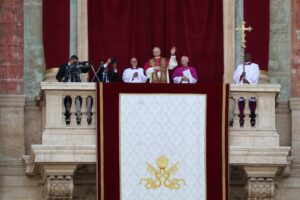
On 8 May 2025, the Roman evening slipped out of its usual role as host to the world’s tourists and back into the role which partly made it so famous: it became a stage set for providence. Inside Michelangelo’s glorious Sistine Chapel, the mysterious conclave had been going on.
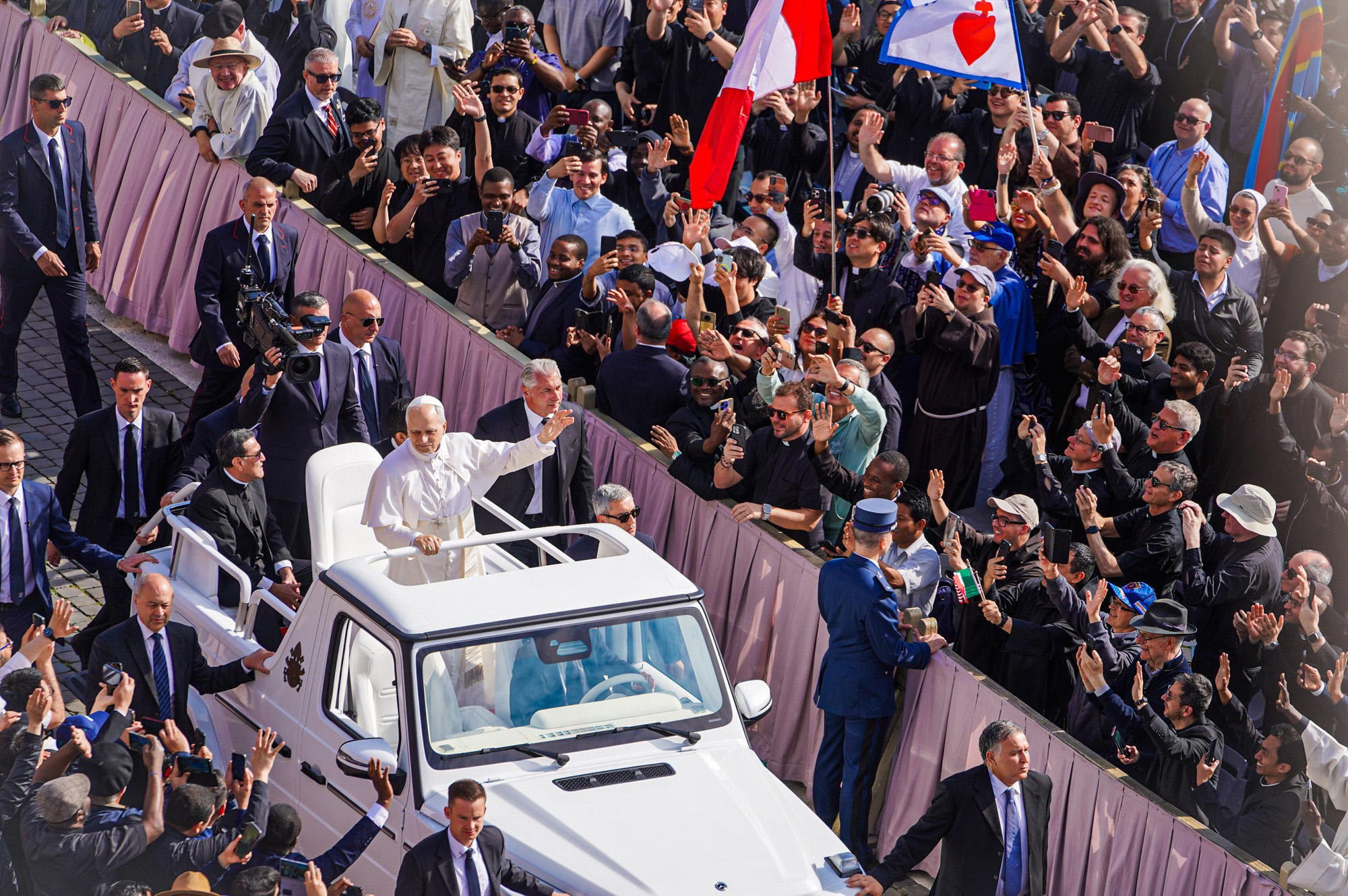
The announcement of a new pope is an extraordinary thing. The crowds in St Peter’s Square do their part – cheering, weeping, capturing the moment with their phones. The build-up resembled a cup final: there was a feeling of something utterly exciting at stake, which seemed somehow at odds with much of what one associates with religion—the silence of prayer, the curious codes of the Eucharist, the whispers of the confession booth.
Eventually, inside, the future had been chosen, and the white smoke curled upwards. Then the famous thrilling words: Habemus papam, and in among the Latin recitation, some English-sounding names.
My first sense of him is how utterly American he seems. Robert Francis Prevost, born in 1955, has that same faintly imperial look which all Americans used to have—of power as a reasonably neat fit. For a moment he looks at the crowd—tens of thousands in the piazza, millions more by satellite—and smiles with the polite blandness of someone who knows he is about to be defined by others.
What he does next is interesting. Francis used to talk off the cuff – those first words, “Buona sera”, delivered like the start of a parish meeting. Leo XIV, by contrast, feels more prepared and structured. When he finally begins, it is with a phrase which could almost be a syllabus for his pontificate: “Peace be with you! Dearest brothers and sisters, this is the first greeting of the Risen Christ, the good shepherd who gave his life for God’s flock.”
He thanks Francis with an almost filial warmth. He thanks the cardinals, who have taken the historically unlikely step of choosing an American, and then places himself where he is most comfortable: “I am a son of St Augustine… with you I am a Christian and for you a bishop.”
Some six months later, Pope Leo XIV is still not especially defined in the public imagination. He exhibits neither the oratorical thunder of John Paul II nor the Teutonic precision of Benedict. He speaks of a “missionary church” that “builds bridges and dialogue”, but it is difficult so far to think of that language as specifically his. The very geography of his speech—Rome, Peru, “the entire world” – tells us what kind of universal he has in mind, and yet this fact alone makes one also hanker after specifics.
Then there is the small but telling thing: he uses the word “synodal” from the loggia. “We must be a synodal church, one which goes forward and always seeks peace, charity, and to be close to those who suffer.”
THE LIFE BELOW THE WATERLINE
Pope Leo XIV was born in 1955 in Dolton, an unshowy suburb on the southern fringe of Chicago. That sentence alone would have seemed impossible to any contemporary of the future pontiff. Dolton in the 1950s was part of that great post-war American story—a place built on the optimism of returning GIs, steelworkers with good union jobs, families who believed in the upward trajectory promised by modest lawns and dependable schools.
It was straightforward Midwestern town whose population was overwhelmingly white and solidly middle-class. The Catholic presence was real but not overwhelming: mostly Irish- and German-rooted families, with a sprinkling of Poles. The real dividing line in Dolton wasn’t between Catholic and Catholic, but between Catholic and Protestant, though even that was more a matter of Sunday geography than hostility. Lutheran and Methodist families lived on the same blocks; their children played Little League together. It was a community where religion ran deep but quietly, almost like an underground river.
The Prevosts fit this landscape exactly. Their house was typical: two storeys, modestly scaled, always tidy. It has now been bought by the city as a result of Robert’s election, and it is probably in some sense the architectural opposite of the Vatican. His father, Louis, worked steadily—first in a steel mill, then in administrative roles. His mother, Mildred, travelled each day to the Dolton Public Library, that small civic temple of order and quiet. She had what librarians sometimes acquire: an air of inwardness, as though she lived partly among the books she tended.
The politics in the house were Democratic, in the straightforward New Deal sense: pro-labour, suspicious of plutocrats, instinctively egalitarian. Kennedy’s election in 1960 was not a tribal triumph but something closer to a cultural relief – the moment when Catholics felt their faith was not a disadvantage to be quietly managed.

Robert was the third of five children and, even in childhood, the one whose seriousness marked him out. Contemporaries noticed it in church, where he followed the readings with a stillness that made other parents nudge their own distracted children. It was seen also in the questions he asked – ordinary questions, but asked with an adult’s patience, as though he believed that answers mattered.
At the age of 16, he took on a curious summer gig as a grave-digger. Years later he would describe grave-digging in the heat of an Illinois summer as “meeting mortality very directly” – surely an occupational hazard for that grim profession. The cemetery workers remembered him – the quiet kid who didn’t joke as much as the others, who lingered a little longer after funerals, who seemed to understand instinctively that grief is not to be hurried. One leitmotif of Leo’s life is that people seem to like him – and to remember liking him.
It is possible to imagine him digging those graves, turning thoughts as well as earth over in his mind. Perhaps this is what first nudged him toward the Augustinians: not the drama of a Jesuit-style intellectual conquest, but the steady interiority of Augustine, the saint who understood that every life is lived half above ground and half below it—in the visible world and the hidden chambers of the heart.
Dolton is not a place that produces popes – except that here it did. His upbringing gave him a particular way of being Catholic: steady, unpretentious, bereft of theatricality, shaped by the belief that faith is not demonstrated but lived.
AUGUSTINE AND ALL THAT
Castel Gandolfo, 2025. Leo XIV appears in what feels less like a papal palace than a parlour-sized room, a cross between a hotel and an office.
Behind him, walls bloom with pale green damask; a lamp glows with soft gold. He begins: “Good evening and God’s blessings to all of you who are taking part in this wonderful occasion, the celebration of the feast day of our Holy Father Saint Augustine.”
There is no papal grandeur in the voice; it is the voice of a man joining a gathering already underway. “On this solemnity of our Holy Father Saint Augustine, I’m humbled and truly honoured to accept the Saint Augustine Medal of the Province of Saint Thomas of Villanova, for contributions both as a scholar and a leader in the Church.”
The occasion is formal, even slightly stiff. But when Pope Leo XIV speaks of Augustine, o notice how everything becomes suddenly, unexpectedly alive. “On the celebration of this feast day in honor of our spiritual father, Saint Augustine, I realize, with much humility, that so much of who I am I owe to the spirit and the teachings of St Augustine,” he says. What is the essence of Augustine, who, as we shall see, has had such an influence over his life. “Augustine, who likewise tried, through earnest toil and prayer, to understand this relationship and this passionate love of our God.”
Those who know Augustine’s Confessions, arguably the first biography, will not forget the extraordinary passion of those early pages – and clearly nor has Pope Leo. He continues: “Augustine helps us learn the right relationship with God and to understand how we must respond out of that love to others. His life was full of much trial and error, like our own lives, wrought with at times a lack of understanding and difficulties of choosing rightly. But by opening himself up more and more each often difficult day, Augustine was able to find the way to peace for his restless heart.”
The restless heart: it is acknowledgement of this restlessness which, I think, can make Pope Leo XIV’s project relevant to our time of Snapchat and Signal, AI, and fad diets. Once we acknowledge that we are restless, and that this isn’t necessarily a good thing, we then begin to cast about for peace. What makes Augustine unique is his ability to be ahead of you in admitting his own faults – and to be aware that those faults stem from a certain misplaced urgency to be sated in a transient and not a spiritual way. In admitting all this, Augustine was going against our idea of the bishop as the person of few appetites, who is somehow not subject to the ordinary temptations. Augustine not only said he was subject to them, but that he would like to have his fill of them before he gave them up.
Of course, there are dangers in the Augustinian method: admitting to a propensity for wrong-doing can sometimes seem to rubber-stamp sin. I’m sure there are plenty of people who read Confessions and then went on to live lives which can hardly qualify as Christian at all. This will always be the objection of the traditionalist wing of the Church, which found its leader in Pope Benedict XVI.
But the benefits of Augustine’s approach seem obvious once you see Leo XIV’s face while he speaks: Augustine’s candour is an unusually good basis from which to begin. And it’s beginning which most of us feel we must do – at the level of each day, at the level of our understanding, and indeed across our whole life. It’s not a bad idea to be brutally frank about one’s desire, ambition, vanity – provided we also remind ourselves that we really do intend to move on from them. When Augustine writes the immortal line about chastity postponed –Lord, make me chaste, but not yet – he becomes the saint who understands the modern condition better than any contemporary philosopher.
Pope Leo XIV continues: “It is a powerful example of the power of God’s grace that touches our human experience. It is an example I have tried to emulate these many years as an Augustinian.”
This is the first time he has said anything approaching the personal, and it lands with modest force. He is not claiming sainthood; he is admitting apprenticeship. To be Christian at all is really to admit to being perennially in short trousers. It’s good to have a Pope who understands this – and to realise how he came to that understanding we need to go back to his early decisions.
FORK IN THE THEOLOGICAL ROAD
By his teens, Prevost was already on the threshold of vocation. His summer job as a grave-digger did what such work often does: it stripped life to its essentials. When he later spoke about those summers, he remembered not the labour but the people – “the families, the moment that mattered.”
I wouldn’t put Prevost in the category of those who need a conversion, of which St. Paul is by far the most famous example. There is a sense, as you read about the boy who used to roleplay taking the Eucharist as a boy, of someone who finds Christianity to be true from the outset, and doesn’t have to struggle with it much, if at all. Such people don’t career about and then suddenly hear a thundering voice from above; they miss the drama of the Damascene moment. Instead, they tend to receive a deepening, and this seems to me the best way to read Pope Leo XIV’s unusually centred life. The danger is that we mistake this for blandness; the danger for the Pope and his supporters, is that he actually is a bit dull and therefore doesn’t bring many people to the faith.
As Prevost looked around upon reaching maturity and considering his career in the church, the Jesuits were the obvious route. He had the temperament for it: disciplined, studious, naturally inclined toward order. But Jesuits tend to be centrifugal. They expand outward into the world: universities, diplomacy, missions, intellectual life. Prevost, even young, seemed to sense something else calling him.
Augustinians, as we have just touched on, are different. Their gaze turns inward first – not out of narcissism but out of realism. Augustine knows that the battlefield is the heart, the territory contested is memory, desire, conscience. This is the spirituality of the restless heart that seeks rest in God. It is probably Prevost’s only really surprising decision that he chose the latter when seeming so temperamentally suited to the former.
And indeed, for years people have remarked that Prevost, with his combination of intellectual discipline, administrative clarity and quiet resolve, looks in many ways like a natural Jesuit. He studied mathematics with the sort of rigour that would not have been out of place at a Jesuit college. He has the careful, structured way of speaking associated with the Society of Jesus, and more than one Vatican observer has said that he “thinks like a Jesuit even when he is not trying to.” And yet, when the moment of choice came, he did not walk toward the outward-facing, intellectually expansive world of Ignatius. He walked inward, toward Augustine.
The key, perhaps, is the sort of young man he had already become. That summer he spent digging graves — a job taken at the age of sixteen, at exactly the age when abstract questions begin to sharpen into moral ones — may have left a deeper impression than he ever felt inclined to dramatise. It introduced him to death before he had learned to explain life, and it confronted him not with philosophical puzzles but with bereaved families whose grief could not be tidied or theorised. It was the kind of work that presses a person inward: toward empathy, toward an awareness of the fragile self, toward the questions that accompany rather than dazzle. Augustine would have recognised the formation instantly. A Jesuit vocation often begins with a desire to act on the world; an Augustinian vocation often begins with a desire to understand one’s own heart before God. Prevost, even young, leaned unmistakably toward the latter.
His later intellectual paths only deepened that instinct. In time, Prevost would study mathematics. Even here though, set theory is abstract, but its beauty lies in its interior order, not in outward conquest. His doctoral work in canon law, examining the authority of the prior, was not a study in power but in how a community listens to itself. These are profoundly Augustinian concerns. They look administrative on the surface, but underneath they ask the Augustinian question: how does a human community discern truth together?
There were also the subtler influences of his Midwestern upbringing: the aversion to display, the suspicion of grandiosity, the sense that truth lives in steady commitments rather than dramatic gestures. Jesuit life can be brilliant, theatrical, strategically engaged with the world. Augustinian life is quieter. It asks for persistence, for community, for a readiness to do the hard work of inward scrutiny. Everything in Prevost’s formation — from the library-quiet of his childhood home, to the graveyard summers, to the disciplined inwardness of his mathematics — pointed him toward the order that prized interior depth over public brilliance.
All of this was why at eighteen, he entered Villanova University to begin formal discernment. There he encountered a different kind of intellectual life—not the polished rhetorical certainty that some associate with Catholic academia, but a more questioning, psychologically honest mode of thought. He studied philosophy, theology, and mathematics, thriving on the triangulation: logic sharpening faith, faith grounding reason.
After graduating in 1977, he continued deeper into the Augustinian formation. His solemn vows arrived in 1981; ordination the following year. At Catholic University in Washington, his doctoral work took shape – a thesis on the authority of the prior in an Augustinian community. Authority, he argued, is less an imposition than a form of obedience – not obedience to the superior, but to the collective discernment of the brothers.
Leadership, in that model, is an act of listening.
By the late 1980s, Robert was teaching, ministering, helping form new members of the Order. He was on the path to a very normal Augustinian life: scholarship, community, governance. It was a clean, dignified trajectory – but another surprise was around the corner: Peru.
TESTED BY A CONTINENT
One good way of taking the measure of Robert Prevost is by looking at a photograph: the one taken in Chiclayo during the great flooding, the bishop wading into the street as though it were a river. The water reaches almost to the top of his rubber boots. He wears no cassock –just a short-sleeved collared shirt and a simple pectoral cross. His face holds a strange combination of focus and softness: the slightly furrowed brow of a man taking in the damage, and the faint lines at the corner of the eyes that tell you he is listening.
He is not posing. Behind him, houses are half-drowned. Two men flank him – one with a shovel, another with a plastic bucket – following his gaze. They are looking where he is looking. That is the key to the image: he is not leading from in front, nor hovering as a dignitary behind; he is simply in the middle. He is present.
This is the man who arrived in Peru in his early thirties: an American priest with the earnest face of the Midwest, stepping off the plane into the unfiltered sunlight of Lambayeque and discovering almost immediately that the Church there was not an institution but a weather system. He came with that doctorate in canon law and the abstract clarity of set theory. But Peru – vast, uneven, beautiful, wounded – would not be a place for abstractions.
He arrived in 1985, just thirty years old. The Peru of that period was marked by turbulence: the lingering shadows of the Shining Path insurgency, persistent inequality, political volatility. But Chiclayo – the “City of Friendship” – welcomed him with straightforward warmth that would mark his entire Peruvian ministry.
He learned Spanish not from textbooks but from the parishioners who insisted on speaking to him quickly, impatiently. He discovered that Augustinian ideals of community acquire a new voltage when the community is under stress. And somewhere between the Masses in makeshift chapels and the evenings spent listening to families who had lost everything, the young American priest became a Peruvian bishop without ever intending to.
He taught in the seminary, worked closely with young men discerning priesthood, and quickly developed a reputation for fairness. Students recall that he listened more than he judged; staff recall that he noticed the quiet ones before the outspoken ones.
Peru shaped him intellectually too. His parishioners were not wrestling with abstract sacramental principles; they were wrestling with unemployment, broken infrastructure, domestic instability. To them, the Church was not a doctrinal fortress but a place where someone would finally listen.
By the early 1990s, he was not just a missionary but a leader. In 1999 he was elected Prior Provincial – the highest Augustinian role in the region. Then came 2001, when he was elected Prior General of the entire Augustinian Order – based in Rome, responsible for friars on every continent. His Peruvian colleagues were direct. “He was one of us,” one priest said. “He belonged to Peru because he chose us.”
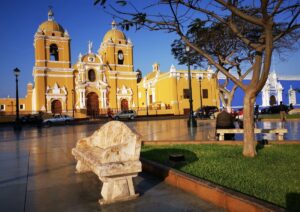
What Peru gave him, above all, was the confidence that his vocation could stretch. That the quiet young man from Dolton could live in a foreign land, absorb a different culture, reshape a regional Church, and still remain, at the deepest level, Augustinian: inwardly searching, outwardly serving.
When he speaks now of “the voices of the poor and the marginalised,” he is not reciting a theme. He is remembering people whose names he can still summon in prayer. The road to Rome began in Dolton, but its decisive turn was taken in Peru.
2013 ONWARDS
By 2013, after a dozen years as Prior General, Robert Prevost had become one of those rare figures in the Church whose influence is both widely felt and barely spoken of. Vatican people would describe him in their small, exact ways. “Serious,” one said. “Not forbidding. Just serious.” Another: “He has that way of speaking as if he has already listened.”
He had finished his second term with the unmistakable look of a man who had poured himself out. His Augustinian brothers granted him a “pause” – a period of rest. But the pause did not last long.
Francis had been elected that spring – the unexpected Jesuit with the unexpected mandate –and one of his instincts was to bring missionaries closer to the heart of things. The new Pope had little interest in careerist clergy. He wanted men formed by experience rather than ambition, men who had prayed in simple chapels and eaten whatever was placed before them.
Prevost returned to Peru in 2014 to oversee Augustinian formation. A Peruvian priest recalls: “He arrived with an almost embarrassing humility. But then he began to arrange things –gently, but with a certain steel.”
Then came the moment that startled even those who had admired him. In 2015, Francis appointed him bishop of Chiclayo. If anything, being made a diocesan bishop clarified him. He spent hours each week in parishes, visited schools and hospitals, wrote pastoral letters striking for their absence of self-importance. But he was also prepared to speak against certain trends he saw in society. In one he writes: “The truth of human person male and female is not a cultural construction but a divine gift. We must resist ideologies which confuse children and distort God’s plan. The family, as designed by God, is the sanctuary of life and love. No one has the authority to redefine this foundation.”
Things were beginning to move rapidly. Francis had a longer plan in mind. In 2020, Francis appointed Prevost to the Congregation for Bishops – the body that had, for decades, been one of the Church’s most guarded machines. Its task was delicate: to sift candidates for episcopal leadership, assess their character, judge their suitability.
Then, three years later, the decisive act: Francis appointed him Prefect of the Dicastery for Bishops. One Peruvian priest said, “Rome has taken our bishop because they needed someone who will not lie.” A seasoned Vatican diplomat said privately, “He is not afraid of the powerful. And he is not dazzled by them.” The impression throughout this rapid rise is of someone who makes few enemies and many friends – and does so by learning that listening is a far more promotable quality than talking.
His appointment sent a signal that Francis wanted a particular kind of episcopal culture: less ideological posturing, more pastoral reality; less clerical defensiveness, more transparency; fewer princes, more shepherds.
Inside the Dicastery, his staff learned his habits. He asked more questions than his predecessors. He disliked jargon. He took long walks in the
Vatican Gardens when facing decisions about bishops who would shape whole nations’ spiritual futures. Again the impression is of someone who hadn’t hugely changed, who had enough spiritual room in himself to accommodate new positions without being overwhelmed. It is a rare gift: to be able to find space when the world is bearing down on you with its demands.
By 2024, Rome knew he was different. By 2025, Rome knew he was indispensable.
His name shifted category. It ceased to be the name of a Dicastery prefect and became the name of a possible pope. One Italian who had known Prevost for twenty years told a journalist: “He is not the kind of man who seeks the papacy. But he is the kind of man the papacy seeks.”
THE DRAMA OF THE CONCLAVE
By the time Francis died in April 2025, Robert Prevost had become something highly unusual in the modern Church: a man everyone trusted and no faction could quite claim. That alone made him quietly powerful. As prefect of the Dicastery for Bishops, he had become one of the few figures in Rome who lived with a daily, unfiltered view of the Church’s wounds.
What colleagues noticed in Prevost during those years was his steadfast refusal to speak the language of camps. While the Catholic commentariat organised itself into tribes –restorationist, integralist, synodalist – Prevost kept his vocabulary stubbornly pastoral. Asked what he looked for in a bishop, he would answer in disarmingly simple terms: that a bishop must be a pastor, not a manager; a witness of hope.
He was, undeniably, close to Francis. But closeness to Francis did not make him a Francis clone. Francis could be blunt, impatient, almost performatively allergic to the grand manner. Prevost was careful, introspective, almost monastic in stillness. Where Francis provoked, Prevost absorbed.
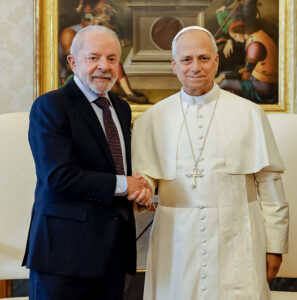
Presidente da República, Luiz Inácio Lula da Silva, durante audiência com Sua Santidade o Papa Leão XIV. Biblioteca do Palácio Apostólico, Vaticano.
Foto: Ricardo Stuckert / PR
To understand the conclave that followed Francis’s death, one must understand the decade-long drama behind it. Benedict and Francis had become symbolic totems for two different Catholic imaginations. Prevost was caught between those worlds. He respected Benedict’s theological lucidity; he admired Francis’s pastoral courage. He was, in a phrase used by one Roman old hand, “a Francis man without the Francis heat.”
It was this mixture that made him a trusted figure among cardinals. He did not lobby; he did not cultivate journalists; he did not try to neutralise enemies because he did not seem to have any. For a Church exhausted by a decade of online vitriol, that combination felt like just what was needed: a de-escalation. Many cardinals felt the Church had spent too long performing its divisions. They admired Francis’s courage but wanted a less polarised atmosphere. They wanted continuity without the ideological fever.
This was where Prevost entered the frame. He had Francis’s trust but was not a Jesuit. He defended Vatican II but did not scold those attached to older liturgies. He came from the United States but carried little of the American imperium; after three decades in Peru, he seemed culturally bifocal.
The conclave, when it began, carried a strange intensity. The cardinals entered the Sistine Chapel sensing the weight of needing to choose someone who could restore a measure of internal peace.
The early ballots scattered widely. But as discussions continued, Prevost’s name slowly gathered density. What impressed his peers was not ideology but equilibrium. One French cardinal said privately that Prevost “knew the global Church the way a confessor knows a penitent – from the wounds inward.”
On the second day of voting, the tide turned. The Francis-appointees trusted him not to dismantle their pope’s reforms. The Benedict-leaning traditionalists took comfort in his sobriety. The Italians saw a man who understood the Curia without being devoured by it. The Latin Americans
felt a filial pride.
By the fourth scrutiny the decision was sealed.
When the white smoke rose, the announcement came: a name the world did not expect to hear. Leo the Fourteenth. An American Leo—a name with echoes of Leo XIII, the pope of industrial justice and modern Catholic social teaching.
When the man himself stepped onto the balcony, the contradictions that would define his papacy were immediately visible. He wore the traditional mozzetta and lace rochet that Francis had abandoned – traditionalists cheered; liberals flinched. But when he spoke, the tone was unmistakably Franciscan: “God cares for you, God loves you all, and evil will not prevail.”
Within hours, the interpretation industry got to work. The truth is simpler: Leo XIV was neither a return nor a rupture. He was what the cardinals, in their collective exhaustion, had decided the Church needed: a man of equilibrium – Augustinian interiority, Franciscan compassion, Benedictine seriousness – who might lower the temperature and restore the sense that the Church was not a battlefield but a communion.
THE PONTIFICAL DAY TO DAY
So what is his life like now? The Catholic Church is not merely a religion; it is a vast organism spread across every continent, a planetary nervous system of parishes, dioceses, charities, schools, hospitals, mission posts, and refugee camps. It counts more than a billion adherents, making it the largest non-governmental educational and healthcare provider in the world.
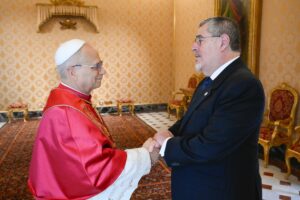
And yet the Vatican itself, over which the American now presides, is shockingly small. A few thousand employees. A bureaucracy no bigger than a mid-sized liberal arts college. The pope’s immediate staff is tiny. So what is his working life like? A pope wakes before dawn to pray, to read, to celebrate Mass. Then come the audiences: a head of state, scientists, disabled pilgrims. Afterward there are meetings with the Secretariat of State, with financial officials, with the prefects of dicasteries. There are decisions about bishops to approve, decrees to sign.
A pope must balance the demands of doctrine, diplomacy, liturgy, economics, and mercy, holding together Rwandan farmers, German bishops, Filipino domestic workers, Brazilian charismatics, French intellectuals, American culture warriors, and the Ewe grandmother at the back of a random parish whose faith matters as much as any of the others.
What does success look like in such a role? History gives us clues. The great popes are remembered less for flamboyance than for clarity. Gregory the Great held the Church together in the ruins of the Roman Empire. Leo the Great faced down Attila. Leo XIII navigated the industrial age. John XXIII threw open the windows at Vatican II. John Paul II spoke across continents with the authority of a poet-statesman.
Success means the ability to read the times without being swallowed by them; the courage to reform without factionalising; the grace to hold unity when unity seems impossible.
Leo XIV inherits a Church still marked by the double exposure of Benedict and Francis. Their two pontificates created one of the most unusually emotional decades in modern Catholic memory. The battles over Vatican II, over the Latin Mass, over synodality – these have left the Church with something between an identity crisis and a family feud.
Leo’s challenge will be to impose neither nostalgia nor revolution but a kind of interior coherence. Augustine would call it making the heart one. The modern world might call it leadership.
LOOKING TO THE FUTURE
And so we find him now – the grave-digger from Dolton, the Augustinian mathematician, the missionary of Northern Peru – stepping off the papal plane into the light of Ankara for his first foreign visit. Behind him, the Vatican press corps shifts; ahead, the Blue Mosque waits, and beyond that, Nicaea – or Iznik, as it is now called – where the year 325, the year of the Nicene Creed, will be celebrated, and the question of the unity of the Church looked at anew. As usual, it is all an impossible balancing act for the Pope.
He descends slowly. This is not a man who wastes gestures. On the plane, he had given what amounted to a one-sentence précis of his entire vision: that all men and women “can truly be brothers and sisters, in spite of differences, in spite of different religions.”
Turkey is a clever choice for a first journey. At Nicaea, he knows he will stand where bishops once hammered out the Nicene Creed. The original council was a drama of unity in an empire fraying at its edges; the modern commemoration, 1,700 years later, is similarly charged. He will speak not of triumph but of wounds, the Augustinian lexicon in which healing is always slow work.
Then to Lebanon – a country shaken again by violence. He will meet faith leaders and young people; he will pray at the Beirut waterfront, the site of the port explosion. There is something fitting about this: the grave-digger who once learned mortality in Illinois soil now standing before the scar of another city’s catastrophe.
What is striking, six months into this papacy, is how carefully he has walked the tightrope his predecessor left behind. Francis was not a pope of consensus; he governed by instinct and provocation. Leo XIV’s style has been different. He has retained Francis’s moral commitments – on migrants, on ecology, on the dignity of workers – but he has delivered them with a different pitch: measured, steady, almost judicial in cadence.
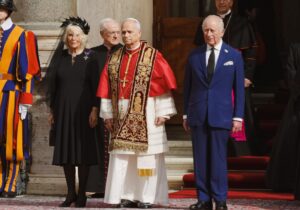
Progressives claim him because he speaks of accompaniment, the poor, the wounded. Traditionalists claim him because he speaks of truth, the Creed, the Fathers. Both are partly right and partly wrong – which, in papal terms, is usually a sign of a balanced pontificate.
What is more interesting is how this trip foreshadows the papacy to come. Nicaea is not merely an anniversary; it is a reminder that Christianity, at its most foundational, is a faith born of councils – of men gathering, disagreeing, arguing, conceding, refining, praying. It is synodal by birth. The pope’s presence there is a kind of enacted homily: communion, not combat.
What, then, might the future look like for Leo XIV? Something quieter than revolution and more demanding than restoration. In the best case it will be a papacy of dialogue that is not mushy, of truth that is not brittle, of mercy that is not sentimental. He seems intent on neither scolding the world nor flattering it, but translating the Gospel into a language the world might still recognise as human.
This first journey – to Turkey, to Lebanon, to the very birthplace of the Creed—feels like more than a diplomatic itinerary. It is a subtle declaration of method: the pope stepping not into the centres of power but into the wounded peripheries of history, where Christianity once defined itself and where it must define itself again.
When he returns to Rome, he will be the same man. But he will have begun to trace the outline of a pontificate whose success will depend less on grand gestures than on the slow, almost monastic work of healing – a task Augustine would have understood.
In the end, he keeps returning to the same conviction: that truth is found in encounter, that the Church’s task is accompaniment, and that the world, for all its rage and acceleration, is still capable of listening.
POPE LEO XIV EDUCATION TIMELINE
1955 – Born September 14, 1955, in Chicago; raised in Dolton, Illinois.
1973 -Graduates from Thornridge High School, Dolton.
1973–1977 – Enters Villanova University, an Augustinian institution. Earns a Bachelor of Science in Mathematics (1977).
1977–1981 – Enters the Order of St Augustine, making his solemn profession of vows in 1981.
1982 – Ordained a priest on June 19, 1982.
1985–1999 – While completing doctoral work, he is assigned in rotation to Peru beginning in 1985. Works in formation, parish ministry, and later in leadership roles.
2001–2013 – Elected Prior General of the Order of St Augustine — global head of the Augustinians. Based in Rome; oversees all Augustinian houses and international formation.
2015 – Appointed Bishop of Chiclayo by Pope Francis.
2023 – Appointed Prefect of the Dicastery for Bishops and created Cardinal.
2025 – Elected Pope Leo XIV.