




 BBC News
Borrowing was £17.4bn last month, the second highest October figure since monthly records began in 1993.
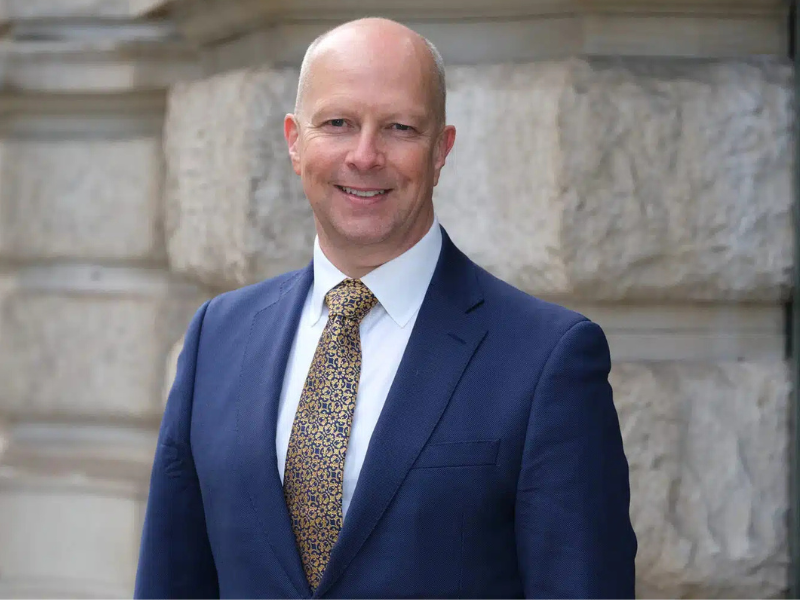
Mark Plummer
Having spent much of my career in private banking and wealth management, one thing has remained remarkably consistent: our industry is built on trust.
Products evolve, markets rise and fall, regulations change, and technology advances, but clients continue to place their confidence in people. In my experience, the strongest relationships are rarely built on technical expertise alone. They are built on understanding, judgement, empathy and the ability to provide clarity when circumstances are complex.
That is why I find the current debate around artificial intelligence so interesting.
There is no question that AI will transform financial services. In fact, it already is. From analysing data and producing reports to streamlining administration and improving operational efficiency, the opportunities are enormous. Every private bank, wealth manager and family office will either be using AI or actively exploring how to do so in the near future.
As with every major technological shift, those who fail to adapt will struggle to remain competitive.
Yet I suspect we are asking the wrong question. Much of the discussion focuses on what AI will replace. A more interesting question is what it will make more valuable.
The reality is that access to AI will not, in itself, become a differentiator. The technology is advancing rapidly and becoming increasingly accessible. Over time, most firms will have access to broadly similar tools and capabilities, but I already see some organisations making the mistake of viewing AI as the destination rather than the tool.
In my view, what will distinguish the best firms is how effectively they combine technology with human expertise.
Family offices and wealth managers do not simply provide information. They help clients make sense of it. They listen, interpret, challenge, guide and occasionally reassure. They understand the nuances behind a balance sheet, an investment portfolio or a succession plan.
A family considering how to transfer wealth across generations is not looking solely for an answer generated by a machine. AI cannot fully understand the complexities of family relationships, and no two families are ever quite the same. Clients need someone who understands not only the financial implications of a decision, but also the personal dynamics that often determine whether a strategy will succeed.
Technology can support that process, but it cannot replace it. In many respects, I believe AI will increase the value of relationship skills rather than diminish them.
As routine tasks become increasingly automated, however, advisers will have more time to spend with clients. Their value will shift further away from gathering information and towards interpreting it. The ability to explain complex issues clearly, navigate uncertainty and build genuine trust will become even more important.
Those skills have always mattered but they are now becoming critical, and that has significant implications for how we develop talent within our industry.
One of my greatest professional satisfactions has been mentoring and helping people grow. Throughout my career, I have worked with many talented individuals, and one lesson stands out above all others: technical knowledge can be taught relatively quickly, but judgment takes years to develop.
The best advisers are not simply knowledgeable. They are personable. They are curious. They listen carefully. They understand context. They know when to challenge and when to support. Most importantly, they recognise that every client is different.
These qualities are developed through experience, observation and guidance from others.
That is why mentoring remains so important. Much of what makes someone successful in private banking or wealth management is not found in a training manual. It is learned through conversations, client meetings, difficult decisions and exposure to experienced professionals willing to share their knowledge and experience.
As leaders, we have a responsibility to create those opportunities.
The firms that succeed in the years ahead will not necessarily be those with the largest technology budgets. They will be those who invest in people with the same commitment they invest in technology. They will develop future leaders who are comfortable using AI while also possessing the emotional intelligence, commercial judgement and relationship skills that clients value.
The irony is that the more sophisticated technology becomes, the more clients are likely to appreciate the qualities that technology cannot replicate.
Discretion. Integrity. Empathy. Trust. These are not new concepts, but they remain central to every successful client relationship.
Family offices perhaps understand this better than most. Their role extends far beyond managing assets. They often become trusted advisers across multiple generations, helping families navigate complex financial, business and personal decisions over many years. That level of trust is earned through human connection, not technology.
AI will undoubtedly help organisations operate more efficiently, analyse information more effectively and improve client service. Those benefits should be embraced.
But while clients may value faster reporting, deeper analysis and greater efficiency, what they tend to remember is the adviser who understood their concerns, helped them make difficult decisions and provided confidence when it mattered most.
That has always been the essence of exceptional private banking and wealth management, and I suspect it always will be.
As our industry enters the next phase of technological change, the organisations that stand apart will not simply be those with the smartest systems. They will be those who continue to develop exceptional people who can turn information into insight, technology into advice, and relationships into lasting value.
In an increasingly digital world, I strongly believe that people will remain the most valuable asset of all.