



 BBC News
Borrowing was £17.4bn last month, the second highest October figure since monthly records began in 1993.
Finito World
There are moments when a politician finds not merely a policy, but a subject.
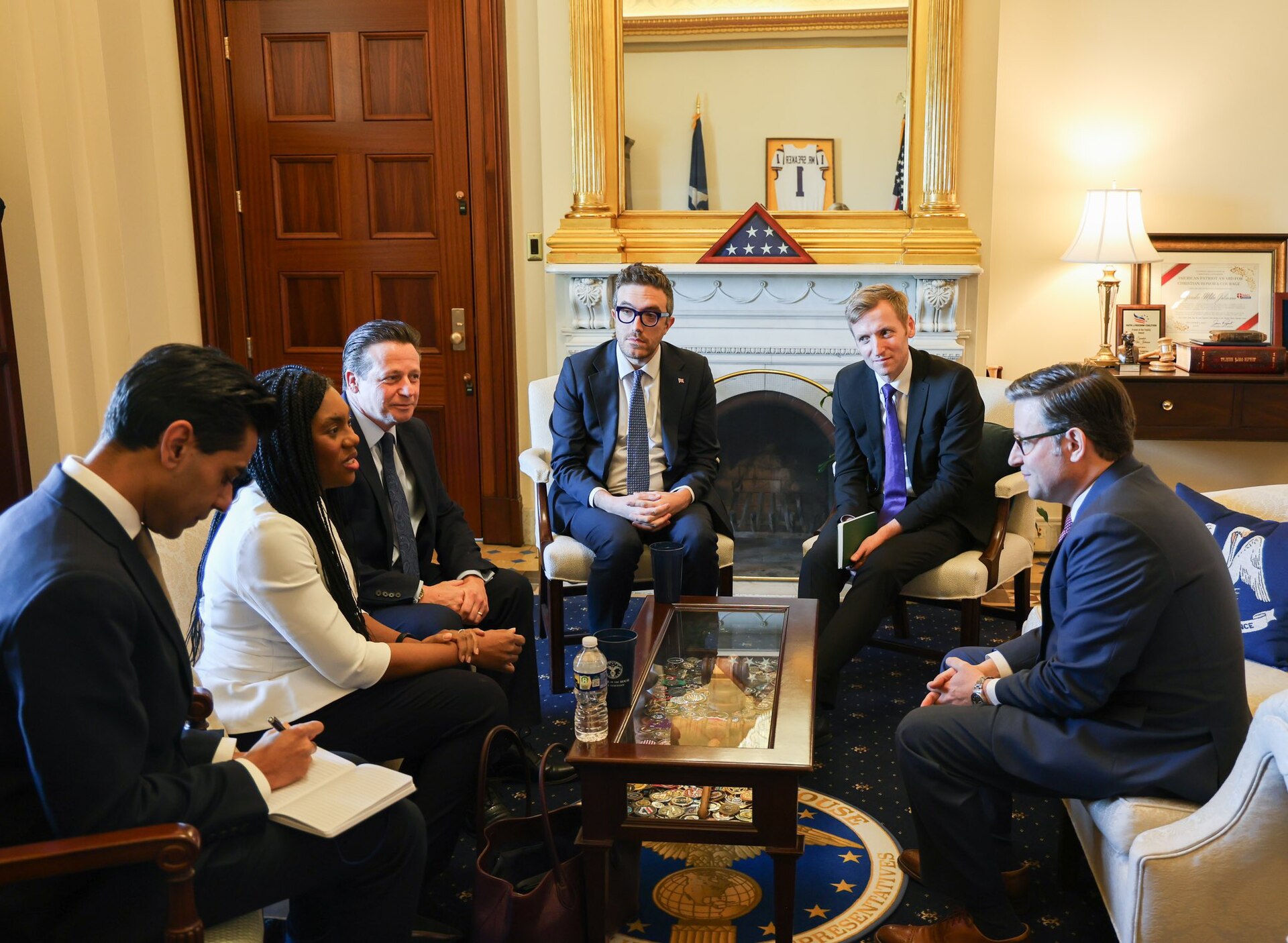
For Kemi Badenoch, that subject may increasingly be work.
The latest Conservative welfare proposal is eye-catching enough. Those capable of working who remain unemployed for more than six months, and who have not accumulated sufficient contribution through previous employment, would see their Universal Credit reduced to a 70 per cent “subsistence allowance”. This would be paid through a card which could not be used to buy alcohol or cigarettes, gamble or withdraw cash.
There will be plenty of argument about the mechanics. There should be. Any system which gives the state greater control over how individuals spend their money deserves scrutiny, and the Conservatives will need to demonstrate that the apparatus required to administer it would not swallow up its intended savings.
But concentrate too closely on the card and one risks missing the larger political development.
Badenoch is beginning to put work at the centre of her political philosophy.
This is potentially more consequential than another argument about welfare. Political parties tend to prosper when they can explain themselves in a word or two. Thatcher had enterprise and ownership. Blair had opportunity and modernisation. Cameron, at his best, talked about responsibility and the Big Society. The trouble for the Conservatives since 2024 has been that it has often been difficult to say what their central proposition is.
Badenoch may now have an answer: work.
It is becoming the thread connecting apparently separate parts of the Conservative programme. Welfare should encourage people who can work to do so. Businesses should be allowed to invest, hire and grow. Young people entering employment should be rewarded. Taxation should not excessively penalise those who work and accumulate assets. Government itself should become leaner and more productive.
Whether one agrees with each prescription is another matter. But a philosophy is beginning to emerge.
And work is fertile political territory because it is about considerably more than Treasury arithmetic.
At Finito World, we have always believed that work is one of the central structures of a life. At its best, it provides income, certainly, but also routine, relationships, expertise, confidence, independence and purpose. A first job is rarely just a first pay packet. It is one of the important transitions into adulthood.
That makes Britain’s economic inactivity problem something more troubling than a line in the national accounts. If large numbers of people, particularly young people, become detached from employment for long periods, the loss cannot adequately be expressed in billions of pounds. Skills go undeveloped. Confidence can diminish. Networks never form. The habits through which people discover what they can contribute to society are harder to acquire.
This is where Badenoch’s argument becomes more interesting than the familiar Conservative demand simply to cut welfare.
There is an important distinction between saying that benefits cost too much and saying that work is good.
The first is an accounting proposition. The second is a proposition about human flourishing.
It also imposes obligations on Conservatives themselves. If work really is to become the centre of Badenoch’s politics, it cannot only mean being tougher on somebody who has been unemployed for six months.
It must mean asking why the first rung of the employment ladder has become difficult for some young people to reach. It must mean apprenticeships and training. It must mean an education system sufficiently connected to the economy it serves. It must mean encouraging employers to take chances on inexperienced applicants. It must mean confronting the effects of technology, including AI, on entry-level employment. And it must mean ensuring that someone who does the right thing and goes to work can reasonably expect life to improve as a consequence.
There is also a danger in political rhetoric which divides the country too neatly into strivers and shirkers. Human lives are usually messier than political categories. Illness arrives. Companies fail. People care for relatives. Industries disappear. Confidence collapses. A serious welfare system has to retain both discernment and compassion.
Indeed, the most interesting element of the Conservative proposal may be its attempt to recognise contribution. Someone who has worked for decades and suddenly loses their job would be treated differently from someone capable of employment who has made little contribution to the system. Whatever one thinks of the precise mechanism, the underlying idea is recognisably reciprocal: society supports us when we need it, but where we are able to contribute, something is expected in return.
That principle has deep roots in the British welfare settlement.
The challenge for Badenoch is to turn it into something larger than welfare conditionality.
A politics of work would need to celebrate the engineer and entrepreneur, certainly, but also the nurse, teacher, waiter, care worker, electrician, delivery driver and apprentice. It would need to understand that the dignity of work does not depend upon the glamour of the job. And it would need to recognise that government cannot command meaningful employment into existence: ultimately businesses, institutions and individuals create it.
This is why Badenoch’s emerging emphasis is worth watching.
The Conservatives have spent much of the period since their 2024 defeat debating what they are against. Against higher taxes; against excessive regulation; against expanding welfare; against aspects of the post-Blair constitutional settlement.
Opposition inevitably contains opposition.
But successful political projects eventually require a positive noun.
Work might be Badenoch’s.
If so, today’s benefits announcement will ultimately matter less for what can or cannot be bought with a particular payment card than for the
philosophy sitting behind it.
The important question is becoming not merely how much welfare Britain can afford.
It is what kind of country Britain wants to be — and what place work should occupy within it.