


 BBC News
Borrowing was £17.4bn last month, the second highest October figure since monthly records began in 1993.
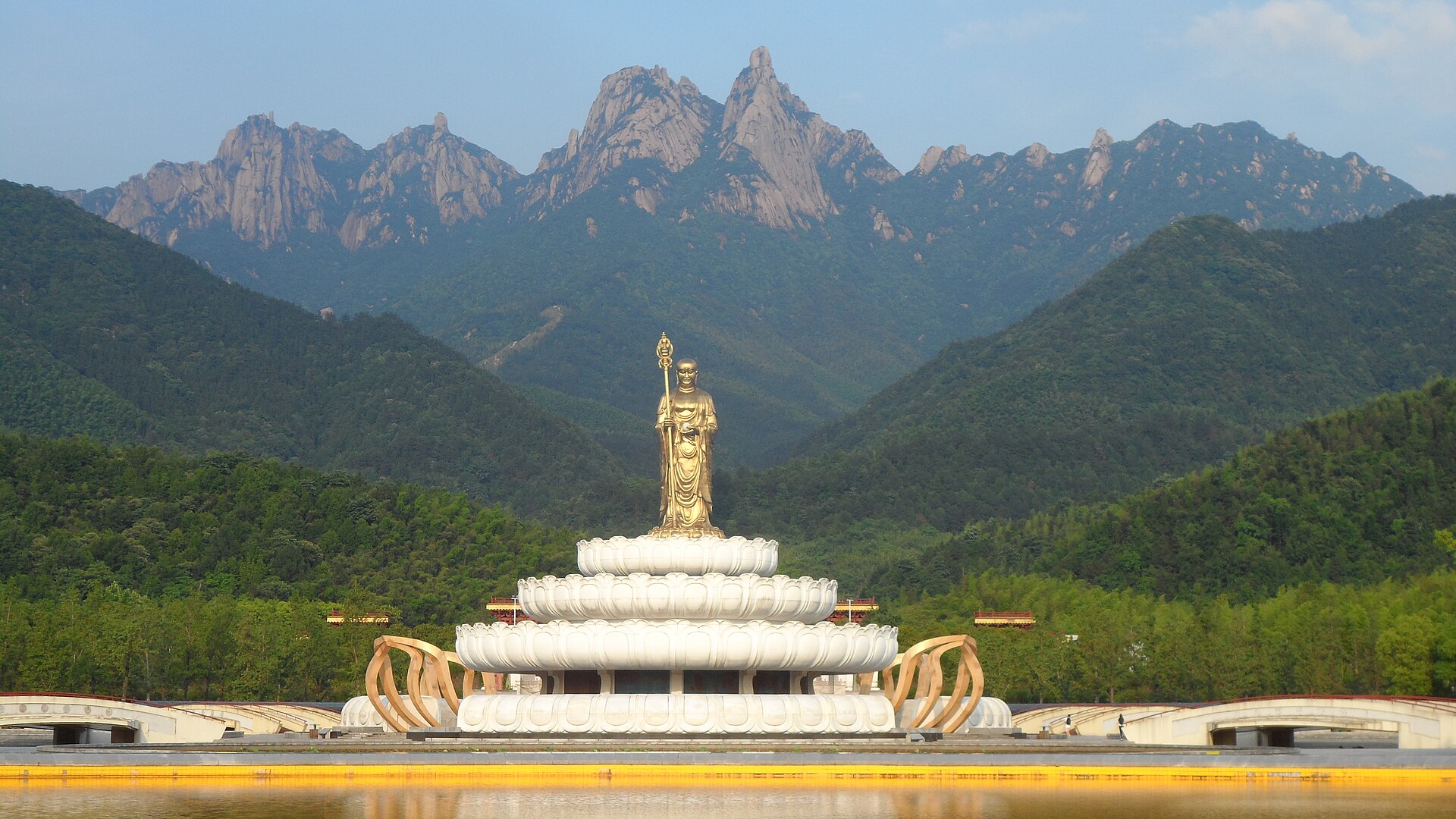
Travel writer, novelist, biographer and lecturer, Sarah Tucker reflects on a journey through China’s Anhui Province that proved more challenging, and more therapeutic, than expected.
Over the past few months, I’ve been reflecting on a recent trip to China’s Anhui Province, a place I can only describe as a kind of meditative migraine: sometimes painfully confusing, sometimes unexpectedly peaceful, always memorable. It’s a region marketed as “China in miniature,” which makes you wonder what the full-sized version is trying to prove.
Anhui is small only by Chinese standards, 350 miles from north to south, home to over 60 million people, and with more UNESCO designations than your average European country. On the surface, it offers a rich tapestry of paddy fields, misty mountains, ancient villages and artistic heritage. Beneath that, however, it offers something else entirely: a recalibration of what travel really means.
Tourism here is a curious thing. The Chinese are famously enthusiastic domestic travellers, a high-speed, see-tick-move-on kind of enthusiasm. Try finding the ‘peace’ in “peaceful beauty” when you’re sharing a sacred site with 10,000 others brandishing selfie sticks and shrimp crackers. Still, if you choose wisely and travel off-peak, you may glimpse what lies behind the neon of Hefei or the stone courtyards of Hongcun.
Hongcun, by the way, is a painting come to life, quite literally, as there are students from local art colleges everywhere capturing its ox-shaped water system and lakeside homes. There are narrow lanes, red lanterns, elderly residents in jeans, others floating by in silk robes, often with a smartphone where a fan should be. The scene is charming, if a little staged, like the Chinese Cotswolds, only with more rice and less cream tea.
Of course, there are moments where the modern Chinese temperament takes centre stage. The culture can be abrupt. Personal space is less a right and more a suggestion. One moment you’re bowed to politely, the next you’re barked at to move, by a security guard, a fellow tourist, or a child with a megaphone. A Portuguese ambassador in our group told me, “Shout back. They’ll respect you for it.” I wasn’t sure if I should laugh or take notes.
Then there’s Mount Huangshan. Yes, that Huangshan, pine trees growing out of rock, Avatar-style stone peaks rising from mist, clouds so low you think you can walk on them (please don’t). It’s beautiful, enormous, exhausting. Porters carry supplies up narrow steps with planks across their shoulders, rewarded not with applause but pay-by-the-kilo. Their abs alone deserve UNESCO status.
Distances here are misleading. Everything is an hour, or two, from everything else. You’ll spend as much time on a coach as at the site itself. But it’s what you see from the window that stays with you: farmers in conical hats, hay bales in perfect symmetry, villages preserved like museum pieces… or perhaps redesigned as museum pieces. You begin to wonder: is this recreation or reinvention?
That, in many ways, is the heart of Anhui’s contradiction. The region (and much of China) is attempting to resurrect a culture it once demolished. Museums, like the excellent Huizhou Culture Museum, house the artefacts of Confucianism and ancient dynasties with pride, though without much English signage. But there’s a sense, at times, that the culture on display is more reconstruction than revival. It’s Disneyland, but with better tea.
Still, innovation shines in places. The Paper Museum in Langqip Town is exquisite, a building that curves and breathes like it’s made of paper itself. Visitors even speak in hushed tones, rare in a country where volume is often mistaken for vitality. Here, at least, China isn’t imitating its past — it’s creating something new.
Tea is another revelation. The green teas, Huangshan Maofang, Lu’an Guapian, and the black Qimen are soothing, restorative, and nothing like the dusty bags you find in Western supermarkets. The food, however, divides opinion. “Stinky fish” and “hairy tofu” are local delicacies. I lived on watermelon and hard-boiled eggs, unable to brave the gloopy sauces and mystery meats that seem to accompany every dish — even the croissants.
But the real nourishment, if you’ll forgive the pun, is philosophical. Anhui is not a place to tick off, it’s a place to think in. I found myself journaling more than photographing. Not because the scenery wasn’t beautiful, it was, but because I wanted to remember how it felt. The landscapes, the pace, the tension between past and present, they prompt a different kind of reflection. One that doesn’t end when the trip does.
And if I felt uneasy at times, I wasn’t alone. The friends I travelled with, all seasoned wanderers, admitted to moments of awe, confusion, and culture shock. That, we agreed, is the point. This isn’t a holiday. It’s a confrontation, with your own expectations, and the assumptions you carry with you.
Anhui, like much of China, walks a cultural tightrope. Its people are proudly innovative, yet protective of the past. The country has bulldozed its ancient spirit in pursuit of modernity and is now trying, earnestly if awkwardly, to retrieve it. Whether that can be done through glass cases and staged villages is uncertain.
But even if some of the restoration feels performative, the emotional response it evokes is not. You walk away from Anhui changed. Wiser, maybe. Grateful, definitely. Not just for the safe streets or the serene views, but for the jolt to your own perspective.
To paraphrase, or misquote, Durrell: in the middle of China’s summer heat and cultural dissonance, I felt the cool inventions of my own spring beginning to stir.