




 BBC News
Borrowing was £17.4bn last month, the second highest October figure since monthly records began in 1993.
Christopher Jackson
I knew what it would be before it arrived, which is perhaps the most telling detail of all.
There is a moment — familiar now to most drivers in London — when you turn into a street and something in you registers, fractionally too late, that you have crossed an invisible boundary. No barrier, no human presence, no raised voice or outstretched arm. Just the sense that something has quietly, efficiently, recorded you. The wheel straightens, the car moves on, and already another part of the mind has begun its work: the letter will come; the money will go; and though I think the whole thing is slightly unfair, I probably can’t quite be bothered to fight it.
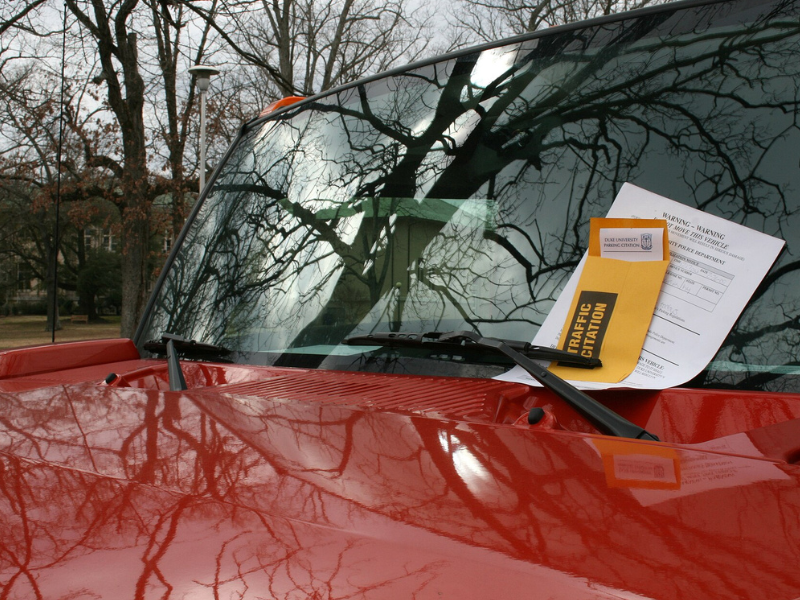
Here’s how it happened. Driving through Norwood, in a part of the city I barely know, looking for a timber merchant, I temporarily abandoned the safety of Waze, and made a wrong turn. I wouldn’t say I was being reckless. It was the sort of error that arises precisely when you are paying attention — to directions, to traffic, to where you are trying to get — rather than when you are behaving badly. I was on a perfectly ordinary errand, trying to be a functioning adult in a functioning city. And yet I knew, almost immediately, that the system would not care about any of that. It never does.
When the letter arrives, I will pay it. I am already resigned to that fact. The sum – a humourless £160, halving itself obediently to £80 if I pay it promptly – doesn’t have the capacity to ruin me, but it is more than capable of annoying me even as I write this. You could say it will sting just enough to make its presence felt, and not quite enough to justify the effort of resistance. This, too, is by design. What troubles me is not the money – although I would quite like to have spent it on shoes for my children or the new brand of Welsh gin my wife likes – but the way the entire exchange feels morally incomplete, as though something essential has been left out of the relationship between the citizen and the state.
Before I go further, it is worth pausing on this sensation itself — the sensation of resignation — because I think it is more interesting, and more politically significant, than it first appears.
Every age gets the discontents it deserves. In the nineteenth century, people rioted over the Corn Laws. In the twentieth, they marched – though not, one sometimes thinks, quite enough – against various taxes, especially the poll tax. In the twenty-first, we sit quietly at kitchen tables and type our debit card details into government payment portals, muttering something under our breath that doesn’t quite constitute protest and isn’t quite acceptance either. There is a word for this condition. In psychoanalytic terms, it resembles what the theorist Slavoj Žižek — following Lacan — called “ideological interpellation”: the moment when the system addresses you, and you recognise yourself in its address, and comply, even though you know perfectly well that the recognition is a kind of trap. “That is the law,” says the guard to Josef K., early in Kafka’s The Trial. “All the worse for you,” comes the reply, when K. admits he has never heard of it. The system is not required to explain itself. It is merely required to persist.
This is not, of course, to compare a moving traffic penalty to Stalinist show trials or Central European totalitarianism. The comparison would be absurd. But there is something in the Kafkaesque architecture of modern enforcement — the invisible authority, the delayed notification, the fine calibrated to deter challenge without eliminating compliance — that Kafka, who spent his professional career as a lawyer at the Workers Accident Insurance Institute in Prague, would have recognised immediately. The bureaucracy does not seek out guilt, as the guard explains to Josef K. It is merely “attracted by guilt.” What is a no-entry camera if not exactly that: a device not designed to prevent an infraction but to register it after the fact, passively, at scale?
From Explanation to Extraction
The Rotherham MP Sarah Champion once told me that one of the great failures of modern governance is the erosion of meaningful communication between state and citizen. Not communication in the sense of campaigns, leaflets, or behavioural nudges, but communication as explanation, as proportionality, as the simple human act of telling someone why a rule exists and how to live within it. One thing she was campaigning for struck me as charmingly simple: that the state would write nicer letters to its citizens.
Her point is not radical, but it is unfashionable. The assumption now is that the law need not persuade, only enforce; that compliance can be engineered without consent; that people will come to accept what they are repeatedly fined for, even if they do not quite understand it. The language of warning, discretion, and first encounter — once central to policing and regulation — has been replaced by the language of liability and settlement windows.
Traffic enforcement is where this shift is most keenly felt. What was once a conversation at the roadside has become a delayed notification through the post. I still watch with envy Ealing comedies when you see the typical establishing shot of St Paul’s cathedral, and people parked cheerfully right outside it: it shows you how much freedom has been eroded in the city under the guise of safety – though, as we shall see, the safety point is an important one. But today, if you trigger a camera, you are not stopped, spoken to, corrected, or cautioned. You are simply informed, after the fact, that you owe money. The relationship is transactional, not civic. It is efficient, but it is thin.
The thinness is not, it must be said, without a certain logic. It is very expensive to have a police officer stationed on every corner of London. Cameras are cheap, tireless, and consistent. They do not have bad days, do not accept bribes, do not make different decisions about the same offence depending on whether the driver is charming or contrite. In the abstract, there is something appealing about the neutrality of the machine. The difficulty is that justice is not, in the end, an abstraction. It is an encounter. It takes place between persons. And when you remove the person from the equation entirely, what you are left with is not justice but processing.
The Numbers
It is worth dwelling here on the sheer scale of what we are talking about, because the numbers have a tendency to induce a mild stupor in those who contemplate them.
In the financial year 2024/25, Transport for London and the London boroughs issued a combined total of 9,462,185 Penalty Charge Notices to motorists. This was a 13.5 per cent increase on the year before, and a 70 per cent increase on the equivalent figure in 2010. The enforcement economy is not merely stable; it is growing at a pace that would make many legitimate businesses envious.
The financial consequences are correspondingly spectacular. Westminster alone declared a net income of £90.6 million from £129.4 million of enforcement revenue in a single year. Motorists across London are, in aggregate, paying the equivalent of roughly £1 billion annually in road charges and fines. Edmund King, president of the AA, has made no attempt to disguise his view of what this represents: “London enforcement that used to be for deterrence,” he has said, “is now a money-making exercise.” His organisation’s head of roads policy, Jack Cousens, was perhaps even more pungent on the subject: “A new road restriction is created, the camera points at the hotspot and sets the trap. It feels like some of these councils would slap a ticket on Santa’s sleigh if they could.”
One could, if one were minded to be uncharitable, dismiss these observations as the inevitable complaint of motoring organisations that have always resisted speed limits and traffic restrictions on principle. But there is something in the structure of the incentives themselves that lends the concern a more serious colouring. Nationally, UK councils reported record revenues of £250 million from speed camera fines alone in 2023, a 15 per cent increase on the previous year. Critics have pointed out that many cameras are positioned not at accident hotspots but in high-traffic areas — a placement that, whatever one says about it, does invite a certain interpretation.
The legal framework is, in theory, designed to prevent councils from profiting from enforcement. PCN income is supposed to cover enforcement costs, with any surplus ring-fenced for transport projects rather than general revenue. In practice, the line between covering costs and generating a reliable income stream has proven somewhat elastic. The government launched a consultation on exactly this question in 2023, with proposals that any surplus from specific traffic contraventions should flow to the Treasury rather than the issuing council. The proposals have not yet been implemented. Councils, one notes, have not been clamouring for their swift enactment.
The Law and Its Afterlife
It matters to say, and to keep saying, that the laws underpinning these systems were not conceived cynically. Lower speed limits, restricted turns, camera enforcement — all arose from serious and humane concerns. Slower traffic does save lives. According to the Royal Society for the Prevention of Accidents, a pedestrian struck by a vehicle travelling at 30–40mph is between three-and-a-half and five-and-a-half times more likely to be killed than one struck at under 30mph. Transport for London’s long-term analysis of roads where 20mph limits were introduced suggested reductions of around 35 per cent in collisions and a similar fall in serious injuries and deaths.
These figures matter. They are not abstractions. They represent children who lived, families who were not bereaved.
But the journey from a good intention to a functioning system is rarely as smooth as the legislative framers imagine, and somewhere along the way from the design of these rules to their administration in 2024, something has gone wrong. The problem is not that we have decided to enforce traffic laws. The problem is that we have built an enforcement infrastructure that has its own logic, its own constituencies, its own financial gravity — and that once such an infrastructure exists, it becomes very difficult to ask whether it is working for the people it is supposed to serve, or has begun, quietly, to serve itself.
Over the past two decades, civil enforcement has become professionalised, outsourced, technologised. Camera systems, ANPR software, PCN processing platforms, legal contractors, debt recovery agencies — an entire enforcement economy has grown up around what were once marginal infractions. Councils under acute financial pressure have discovered that enforcement can be self-funding, even revenue-generating, and once that happens, incentives quietly shift. Warnings become inefficient. Discretion becomes costly. Context becomes an inconvenience.
One thinks here of a distinction that the philosopher Michael Sandel has pressed throughout his career: the difference between markets that allocate goods efficiently, and markets that corrupt the very goods they are supposed to allocate. Sandel’s concern was primarily with domains like healthcare and education, but the logic applies here too. When enforcement of traffic rules is primarily designed to deter dangerous driving and protect human life, it retains its civic character. When it becomes, structurally and financially, a revenue stream, something shifts. The fine is no longer a moral communication — “you have done something unsafe; please don’t do it again” — but a tax on being in the wrong place at the wrong moment. Citizens can feel the difference, even if they cannot always articulate it.
Normalisation Without Justice
This is why Evan Davis’s recent essay on 20mph speed limits is so revealing, and so unsettling, despite its measured tone and evident good faith.
Davis begins, disarmingly, with his own admission: “I like to think of myself as a law-abiding driver. But it was not a total shock earlier this year when I received one of those official notifications in the post.” He describes being caught at 26mph on a 20mph road, and choosing a speed awareness course over penalty points. Like so many others, he accepts the premise of the system without protest.
What follows is not an examination of whether the law itself might sometimes be unjust in its application, but an inquiry into why drivers find it so hard to comply. Davis notes that on 20mph roads, “76% of drivers exceed the speed limit,” with an average free-flow speed of 24mph, and that “one in 10 drivers exceed the 20mph speed limit by at least 10mph.” These are extraordinary figures. In most other domains of law, if 76 per cent of the population failed to comply with a given rule, we would regard this as strong evidence that something was wrong with the rule, or its application, or both. The implied inference would not be that all those people need retraining; it would be that the law had failed to achieve the conditions for its own legitimacy.
But Davis does not treat the compliance figures as evidence of a mismatch between rule and reality. Instead, they are framed as a psychological problem.
For Davis, and for the experts he quotes, the issue is habit, perception, flow. Richard Stephens of Keele University explains that drivers seek a “flow state”, and that when a road feels under-challenging, there is a temptation to “increase the challenge a little bit to get more into that sweet flow spot.” The solution is not to question the rule, but to retrain the mind — through gamification, eco-driving displays, or technological assistance. Later, Shaun Helman of the Transport Research Laboratory offers what may be the most revealing line in the entire piece: “Once you get people behaving in a particular way, they change their outlook and their attitudes on those behaviours.” Behaviour first; attitudes later. Compliance as pedagogy.
This is a view with a distinguished pedigree. It is, more or less, Aristotle’s account of virtue ethics: we become just by performing just actions, even before we fully understand why they are just. There is something to it. But Aristotle’s account assumed a community whose laws were, on the whole, good — laws that tracked genuine virtues, that reflected hard-won collective wisdom about how to live well together. What it did not envisage was a situation in which the laws in question might be calibrated more by financial incentive than by safety need, and in which the mechanism for enforcing them might be primarily designed to extract revenue rather than to change behaviour.
At no point does Davis seriously ask whether a system that criminalises three-quarters of its users might need recalibration, or whether first-time, low-level breaches might merit a different response from habitual or dangerous speeding. The justice of the law is assumed; the task is to normalise it.
The Peculiar Sociology of Being Fined
There is another dimension to all this that tends not to feature in the policy literature: what it actually feels like to be on the receiving end, and whether that feeling matters.
I suspect that it matters rather a lot, and for reasons that are not merely sentimental. The sociologist Émile Durkheim — who thought about law and social cohesion more carefully than almost anyone before or since — argued that the power of legal sanction derived not merely from its coercive force but from the moral authority it commanded. Laws work best when people believe them to be just. They work least well when compliance is achieved purely by making non-compliance expensive. The latter condition is stable, up to a point, but it is brittle: it depends entirely on the cost of enforcement remaining favourable, and it produces no reservoir of social goodwill, no sense that the law and its subjects are engaged in a common enterprise.
This is not an academic distinction. It is, or should be, a practical concern for anyone who thinks about what kind of city and what kind of democracy London is becoming.
The AA’s Cousens made a similar point when he observed that an unexpectedly high number of PCN appeals — nearly 50,000 in 2024/25, a 13.6 per cent increase on the previous year — are now being lodged, and that a significant proportion are being won. “Too many drivers, who are certain they did nothing wrong or the road and sign layout was in effect a trap, paid the half-rate within 14 days instead of contesting the PCN.” The system, in other words, is structured to make the cost of resistance slightly higher than the cost of compliance — not because drivers are usually wrong when they believe themselves to have been unfairly fined, but because the system has been designed to price most people out of contestation. This is, if you think about it, a rather extraordinary thing to have engineered into a civic process.
Elsewhere, Other Possibilities
It does not have to be this way, and it is worth reminding ourselves of that.
In parts of continental Europe, warning-first systems are routine for minor traffic infractions, particularly where no danger has been caused. First-time offenders receive letters explaining the rule, the risk, and the rationale, with penalties reserved for repeat behaviour. Compliance improves not because people are frightened, but because they feel addressed. They have been spoken to rather than processed.
In Germany and the Netherlands, enforcement revenue is more tightly ring-fenced, reducing the temptation for authorities to rely on fines as a funding stream. In some Scandinavian countries, fines are scaled to income. I’m not sure that always works: a Finnish businessman was famously fined over €100,000 for a speeding offence in 2004, on the grounds that the moral force of the penalty should not diminish as income rises. None of these systems abandon safety. They simply retain the idea that law is a relationship over time, not a trap sprung without warning.
The contrast is worth taking seriously. What the Scandinavian model assumes, at its core, is that the law ought to make the same claim on a wealthy person as on a poor one — that justice, in the most basic sense, should not be a function of income. The British system, in which a fixed penalty of £70 or £160 represents a minor inconvenience to a high earner and a genuine hardship to someone on minimum wage, embeds precisely the opposite assumption. It is not an injustice that anyone planned. It is simply an injustice that nobody bothered to correct.
Britain as an Unfair Parking Ticket
And do these feelings ripple out somehow into our sense of politics? Is it too much to say that this sort of thing contributes in some curious way to the rise of Reform? Britain feels like an unfair parking ticket. Not a speed camera, not a congestion charge, not a failed MOT — a parking ticket. The specific, low-grade injustice of the parking ticket: its randomness, its indifference, its air of having been issued by a system that knew perfectly well what it was doing and didn’t much care how you felt about it. If one goes too far down that emotion one finds that among the main candidates only Nigel Farage speaks to it. Many of us try to arrest ourselves from letting that anger overtake us – but especially where £80 is a lot of money to someone that’s hard to do.
This is partly because the unfairness of a parking ticket easily ripples out to a more general sense of things having gone permanently askew. Consider the circumstances in which most of us accumulate these moments. You are not, on the whole, caught while speeding recklessly through a school zone at three in the afternoon. You are caught because you turned left at a junction you had never encountered before, in a part of the city you visit once every three years, having driven there to pick up timber for a project, or collect a child from a birthday party, or drop something off at an elderly parent’s house. You are doing, in other words, the things that a functioning adult in a functioning society is supposed to do. You are being a citizen.
And for this — for citizenship, essentially — you will be taxed. You will be taxed on your income to earn the money with which to buy the wood. You will be taxed on the wood itself. You will pay fuel duty on the journey to collect it. You will have paid road tax for the vehicle in which you make the journey. You will have paid, if you are in the right postcode, a daily charge for the privilege of making that journey within the city limits. And then, for one misjudged turn in an unfamiliar street, you will pay again: not as a criminal, not as a reckless driver, but as someone who simply did not know the road well enough. The cumulative effect is not punitive in any single instance. It is punitive in aggregate.
What makes this especially wearing is that everyone knows it. There is no constituency that defends the parking ticket as good policy. There is no politician who has gone to the hustings on a platform of more rigorous residential parking enforcement in the outer boroughs. There is no philosopher who has argued that the finest expression of the social contract is the PCN. And yet the system persists and grows, year on year, generating more revenue, processing more notices, absorbing more of the quiet daily frustration of people trying to go about their lives in a city that has become extraordinarily complicated to navigate without transgression.
London’s road network has not become more complex by accident. Over the past two decades, the number of controlled zones, restricted turns, bus gates, school streets, pedestrian closures, box junctions, and low-traffic neighbourhoods has multiplied at a pace that signage has simply not kept up with — signs that are often small, poorly positioned, faded, or placed in a manner that suggests they were designed to inform residents rather than strangers. To know all the rules, you would need to know London better than most Londoners do: you’d need to have taken the Knowledge, and then updated it each year. To comply perfectly, you would essentially need to confine yourself to familiar streets. Neither condition is remotely reasonable, and both are in quiet tension with the purposes that a city is supposed to serve.
Returning to the Letter
Even so, when my letter arrives, I will open it, read it, and pay. I will do so not because I believe I have behaved badly in any meaningful moral sense, but because the cost of resistance — in time, energy, and attention — isn’t really worth it to me.
And yet something will linger, as it always does: the sense that the state has spoken at me rather than to me; that I have been processed rather than corrected; that a small opportunity for trust has been missed.
Solon, the ancient Athenian lawgiver, believed that the purpose of law was to reward good behaviour and punish bad, not simply to extract obedience. The distinction matters. One treats citizens as moral agents capable of understanding and growth; the other treats them as variables to be adjusted until dissent fades. That distinction has not become less important in two and a half millennia. If anything, in an age when the mechanisms for mass processing of infractions are not only available but extraordinarily profitable, it has become more urgent than ever.
The philosopher Philip Pettit, writing about the republican tradition in political theory, has argued that freedom is best understood not as the mere absence of interference — I am free if no one is currently stopping me — but as the absence of domination: I am free if no one has the structural power to interfere with me arbitrarily, at will, without explanation or appeal. By Pettit’s lights, a system that imposes fines through automated processes, with no human judgment involved, no discretion exercised, no first warning offered, and appeals priced out of the reach of most people, is one that exercises exactly the kind of domination over its citizens that a genuinely free polity ought to resist. This is not hyperbole. It is the conceptual vocabulary that, applied consistently, explains why the feeling of having been processed rather than addressed is not merely aesthetic irritation but a substantive civic grievance.
None of which is to say the cameras should come down, or that 20mph limits are wrong, or that councils should stop enforcing the rules. It is to say that the current enforcement architecture has drifted, through a series of individually defensible decisions, into a system that is in tension with the values it was designed to serve. The technology is neutral. The incentives are not.
What Would It Take?
So what would a better system might look like?
It would, I think, require at least three things. First: a genuine first-warning system for minor, low-risk infractions, of the kind that operates in parts of Northern Europe. The letter that arrives after a first-time, unobserved infraction would explain the rule, its purpose, and the consequence of a second breach. It would not fine. This is not softness on compliance. It is seriousness about the civic purpose of law.
Second: proper ring-fencing of enforcement revenue, with regular and transparent public reporting. If councils retain surplus income from fines, they should be required to publish exactly how much they retain, and exactly how it is spent. The moment this becomes embarrassing enough that officials feel the pressure to reform the incentive structure, the incentive structure will begin to reform.
Third: a revision of fine thresholds, either to income-scaled penalties, with a fair cap at the high end, or to a structure that ensures the financial sting of a fine is genuinely proportionate to means. A £160 fine means very different things to very different people. A system that affects everyone equally ought, at minimum, to cost everyone equally.
None of this is expensive. Most of it is not even particularly radical. The warning-first model has operated in various European jurisdictions for years without producing road carnage. The income-scaling proposal has solid support in the academic literature on deterrence theory, which consistently finds that the certainty of punishment matters more than its severity for most categories of offence. What it would require is political will — and, perhaps, a willingness to accept that the enforcement economy currently generates money that various parties have an interest in keeping.
A Closing Thought on Kafka
The most famous episode in The Trial is not Josef K.’s arrest, or his various conversations with lawyers and painters and priests, but the parable told to him by the prison chaplain near the end of the novel. A man comes from the country to seek admittance to the Law. He stands before a great door, guarded by a doorkeeper. He is told he may not enter yet. He waits. The doorkeeper gives him a stool and lets him sit beside the door for years, even decades. The man tries every means he can think of to be admitted: bribing the doorkeeper, making persistent requests, observing the fleas in the doorkeeper’s fur collar. Nothing works. As he is dying, he asks why no one else has ever come to seek entry to the Law. The doorkeeper replies: “This gate was made only for you. I am now going to shut it.”
It is possible to read this parable as pure nightmare: the system as a machine for the destruction of hope. But there is another reading. The man from the country spent his entire life waiting outside a door that was made only for him. The door was his. He had every right to walk through it. What he lacked was not permission but the understanding that permission was unnecessary.
I have been thinking about that parable since I turned into the wrong road in Norwood, looking for a timber merchant, doing what people do. The gate of the law, I think, is genuinely meant to be open to people like me — imperfect, distracted, occasionally wrong, never malicious. The question is whether we have built a system that helps us understand it as such, or whether we have built a system that would rather we stand outside it, waiting, paying, until the door swings shut.
The letter will be paid.
The larger question is what kind of civic culture we are slowly normalising in the process — and whether, somewhere along the way, we might remember how to speak to one another again.