



 BBC News
Borrowing was £17.4bn last month, the second highest October figure since monthly records began in 1993.
Iris Spark
As Christmas 2025 approaches, we are once again surrounded by rituals and words that invoke peace. We sing carols about goodwill to all men, we light candles that symbolise hope, we gather in family groups to celebrate traditions that at their best speak of reconciliation.
And yet, beyond the rituals, the reality is one of violence and fracture. Wars burn in Ukraine and Gaza, political violence has risen sharply across multiple continents, and global military spending has surged past $2.7 trillion – more than triple the cost of eliminating extreme poverty worldwide. Few phrases therefore feel as loaded with irony as “peace in our time.” When Neville Chamberlain returned from Munich in 1938, clutching his agreement with Hitler, he announced those words with conviction. Within a year Europe was devouring itself in its most devastating war. Chamberlain’s confidence was recast as naivety, his name became shorthand for appeasement, and the very phrase that had been intended as reassurance was immortalised as a warning.
The paradox Chamberlain illustrates endures. Humanity proclaims its longing for peace, but it appears to need war. The reason is not simply geopolitical calculation but something far deeper: conflict seems woven into the psychological and cultural fabric of our species. At the same time, there are moments when conflict is not merely self-generated but thrust upon us by the existence of genuine aggression. The task of our age is to hold both truths in tension: that war is our addiction, but that sometimes resistance is necessary. Only by acknowledging both can we face the still-open question: is peace ever truly possible, or are we condemned to repeat the cycle endlessly until necessity forces us to change?
HISTORY’S REPETITIONS
The history of human civilisation gives little reassurance. From the very beginning, war was not presented as a deviation from the human story but as its most dramatic enactment. Homer’s Iliad is not a warning against violence but an epic celebrating it. The heroes of Troy are remembered not for diplomacy or compromise but for feats of valour and cunning. Achilles roars that he will “fight until the gods themselves fall silent,” a line that reverberates across centuries as both boast and curse. Centuries later, Thucydides records Pericles’ Funeral Oration, in which the Athenian statesman consoles the bereaved by declaring, “The whole earth is the tomb of famous men,” as though death in battle itself guaranteed immortality. Julius Caesar, in his laconic report to the Senate – “Veni, vidi, vici,” I came, I saw, I conquered – stripped war down to its essence, reducing slaughter to a slogan and turning conquest into a form of autobiography. Napoleon Bonaparte, redrawing Europe with fire and blood, declared, “Glory is fleeting, but obscurity is forever,” ensuring that war would remain the favoured means of self-advertisement for ambitious leaders.
From the Middle Ages through modernity, the cycle never broke – and there were the casualties to prove it. The Hundred Years’ War dragged on through generations, conflict becoming less a series of battles than a way of life. The Thirty Years’ War, nominally fought over religion, consumed central Europe, killing a third of its population, and only ended when exhaustion forced compromise. The American Civil War revealed the paradox of a republic that proclaimed liberty but slaughtered itself over slavery, with Abraham Lincoln’s Second Inaugural Address noting grimly that “every drop of blood drawn with the lash shall be paid by another drawn with the sword.” World War I, trumpeted as “the war to end all wars,” left millions in the trenches, where industrial killing became routine. Simone Weil, reflecting on it later, called it “the most prodigious bloodletting in history.” And it did not end war but taught nations how to mechanise it more efficiently. World War II was more devastating still, culminating in Hiroshima and Nagasaki, where a single weapon could incinerate a city in seconds. The Cold War institutionalized conflict itself, ensuring a state of permanent rivalry through proxy wars fought in Korea, Vietnam, Afghanistan, Angola, and beyond.
WAR AS A STATE OF MIND
The persistence of war cannot be explained by strategy alone. It meets psychological needs. War provides identity: we know who “we” are by knowing who “they” are. It provides belonging: nothing bonds a community like the presence of a common foe. It provides clarity: moral lines harden, choices simplify. And it provides narrative: heroes, martyrs, victories, defeats, all stitched into national memory. Winston Churchill is not voted over and over again our most revered Briton because of what he achieved in peacetime.
If we look to why all this might be, psychology provides some useful answers. Sigmund Freud, in Civilization and Its Discontents, argued that aggression is not a deviation but a permanent part of the human psyche, always seeking expression. He is not the only thinker to have observed a certain inevitability about war. Thomas Hobbes in Leviathan imagined a state of nature in which life was “solitary, poor, nasty, brutish, and short,” with only the Leviathan of sovereign power to restrain it. Rousseau countered that war is not innate but the product of corrupted institutions – but this doesn’t get us very far since it seems likely that those institutions are merely a reflection of innate tendencies.
Into the 20th century, war has continued to seem a necessary part of life. The greatest war philosopher of them all, Clausewitz described war as “the continuation of politics by other means,” making it the most brutal expression of ordinary rivalry. Hannah Arendt, watching the twentieth century’s eruptions, warned that the glorification of violence as a shortcut to political results was itself a temptation humanity never outgrows. These voices, diverse though they are, converge on a sober recognition: conflict is not merely accidental to the human condition but a constant temptation.
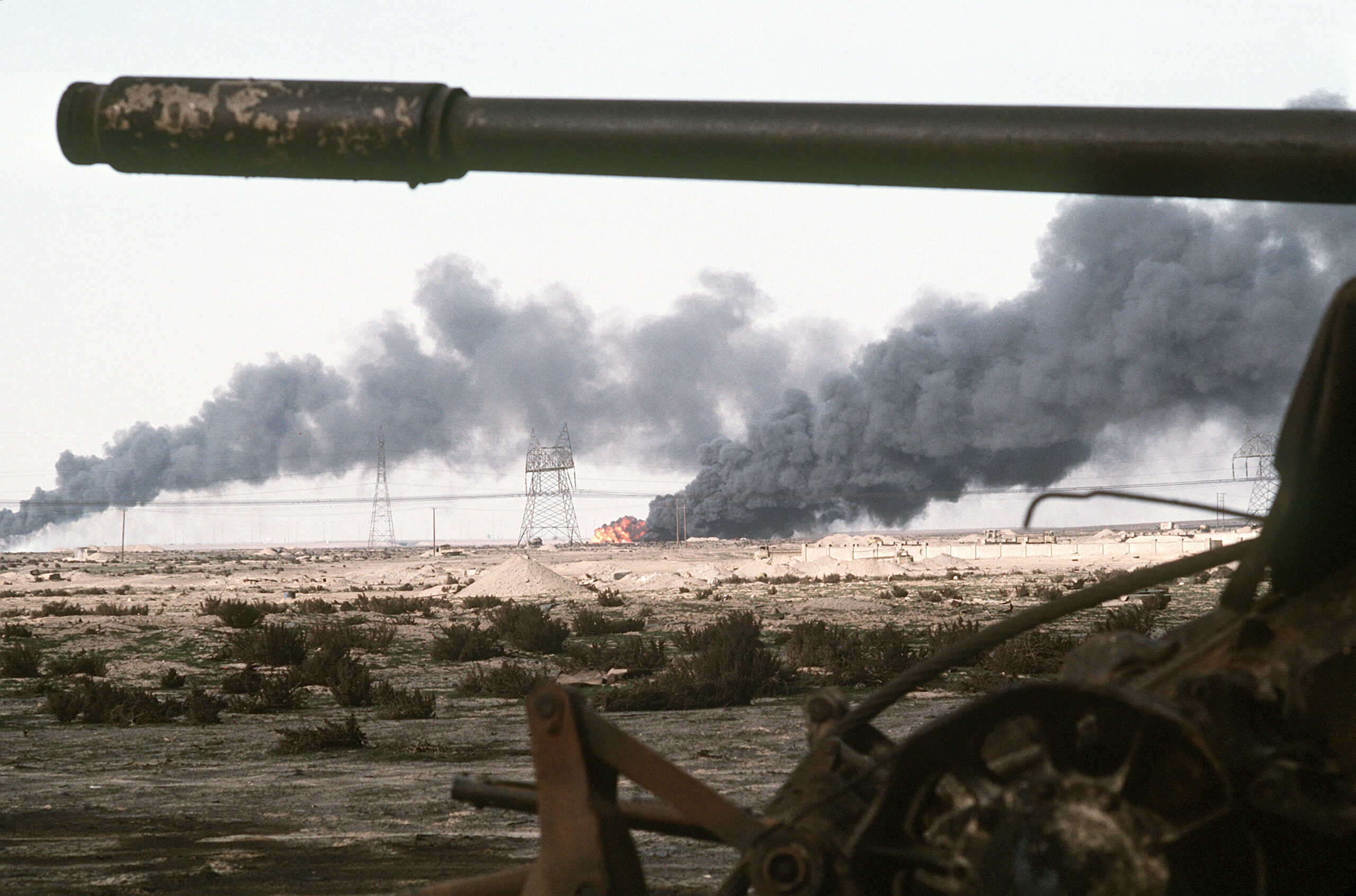
Our own century, now about to enter its second quarter, has given us no reprieve. The campaigns in Afghanistan and Iraq stretched across decades, their aims shifting, their outcomes ambiguous, their human costs staggering. Syria’s civil war remains unresolved, displacing millions and drawing in multiple powers. Russia’s invasion of Ukraine in 2022 reintroduced industrial slaughter to Europe, with cities reduced to rubble and frontlines recalling the frozen stalemates of the past. Gaza has again descended into cycles of rocket fire and reprisal, with civilians paying the price. Across the Sahel, armed groups exploit weak states. Ethiopia has convulsed in civil war, Sudan has fractured, and the South China Sea bristles with militarization. Taiwan lives under constant threat. War is not an exception; it is the background hum of human affairs.
BACK TO THE TRENCHES
Yet there has also for a while been an increasing sense that this isn’t how it should be. World War I deserves more attention, for it marked the moment when the romantic myths of combat collided with industrial modernity. Soldiers went to the front singing of glory, but the reality was mud, gas, and machine guns. The “lost generation” returned traumatized, and yet even the horror of the trenches could be reinterpreted as sacrifice. Siegfried Sassoon and Wilfred Owen tried to capture the pity of war in verse, but politicians erected cenotaphs and monuments that transmuted the carnage into a story of endurance and honour. “Dulce et decorum est pro patria mori” – the old lie, as Owen called it – survived even Verdun and the Somme. War had proved its resilience as a source of meaning – and yet people still read Wilfred Owen. It is the beginning of a kind of hopeful counter-narrative – that perhaps it needn’t be this way.
As the 20th century unfolded, not all responses to violence were fatalistic. Mahatma Gandhi developed satyagraha, “truth-force,” the discipline of nonviolent resistance that proved remarkably successful. Martin Luther King Jr., inspired by Gandhi and by Jesus, spoke of the “beloved community,” in which justice and reconciliation would coexist. Desmond Tutu, presiding over South Africa’s Truth and Reconciliation Commission, declared that “there is no future without forgiveness.” Nelson Mandela, after 27 years in prison, emerged not to wage revenge but to pursue reconciliation, showing that even after generations of oppression it was possible to choose peace. These figures proved that conflict is not inevitable, that spiritual discipline can channel aggression toward transformation.
Of course, you could say that their stories are remembered partly because they are exceptions – and yet they are remembered.
The lesson, then, is complex. Humans do appear drawn to war psychologically, finding identity and belonging in conflict. But some enemies are real, and refusing to recognize them leads to disaster. Chamberlain misjudged Hitler; Churchill, and, after some persuading, FDR, saw the matter more clearly. The challenge is not choosing between psychology and morality but learning how to distinguish between the conflicts we invent and the conflicts we must fight. Without that distinction, we oscillate between cynicism and self-righteousness. With it, we may at least begin to imagine the conditions of peace.
MACHINES OF WAR
If the persistence of war can be explained partly by psychology and partly by the existence of real enemies, it is also shaped by economics. Put bluntly, war has always paid. The empires of antiquity enriched themselves through plunder and tribute. Colonialism cloaked conquest in the rhetoric of civilisation while extracting wealth from conquered lands. The industrial age made war an economic system in its own right, employing millions in factories and supply chains. In our own time, Dwight Eisenhower warned of the “military-industrial complex,” an ecosystem of defence industries, political patrons, and military establishments whose profitability depends on permanent readiness. That ecosystem has not shrunk; it has metastasized. Global military expenditure now exceeds $2.7 trillion annually, with entire communities and economies built around bases, contractors, and research. The costs of peace are diffuse and invisible, but the profits of war are concentrated and immediate.
And yet the arithmetic is an illusion. The Institute for Economics and Peace estimates that the global economic impact of violence in 2023 was $19.1 trillion, equivalent to more than 13 percent of world GDP. This includes not only direct military spending but also the broader effects of refugee flows, destroyed infrastructure, lost investment, and psychological trauma. The resources devoted to sustaining militaries could eradicate extreme poverty, fund universal education, and provide clean water and sanitation. And still we persist. We persist because defence spending feels like insurance, even when it creates the very insecurity it claims to prevent. We persist because it generates jobs in districts, dividends in portfolios, research funding in universities. In short, we persist because the incentives are stacked in favour of conflict.
Religion once provided a counterweight. The world’s great traditions have all insisted that peace is more than the absence of war – it is the cultivation of justice, compassion, reconciliation. The Dhammapada declares: “Hatred is never appeased by hatred in this world. By non-hatred alone is hatred appeased.” The Bhagavad Gita wrestles with the tension between duty and detachment, with Krishna advising Arjuna to act without hatred or greed: “Be free from attachment, and be ever engaged in the performance of your duty without any desire for reward.” Jesus taught in the Sermon on the Mount, “Blessed are the peacemakers, for they shall be called the children of God,” and commanded forgiveness “seventy times seven” times. The Hebrew prophets envisioned swords beaten into plowshares, and shalom as wholeness, not mere truce. The Qur’an counsels: “And if they incline to peace, then incline to it also and trust in Allah,” while the Prophet Muhammad reminded his followers: “The strong man is not the one who can overpower others, but the one who controls himself when angry.”
These traditions recognise that peace is not simply a political arrangement but a transformation of the heart. From Gandhi to Martin Luther King, to Nelson Mandela and many others, all of these examples reveal that peace requires inner change. And yet, in much of the modern world, religion no longer functions as an inhabited moral framework. Matthew Arnold once described Christianity as “a beautiful but lifeless relic.” In Europe, weekly church attendance has dropped into the single digits; in America, it has fallen from 42 percent in the 1990s to around 30 percent today. Without daily discipline, the moral muscles these traditions tried to cultivate have atrophied. Their teachings remain inscribed in texts and monuments, but rarely in practice.
The vacuum is filled by nationalism, ideology, and economics. Nationalism offers belonging. Ideology offers certainty. Economics offers material reward. The result is a world where the restraining voice of religion has weakened and the accelerants of conflict have intensified. Niall Ferguson has argued that wars are rarely fought for ideals alone but are sustained because they redistribute resources, create industrial demand, and consolidate power. The correlation between defence budgets and campaign donations, between arms sales and foreign policy, is evidence enough.
PEACETECH
Technology complicates the picture further. The digital age has given us unprecedented connectivity and equally unprecedented fragmentation. Social media platforms allow individuals to connect across the globe, but they also amplify conspiracy theories, disinformation, and hate speech. The same networks that could foster dialogue have become accelerants of division. At the same time, technology provides tools for conflict prevention that no previous generation possessed. Artificial intelligence can sift through vast data sets to identify emerging risks. Satellite imagery can detect troop movements, refugee flows, and environmental stress. Social media monitoring can pick up spikes in hate speech that precede violence.
Already, initiatives like the Sentinel Project’s Hatebase platform monitor inflammatory language across multiple languages to identify potential flashpoints. Anadyr Horizon has built AI “digital twins” to simulate leaders’ responses to geopolitical moves. Estonia’s SensusQ develops systems to integrate battlefield intelligence and disinformation analysis in real time. Meanwhile, Munich-based Helsing builds AI-enabled defence systems, while the African Union is weaving machine-learning early warning systems into its conflict prevention architecture. The UN itself has begun integrating predictive analytics into its crisis response. The sector known as “PeaceTech” is now a multi-billion-dollar industry, producing both startups and institutional projects.
This convergence of moral urgency and technological innovation is creating career pathways that did not exist a decade ago. The sector needs data scientists who can build predictive models, policy analysts who understand both conflict dynamics and machine learning, software engineers comfortable working with NGOs and governments, and crisis-intervention specialists who can translate algorithmic insights into diplomatic action. The work spans venture-backed startups, international organizations like the UN, defence contractors, and civil society organizations. For graduates torn between idealism and pragmatism, between tech careers and humanitarian work, PeaceTech represents a rare synthesis. It is a field where coding, policy, ethics, and human empathy intersect.
The promise is genuine: early warning systems can buy time for diplomacy, verification tools can make agreements credible, translation software can dissolve barriers, blockchain ledgers can secure compliance. Former diplomat David Landsman, reflecting on the importance of language learning, tells us that “languages are an excellent way to understand quite how differently it’s possible to think.” Nelson Mandela observed that “if you talk to a man in a language he understands, that goes to his head. If you talk to him in his language, that goes to his heart.” Technology can expand this possibility exponentially. But it cannot supply the will. Prediction without action is voyeurism. Tools without institutions capable of acting on them are wasted.
CLIMATE CONTINGENCY
Which brings us to climate change, perhaps the most decisive factor in humanity’s future relationship with peace. Climate disruption makes cooperation not a choice but a necessity. Rising seas will not respect borders. Droughts will drive migration across boundaries. Extreme weather will destroy infrastructure indiscriminately. No nation can solve these challenges alone. The Syrian civil war, analysts note, was preceded by drought that displaced rural populations and heightened urban unrest. Similar patterns are emerging elsewhere: environmental stress interacts with political grievance, turning scarcity into violence. But climate disruption also offers the possibility of shared purpose. If we can frame the struggle against climate breakdown as an “us versus them” narrative—with the adversary being not another people but the destabilization of planetary systems—we may redirect our appetite for conflict toward cooperation.
The economic incentives are powerful. Transitioning from fossil fuels to renewable energy could reshape geopolitics by reducing reliance on concentrated resources. Oil and gas have fuelled wars for generations, but solar and wind are diffuse, widely distributed. Critical minerals like lithium and rare earths will present their own challenges, but cooperative frameworks could manage them better than the cutthroat competition of the past. The Ukraine minerals deal, struck by the Trump administration earlier this year, controversial though it has been, offers a glimpse of how economic interests can be aligned with reconstruction and sustainability rather than conquest. Regional power grids, cross-border water management, cooperative disaster response – all these things can foster interdependence that makes conflict more costly and peace more rewarding. And this, too, has employability implications: climate adaptation will require engineers, policy experts, negotiators, and sustainability officers working across borders.
A SPECIES BACK AT SCHOOL
But since none of this straightforward, or even widely known, education will be the hinge. Today’s youth are the first generation raised in a world of global digital networks. They can speak to peers across continents in real time. They can collaborate on projects across borders. They are already leading on climate and justice. But traditional education systems often reinforce nationalist narratives, competitive models, and zero-sum definitions of success. Military history is taught more often than peacebuilding. Competition is emphasized more than cooperation. If we are serious about peace, education must change. It must cultivate global citizenship, collaborative problem-solving, long-term thinking. It must equip young people to find meaning not only in rivalry but in cooperation.
Language education could play a central role. Landsman’s observation about languages teaching us “how differently it is possible to think” is not trivial; it is a curriculum for empathy. Mandela’s reminder about speaking to the heart in someone else’s tongue captures why. If we could foster empathy through education as intentionally as we foster competitiveness, we might shift the cultural balance. But schools cannot do it alone. Young people learn most from adult example. If adults continue to choose war, children will conclude that war is the natural state of humanity. If adults model cooperation, the next generation may begin to believe another world is possible. When it comes to the question of employability, the question becomes: what skills will tomorrow’s peacebuilders need? Cross-cultural literacy, systems thinking, negotiation, empathy, climate literacy, and the ability to integrate technology into humanitarian contexts. These are the attributes employers in this emerging sector will prize.
Institutions must adapt as well. The United Nations was built to prevent another world war, not to govern artificial intelligence, climate change, or economic inequality. Peace in our time would require new institutions designed around cooperation: global governance mechanisms for climate and technology, legal systems with real enforcement capacity, economic structures that reward collaboration over rivalry, exchange programs that build cultural understanding. The European Union represents one successful experiment, as atrophied as it may sometimes appear today, institutionalising peace among states that had fought each other for centuries. Yet even it is under pressure from nationalist movements that prefer conflict to cooperation. For graduates looking toward careers, this means opportunity not only in traditional diplomatic channels but in new institutional spaces: climate finance bodies, transnational NGOs, peace verification agencies, AI governance boards.
In the end, the challenge is spiritual as much as political. Stephen Cottrell, Archbishop of York, tell me that the most important thing he does each day is to say his prayers: “That is the foundation and heart of my day.” Baroness Ashton describes diplomacy as “both an art and a science, requiring patience, pragmatism, and, above all, an unwavering commitment to peace.” Both testify that peace requires discipline and intentionality, a daily practice as much as a policy. Perhaps peace demands what might be called spiritual maturity: the ability to find meaning in cooperation rather than destruction, to draw identity from creation rather than opposition.
Christmas reminds us of this possibility. The Christ child in the manger, vulnerable and small, represents not triumph but transformation. “Blessed are the peacemakers,” said Jesus, “for they shall be called the children of God.” Chamberlain’s “peace in our time” became a byword for folly because it was built on illusion. But peace in our time could yet be realized if it is built on courage, judgment, and transformation. If we learn to distinguish between enemies we invent and enemies we must resist, if we redirect our hunger for meaning toward cooperation, if we construct institutions that reward peace as much as war, then perhaps the phrase will finally be redeemed.
The choice is ours. We have the tools, we have the warnings, we have the precedents. The question is whether we have the wisdom – and whether we can train and inspire the next generation of professionals capable of turning that wisdom into practice. Peace in our time will not be delivered by wishful thinking but by skilled human beings, willing to make careers out of cooperation rather than conflict.