


 BBC News
Borrowing was £17.4bn last month, the second highest October figure since monthly records began in 1993.
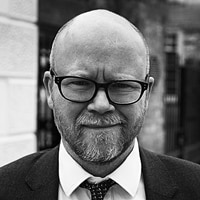
Lord Toby Young
We’ve always styled the Free Speech Union as a nonpartisan organisation, and I think that matters, because free speech shouldn’t just be a concern for people on the right. We go to universities trying to explain to students why free speech should matter to them, and we set up something we call the Academy programme, which gives money to free speech societies and debating societies that want to host good-faith discussions about politically contentious issues. If a university says it can’t afford the security costs for an event like that, we weigh in and pay them ourselves, and if a society gets into trouble for hosting it, we defend them. We’ve been doing exactly that for institutions like the Durham Union, which has run a whole series of debates with our backing, and it’s been working quite well. But it remains a battle to persuade young people, and people on the left in particular, why they should care about this.
I think the ground has shifted a little over the past twelve months, partly because of the pro-Palestinian protests and the trouble people have got into over things they’ve chanted or worn, including arrests for expressing support for Palestine Action. It was telling, I think, that a Labour activist was ejected from the party’s own conference this year. And in America, the Trump administration has been quite supportive of free speech internationally, especially when it comes to Europe, even if it’s been far less reliable in upholding it domestically. That’s made free speech a bigger issue for the anti-Trump left too. We’re always looking for people on the left who get into trouble so we can defend them, precisely to undermine the idea that this is a right-wing cause.
The argument I find most useful with left-of-centre students is to point out that free speech has never simply been a tool for defending the status quo. There’s a common idea that free speech marginalises historically disadvantaged people, that an open marketplace of ideas ignores real power differentials. But historically, free speech has been a weapon of the dispossessed. We wouldn’t have had the suffragette movement and the vote for women without it. We wouldn’t have had the gay rights movement. We wouldn’t have had the civil rights movement in the United States, certainly not without the American Civil Liberties Union winning a string of landmark First Amendment cases that allowed civil rights leaders to organise, protest and march. Free speech has historically sat on the side of the dispossessed, not the powerful. That argument usually lands, even if it’s a challenge to make.
The deeper difficulty with defending free speech is that it goes against a natural human impulse. If someone tramples on something you hold sacred, say you’re a Muslim confronted with someone burning a copy of the Quran, the instinct is to lash out, not to tolerate it. It’s hard to persuade people why they should put up with speech they find deeply offensive. We rely on institutions, our universities, our newspapers, the BBC, to uphold that tradition, and I think they’ve fallen down on the job. Partly that’s the long march through the institutions: those institutions are now largely run by the radically progressive left, and free speech used to be a value they prized when they were on the outside. Now that they’re in charge, culturally if not always politically, it matters far less to them, and they’re not shy about silencing critics who dissent from their own sacred values. So we have to keep restoring belief in the importance of free speech in those very institutions, because you are always fighting against human nature.
I’d slightly hesitate to call myself a free speech absolutist. I don’t think the right to free speech extends to child pornography, official secrets, libel or fraud. There are reasonable, narrow categories where speech has to be restricted. But beyond those, I think the Americans have got it right with the First Amendment. The test should be the Brandenburg test: is what’s being said both intended to and likely to incite imminent lawless action. Unless speech fails both parts of that test, it deserves protection. We fall a long way short of that here, which is why I’ve been asked to lead a commission for the Leader of the Opposition to review the rules that currently restrict free speech in this country and recommend which should be repealed, amended, or introduced. My aim is to get us as close as we can to something like a First Amendment, even though we don’t have the same constitutional machinery, since no Parliament can bind its successor. But the Equality Act has, in practice, managed to bind its successors, so it’s clearly possible to entrench protections politically, by sprinkling an act of Parliament with the right kind of political fairy dust that makes it very hard for a future Parliament to repeal.
It’s worth remembering that America wasn’t always the bulwark for free speech it is today. It took the right justices, at the start of the twentieth century, to interpret it that way. You can pass as many laws as you like protecting free speech, but in practice it depends heavily on judges interpreting them correctly, which is exactly why I worry about the politics of judicial appointments here. The lesson from countries that call themselves democracies but are gradually eroding free speech, whether that’s Thailand, India or Hong Kong, is that free speech is always in a kind of perpetual peril, because defending it runs against the grain of human nature even in places that consider themselves free. I think we could easily slide in the same direction. Digital ID is part of that worry. We’re not there yet, and I’m sure it’s not the government’s intention, but a system like that could in principle be turned into something like a Chinese-style social credit mechanism, where someone could be locked out of payments or public transport for saying something that displeases the regime. It’s a weapon that a future, more authoritarian government could misuse, even if nobody intends that today.
Then there’s the question of how the police actually behave in practice. Take what happened to Graham Linehan, the comedy writer, who was arrested by five armed officers when he landed at Heathrow. I told him that next time, if the police stop him over something he’s said on social media, he should just say he’s a Chinese spy and claim automatic immunity. When he was arrested, he was held for almost twelve hours and only released when his blood pressure rose so high he had to be taken to hospital. We pushed hard and eventually got the police to drop the charges. It turned out a trans rights activist had reported him over three things he’d posted on X. When the police announced they were taking no further action against Graham, we started celebrating, and then, a couple of hours later, came the announcement that they would no longer be investigating so-called non-crime hate incidents either. That felt like an entirely unexpected second round of champagne, and I think it was hugely significant.