



 BBC News
Borrowing was £17.4bn last month, the second highest October figure since monthly records began in 1993.
Meredith Taylor
Pablo Picasso and Francis Bacon never became artistic partners, nor did they share the same vision of the world. Yet their relationship, explored in the Albertina’s compelling exhibition Picasso – Bacon: What It Feels Like to Be Human, is one of the most revealing encounters in modern art. Bringing together their work, the exhibition traces a remarkable artistic inheritance: how Picasso’s revolutionary reimagining of the human figure helped open the way for Bacon’s far darker investigation of the human condition. Both artists understood that the body was more than a subject to be observed or admired. It was a battleground on which desire, aggression, fear, suffering and the brute fact of existence could be played out with startling physical force.
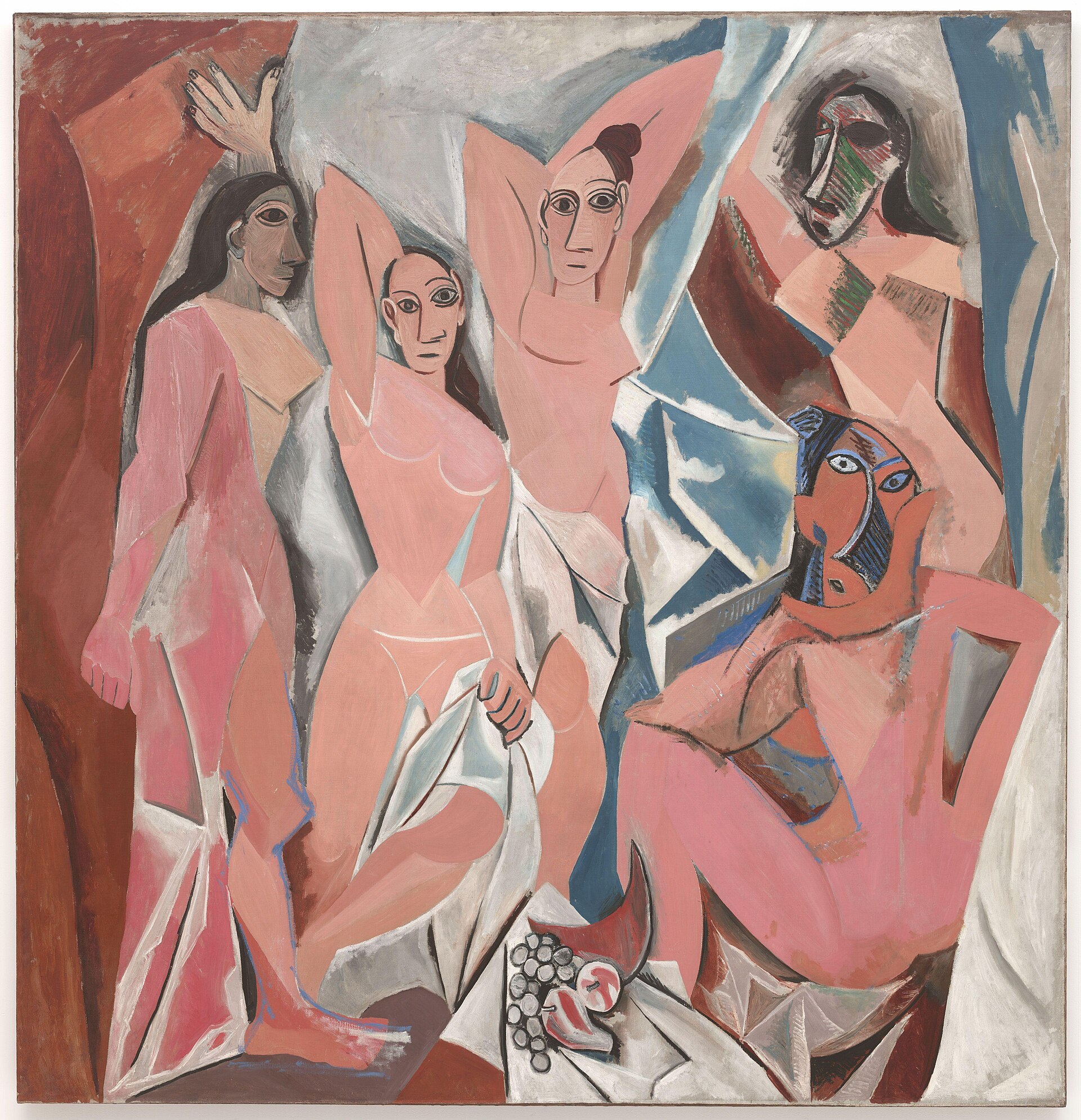
Picasso was the dominant artistic force of the first half of the twentieth century, a restless innovator whose Cubism shattered conventional perspective and whose successive reinventions challenged the very definition of representation. Bacon, working in the aftermath of the Second World War, emerged into a world haunted by mass destruction, existential anxiety and the collapse of traditional certainties. Having encountered Picasso’s work in Paris in 1927, Bacon recognised that painting could be liberated from the obligation to reproduce appearances. He wanted to achieve for his own generation what Picasso had achieved for his: to make the human figure express the deepest contradictions of existence. Neither was content with the body as a harmonious arrangement of limbs, an object of classical beauty or a reassuring emblem of human dignity. Instead, they sought to expose the animal energy beneath the surface, the flesh that bruises, twists, strains and suffers.
The Albertina’s juxtaposition of Picasso’s Bathers with a Ball (1928) and Figure on the Seashore (1929) with Bacon’s contorted figures reveals both the connection and the divergence. Picasso’s bodies become strange, monumental constructions, their limbs and proportions distorted almost beyond recognition. They are not delicate studies of the nude but powerful, sometimes grotesque assemblages of flesh, their exaggerated forms suggesting a physical world in which the human body is neither fixed nor entirely under its owner’s control. There is something elemental about these figures, an almost primitive insistence on bodily presence. Yet Picasso’s formal experimentation retains an element of play, sensuality and Mediterranean vitality. His distortions can be exuberant, even mischievous, as though the body were a pliable substance to be pulled apart and reinvented.
Bacon takes distortion somewhere more disturbing. His figures seem trapped within their own flesh, their faces collapsing under psychological pressure, their bodies twisted into shapes that suggest both violence inflicted and violence barely contained. The flesh appears to melt, buckle or dissolve, as if the person beneath it were struggling to escape the very substance of which they are made. His paintings do not simply represent anguish; they seem to enact it. The physical aggression of the brushwork becomes inseparable from the emotional extremity of the image. Flesh is no longer a protective covering but a vulnerable, treacherous material, exposed to the world and incapable of concealing the turmoil within.
What makes the encounter between these two artists so compelling is their refusal to sentimentalise the human condition. Their masculinity, in particular, is rarely expressed through gentleness or delicacy. It is muscular, confrontational, sometimes brutal: a world of force, appetite, domination and vulnerability in which tenderness, when it appears, is never entirely secure. The body is subject to desire but also to humiliation, injury and decay. Picasso’s monumentalised figures and Bacon’s convulsed bodies may differ radically in tone, but both reject the notion that human experience can be adequately expressed through conventional beauty. They insist instead on the unruly physicality of being alive.
Yet this brutality is not simply a matter of dark subject matter. Colour plays an essential part in its impact. Against the violence of the distorted body, vivid colours can appear almost shockingly alive: saturated pinks, acidic greens, electric blues and blazing oranges that refuse the muted palette traditionally associated with suffering. Colour does not soften the brutality; it intensifies it. Flesh becomes unnaturally luminous, the body heightened into something at once seductive and repellent. In Bacon especially, the collision between garish colour and bodily disintegration produces an unsettling tension. The paintings are visually exhilarating even when their subjects are disturbing. Beauty and violence are not opposites but mutually reinforcing forces, each making the other more difficult to ignore.
Both artists also drew deeply on the cultural inheritance of European art. Picasso wrestled with the classical nude, Spanish bullfighting and the Old Masters, while his response to the Spanish Civil War culminated in Guernica (1937), an anguished indictment of violence. Here, the body becomes the instrument through which collective catastrophe is made physically immediate: limbs are broken, mouths open in screams, and human suffering is rendered as an assault on the eye. Bacon, meanwhile, returned obsessively to the Crucifixion, a subject through which religious iconography became a vehicle for modern anguish rather than spiritual consolation. In both cases, inherited imagery is dismantled and reconstructed to express a world in which familiar certainties have broken down. The sacred body, the heroic body and the idealised body all lose their protective authority. What remains is flesh, vulnerable to violence and charged with the terrible intensity of existence.
The two artists also shared an interest in the relationship between desire and vulnerability. Picasso’s portraits of Dora Maar, including the exhibition’s Dora Maar (1940), transform the face into a field of conflicting emotions. Features are fractured, eyes displaced, expressions divided against themselves. The result is not merely a distortion of likeness but a demonstration of how emotion can overwhelm the visible structure of the face. Bacon’s Three Studies of Isabel Rawsthorne (1967) similarly refuses the comfort of a stable likeness, turning portraiture into an exploration of identity under pressure. His Self-Portrait (1972) is less a record of appearance than an unsettling encounter with mortality. In both artists, the face becomes as physically unstable as the body, a surface on which private anguish is made visible.
There is something profoundly visceral about these images because they address a truth that polite society and conventional portraiture often prefer to suppress: we experience the world through bodies that are capable of pleasure and violence, attraction and revulsion, strength and collapse. We are not disembodied minds observing life from a safe distance. We are living organisms, subject to instinct, appetite, injury, ageing and death. Picasso and Bacon give that condition an uncompromising visual language. Their distortions make visible the emotional pressures that ordinary appearances conceal; their violence forces us to confront the animal vulnerability that lies beneath our social identities.
Ultimately, Picasso – Bacon: What It Feels Like to Be Human is less a story of direct artistic influence than an encounter between two radically different imaginations united by their determination to make the human figure carry the full weight of existence. Picasso’s restless invention opened up the possibilities of the body as an expressive form; Bacon pushed those possibilities towards a more harrowing vision of flesh under psychological siege. One can be playful, expansive and sensuous, the other claustrophobic, anguished and brutal, but neither allows the viewer the reassurance of an intact, idealised human form. Their art is disturbing precisely because it is so intensely alive. In the vividness of their colours, the violence of their distortions and the sheer physical force of their imagery, both artists remind us that to be human is not simply to think or feel, but to inhabit a body that is perpetually exposed to the world, and to the extremes of emotion that make existence at once exhilarating and unbearable.