



 BBC News
Borrowing was £17.4bn last month, the second highest October figure since monthly records began in 1993.
As Donald Trump, Xi Jinping and Vladimir Putin meet in Shenzhen, the people who have worked at summits recall what the cameras miss. Sometimes the vice-president is waiting in the guards’ room. Sometimes the most important person there is the secretary who remembers the grandchildren.
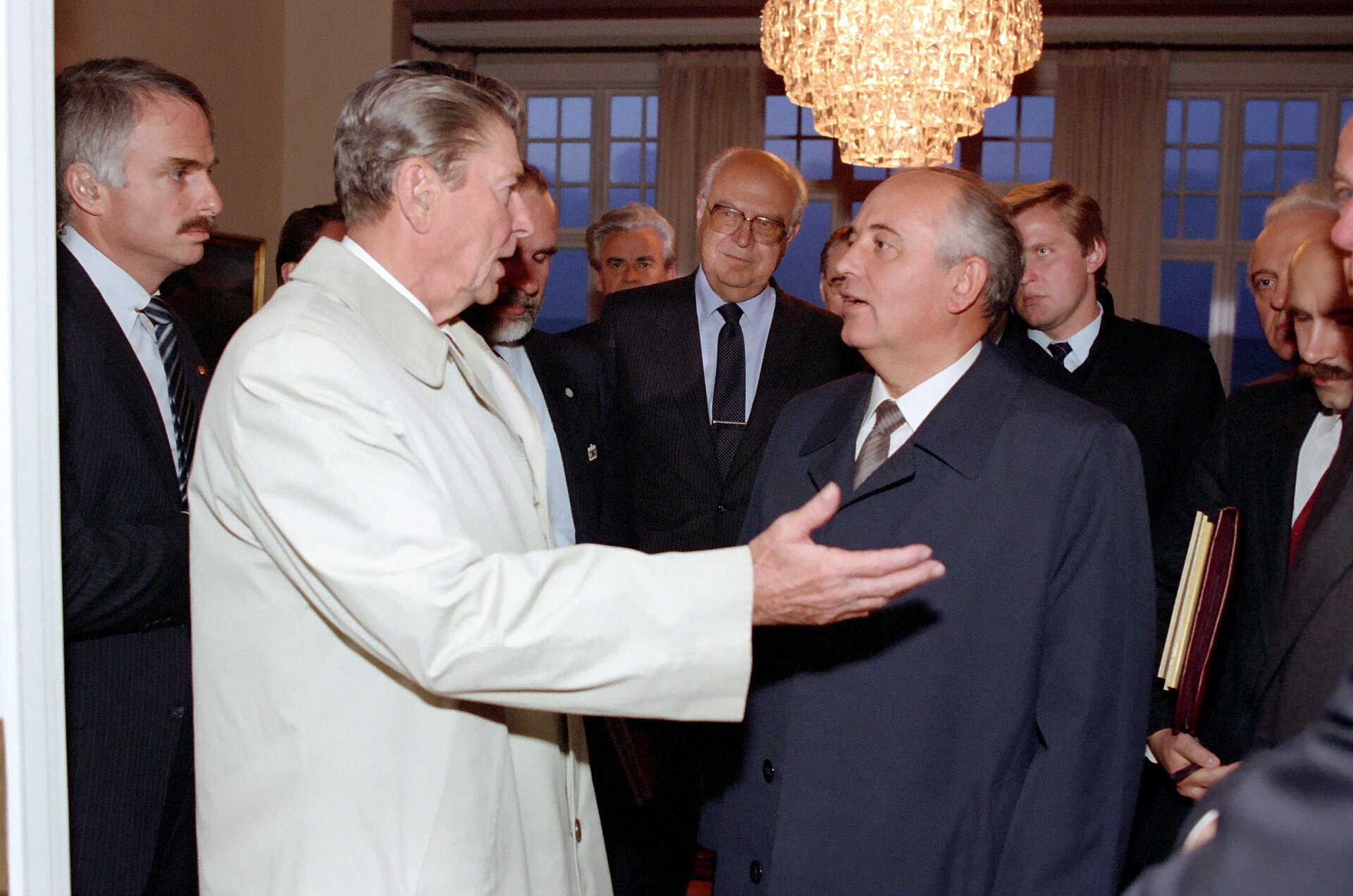
At the Reykjavík summit in 1986, Ronald Reagan came upstairs to tell his advisers that they could have one more go at settling their differences with the Soviet Union. The talks had been due to finish at noon. The President had a domestic consideration to put before the arms-control experts. “Nancy really is expecting me home for dinner.”
Kenneth Adelman, who ran the US Arms Control and Disarmament Agency, remembered looking out at the great gathering of journalists on the lawn of Höfði House. It struck him that Mrs Reagan could probably establish her husband’s whereabouts. He could also have told the President where he himself had been between eight the previous evening and twenty past six that morning. He had been upstairs, negotiating. Downstairs, Reagan and Mikhail Gorbachev had got within talking distance of abolishing nuclear weapons. It had been quite a weekend to put in a timesheet for.
Donald Trump, Xi Jinping and Vladimir Putin have come to Shenzhen for a three-way meeting on 19 November, with nuclear arms again among the subjects before them. The photographs will survive whatever happens to the proposals. What will largely disappear is the experience most people there will actually have had. Somebody will have worked for months on a sentence which a president may discard on sight. Somebody else will have been given forty accredited journalists, a minute in which to move them and one ordinary-sized door. We have a reasonably good idea what happens then.
In Helsinki in 2018, the Time correspondent Tessa Berenson was among the reporters waiting to see Trump and Putin together. There were twenty people on the American side and twenty on the Russian side in an antechamber at the Presidential Palace. The presidents were running nearly an hour late. When the door to the Gothic Hall opened, everybody tried to go through it. Cameras banged against the frame. Somebody hoisted a metal step stool overhead and caught a chandelier. The crystals rattled. The presidents, when the press had settled, took their places on adjacent blue velvet cushions.
One pleasure of Berenson’s account is that she kept an eye on the clock. After more than two hours, the journalists, by now sweaty from waiting in a sunny courtyard, were readmitted for about a minute. It was half past four and the event they were covering was lunch. The table was beautifully laid. While the photographers took their pictures, the two delegations sat in complete silence. A reader studying one of those pictures might reasonably have concluded that the talking had just stopped. A reporter who was there could tell you how little opportunity she had to find out.
Greater access brings its own professional discomforts. Fiona Hill, Trump’s senior Russia adviser, was in the room for the press conference at which the President appeared to take Putin’s word over that of his own intelligence agencies on Russian election interference. She began considering what sort of medical emergency she could plausibly stage. Another possibility occurred to her. “I also thought about pulling the fire alarm, but I didn’t know what Finnish was for ‘fire alarm’,” she recalled. There is a particular agony in having spent your career becoming qualified to advise a president and finding that the one piece of specialist knowledge you could really use is this.
Of all the people whose professional lives are spent in these rooms, the interpreters may have the best grounds for finding summits worthwhile. They hear what the leaders say once the people with the step stools have gone. Pavel Palazhchenko interpreted at all ten of Gorbachev’s summits with American presidents, from Geneva in 1985 to Moscow in 1991. Where the leaders dispensed with aides, the interpreter could also inherit responsibility for the record. How did he manage that? “I took notes on my notepad and in my memory,” he told Meduza.
Across the table at Reykjavík, the American diplomat Jack Matlock applied a discipline of his own. He wrote down Gorbachev’s remarks in Russian and Reagan’s in English. Other note-takers might use the interpreter’s English for both. Matlock wanted the words each man had chosen. Asked by the broadcaster Brian Lamb what went through his mind at such moments, he gave the answer a working reporter might give about the greatest interview of his life. He was principally occupied with getting it down accurately.
Palazhchenko also understood what it was like to be valued for something beyond one’s job description. Shortly before Reykjavík, a spy dispute threatened the meeting. The Soviet foreign minister, Eduard Shevardnadze, went to see Reagan in Washington. Each had only his interpreter with him. Afterwards, back in a secure room with the Soviet ambassador and his aides, Shevardnadze turned to the man who had done the translating. How did he think it had gone? Palazhchenko’s judgement was that Reagan wanted the summit enough to keep the dispute from getting worse. Here was a minister with an embassy’s expertise at his disposal asking the opinion of the one colleague who had heard precisely how the President had said it.
When the subject under discussion is especially grave, the job can get especially dull for everybody else. At the Washington summit the following year, Gorbachev needed to consult his defence minister by secure telephone about an outstanding question. George H. W. Bush, then vice-president, had arrived at the Soviet embassy to see him. Bush proposed that they travel to the White House together once Gorbachev was free. By Palazhchenko’s reckoning, the Vice-President of the United States spent about half an hour sitting in the guards’ room. The intermediate-range nuclear missile treaty was signed at that summit. One would like to know what Bush found to read.
There are occasions when even the people doing the waiting cannot subsequently agree on what the wait meant. Consider the celebrated photograph from the 2018 G7 in Quebec, taken by the German government photographer Jesco Denzel. Angela Merkel leans forward, both hands planted on a table. Trump looks up at her, arms folded. It could have been commissioned to illustrate the difficulties of the Atlantic alliance. Trump subsequently explained that they were waiting for the final documents after some changes he had requested. Merkel, invited to interpret the picture, observed that it showed them “grappling with an issue”. Both descriptions could be perfectly true. Anyone who has ever waited for somebody to bring the revised copy upstairs will recognise how much grappling can be accomplished in the interval.
What might those changes involve? Amitabh Kant, India’s chief negotiator, or sherpa, for the 2023 G20 in New Delhi, has left an unusually good account. Narendra Modi wanted progress reports every two hours. At about eight on the opening morning, the prime minister came to inspect the venue. Kant had to tell him that there was still a difficulty with the leaders’ declaration. Modi indicated that he would like consensus, and that he would like it soon. At nine the leaders began their meeting. At half past nine Kant went into a room next door to try to produce it.
A reader of the international pages would have had little difficulty guessing the sticking point. How could the West and Russia possibly agree on language about Ukraine? Yet the obstacle Kant was dealing with that morning concerned visas for a summit three years in the future. China wanted written assurances that its representatives would be able to enter the United States when the Americans hosted the G20 in 2026. Until it got them, it would withhold assent on the geopolitical paragraphs. Kant, the American sherpa Mike Pyle and the head of the Chinese team, Li Kexin, worked on a letter. The word they could live with was ensure. The word they could not was guarantee. By noon they had it. The leaders adopted their 37-page declaration that day.
It sounds a gloriously pointless way for three able people to spend a morning, until one tries to imagine what instruction each ought to have disobeyed in order to finish sooner. Something similar happened at the Paris climate talks in 2015. In the final text, developed countries were told that they shall continue to take the lead on certain emissions targets. John Kerry telephoned his French counterpart, Laurent Fabius. The United States could accept should. It could not accept shall, with the binding obligation that implied. The French presidency found a way to have the change read out as a technical correction. The distinction would have been perfectly intelligible to anybody who has ever been asked to put a promise in writing.
There is, of course, one department at a summit where a promise has to mean exactly what it says. If the menu specifies turbot, somebody has to produce the turbot. For the Cornwall G7 in 2021, the chef Emily Scott received a rather melancholy briefing from the Foreign Office. Her guests would probably leave early, eat very little and find it difficult to relax. Scott, who had made it through a Cabinet Office shortlist to get the commission, had a professional objection to this forecast. Why would anybody, whoever they were, go out to dinner without hoping to enjoy it?
She served melon gazpacho, turbot on the bone with miso beurre blanc, Cornish cheeses, strawberries and pavlova. There were little ice-cream cones with clotted cream fudge. The guests ate everything and stayed late. When Scott came out, they were passing round her cookbook. On one point she had received specific advice. Under no circumstances was she to address the President of the United States as Joe. “Hello Joe, it’s really nice to meet you,” she said.
For Heidi Stephens, a civil servant working on security and police liaison at the same summit, one of the chief pleasures of the assignment was simply that, after working from home for so long, she could see colleagues face to face again. Sam Mountain, another volunteer, lived within five miles of three of the main venues and watched familiar bits of Cornwall change in the weeks before the delegates arrived. Beneath Stephens’s account on the Civil Service website, Nikki Smith left what may be the most candid short review of summit employment on record. “I loved every minute of it, even the ones I hated!”
Andrew Fairlie, who cooked for the Gleneagles G8 in 2005, might have understood the qualification. For four days he could scarcely leave the resort. Security personnel watched his team prepare food in their own kitchen. The staff worked a twelve-hour preparatory shift in case demonstrations held up their suppliers. They submitted four possible menus for each of two dinners. The Palace liked the kitchen’s first choice. Downing Street went for its fourth. Afterwards Jacques Chirac got to his feet in the hotel bar and asked Fairlie, in French, to convey his compliments to the team. Of all those details, the one with the most to tell us about being on the staff is Fairlie’s recollection of the security operation. For a few days the hotel had ceased to feel like theirs.
How, then, do you tell on the way home whether the thing has been worth doing? Reykjavík ended without an agreement. On the final afternoon, the two leaders could go no further over the restrictions Gorbachev wanted on Reagan’s missile-defence research. Anyone filing to deadline had excellent grounds for calling the summit a failure. Yet the work done there helped prepare the treaty signed in Washington the following year. At Malta in 1989, Gorbachev explained to the elder Bush why he had wanted the Iceland meeting in the first place. Negotiations had stalled. “The delegations sat in Geneva sipping coffee, and there was nothing to do.” Reykjavík had given the people drinking the coffee something to do. The distinction took rather longer to emerge than the photographs of two disappointed men leaving a house.
Perhaps the best answer comes from Jimmy Carter, although the person who thought of it was his secretary. On the last day at Camp David in September 1978, the negotiations between Egypt and Israel were in trouble. Menachem Begin had asked Carter to autograph photographs of himself, Carter and Anwar Sadat for his grandchildren. Sadat had already signed them. There was every reason for a busy president to add his signature to the pile and turn to the next piece of paper. Susan Clough suggested that she could find out the children’s names.
Carter inscribed the photographs individually and took them to Begin’s cabin. The Israeli prime minister recognised his granddaughter’s name on the top one. As he worked his way through the pictures, he said each child’s name aloud. Then he began telling Carter about them, lingering over one whom Carter suspected was his favourite. “We were both emotional as we talked quietly for a few minutes about grandchildren and about war,” Carter wrote. The Camp David accords were signed that evening. A conscientious account should leave room between those two events. Carter himself left something better than a claim about what clinched the deal. He remembered whose idea it was to get the names.