


 BBC News
Borrowing was £17.4bn last month, the second highest October figure since monthly records began in 1993.
Finito World
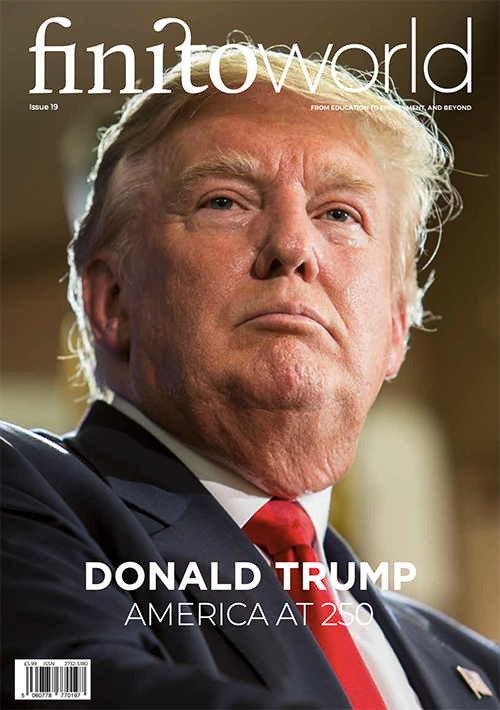
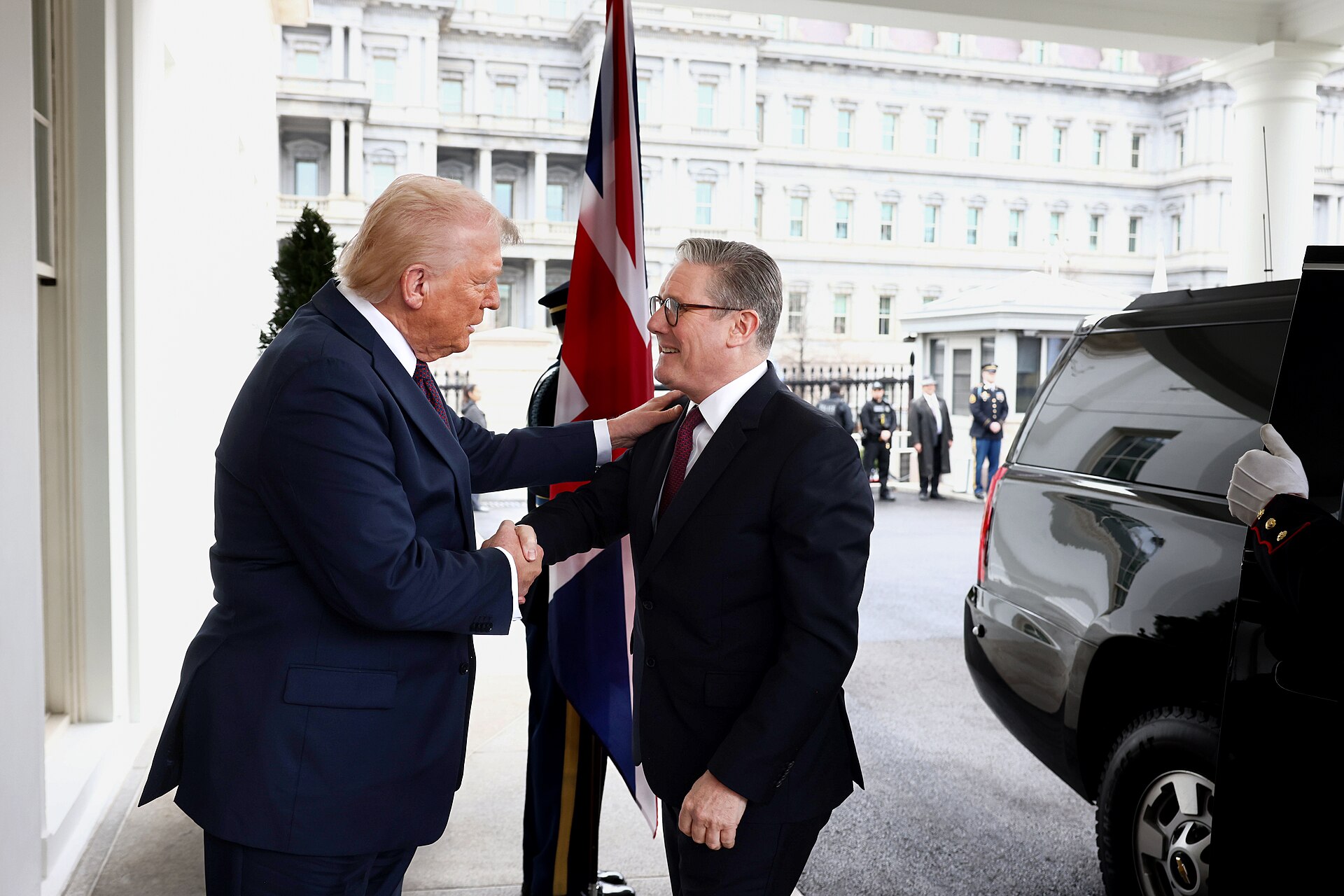
Donald Trump has never been a man to understate his case, but on one point his critics keep testing an argument that refuses to collapse entirely under scrutiny. Since the start of his second term he has repeated, in venue after venue, that America is now “the hottest country anywhere in the world.” Economists have picked apart the claim. Other indices have outperformed Wall Street. Growth has not, by every measure, been exceptional. And yet something in the boast lands, because it gestures at a deeper truth about the American mood: a country that still believes, with a conviction Europe finds almost embarrassing, that it is the place where the future gets built first.
As the United States approaches its 250th birthday, that self-belief is worth taking seriously, whatever one makes of the man currently narrating it. Capital continues to flow toward American technology and American energy. The country is ahead in the race for AI, and in quantum computing. Talent continues to migrate toward American universities and American companies, even as visa policy grows more erratic. The country’s instability is real, its politics coarsened, its institutions tested in ways that would alarm any previous generation of its own diplomats. But instability has not, so far, been mistaken by markets or migrants for decline. America remains, for all its noise, a place that manufactures opportunity at a rate the rest of the world struggles to match.
This is, in a sense, the oldest American trick, and one worth remembering on an anniversary that invites the country to look back as well as forward. The republic has always narrated itself into confidence before the facts entirely justified it, after depressions, after civil war, after the long doubt of the 1970s, each time talking its way back into a swagger that then, often enough, became self-fulfilling. Trump’s rhetoric belongs to that lineage more than it departs from it. The claim is not really a claim about GDP figures. It is a claim about national temperament – and temperament, unlike a stock index, has a way of shaping the future it describes.
Which leaves an uncomfortable question for Britain. For decades the special relationship offered a kind of shelter, an assumption of alignment that made Britain’s own uncertainties feel manageable. That assumption now looks thinner. Trade policy, foreign policy and plain temperament divide London from Washington more than at any point since Suez. British ministers have learned to choose their words about the White House with the caution once reserved for hostile powers, not old friends.
Britain cannot simply borrow American confidence by association, not when the association itself has become a source of anxiety rather than reassurance. If America is entering its most self-assured chapter in years, Britain is entering one of its most uncertain, and the two facts are not unconnected. A junior partner’s confidence has always depended partly on the senior partner’s steadiness. Remove the steadiness and the confidence has nowhere left to stand.
That uncertainty is showing up in the data, not just the mood. Recent research from Arden University found that fifty eight per cent of UK workers believe their industry is changing faster than ever, yet only just over half are doing anything about it. Nearly half point to technological disruption as the single greatest threat to their working lives. The skills gap once discussed as a future risk has become a present condition, and the more striking finding is not the anxiety itself but the paralysis alongside it. More than a third of those not upskilling say they already have what they need. This is not a country short of warnings. It is a country that has heard the warning and not yet decided to move.
Some, naturally, have decided to move in a different sense entirely. The rise of the British digital nomad, working a London salary from a flat in Valencia or Lisbon, is often framed as a lifestyle story, but it is really a verdict. It is what happens when a skilled workforce concludes that geography no longer has to determine opportunity, and that if Britain will not offer the terms it wants, somewhere else might. The countries winning this competition are not accidentally the same ones offering good weather and pleasant cafés. They are offering governance, infrastructure and a functioning sense of the future, the very things a nation needs to keep its most capable people from drifting.
There is a connection worth drawing out here. The worker who quietly relocates to Lisbon and the worker who tells a pollster they see no point in upskilling are, in a sense, expressing the same diagnosis from opposite directions. One has concluded that Britain’s institutions are not worth staying near. The other has concluded that its economy is not changing fast enough to require new skills at all. Both are votes of no confidence, cast without fanfare, in the country’s capacity to keep pace with the world it is competing against.
None of this is fatal, and none of it is new. Britain has reinvented itself before, often against expectations, usually without American self-confidence to draw on. It built a financial centre out of the ruins of empire and turned deindustrialised cities into centres of culture. Reinvention has never required American-style certainty. It has required an honest reckoning with drift before that reckoning is forced from outside.
That reckoning is precisely what a nation absorbed in its own skills anxiety and its own relationship anxiety has yet to have. It is easier to notice that the ground is shifting than to do anything about where one is standing, and Britain, on the evidence of its own workforce, has become rather good at the noticing and rather poor at the doing. America turns two hundred and fifty this year loudly certain of itself, certain in a way that outruns its own balance sheet. Britain does not need to match that certainty, and could not convincingly fake it if it tried. It needs, rather more urgently, to decide what it is certain of at all.