



 BBC News
Borrowing was £17.4bn last month, the second highest October figure since monthly records began in 1993.
Finito World
Recent unemployment figures offer a rare flicker of good news, but anyone tempted to celebrate should look past the headline number. The real test isn’t whether the statistics have nudged in the right direction this quarter. It’s whether young people leaving education are actually equipped to walk into the world of work, or whether they are being handed a system that talks about opportunity while quietly failing to deliver it.
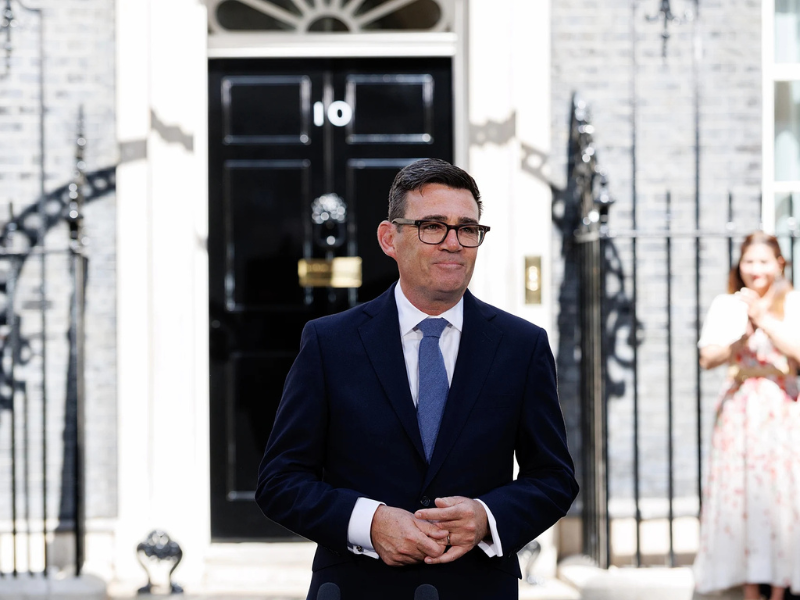
Andy Burnham’s pledge at the outset of his administration to reform education so it serves employment better was a welcome moment of political attention on a problem that has been neglected for too long. But pledges are cheap. As Michelle Ovens CBE, CEO and Founder of Small Business Britain, put it plainly: “we need to see that ambition translate into action.” That is the whole argument in a single sentence. Britain has no shortage of speeches about young people and work. What it lacks is the machinery to make good on them.
Ovens is calling for something specific and measurable: a National Business Skills Guarantee, ensuring every young person has access to business skills, role models, and entrepreneurial pathways before they leave education. It is a modest ask in some ways. It does not require reinventing the curriculum or waiting a generation for cultural change. It requires deciding, as a matter of policy, that no child should leave school without having met an entrepreneur, tried their hand at a business idea, or been shown a path into self-employment as a genuine alternative to the traditional job hunt.
The case for urgency is stronger than the employment figures alone suggest. The UK holds the third-highest employment rate in the G7, and yet, as Ovens notes, too many young people still face barriers when entering the workforce. High employment nationally can mask a persistent failure to bring the next generation in behind it. Confidence, skills, and experience are not incidental extras. They are the difference between a young person who sees the workforce as somewhere they belong and one who sees it as somewhere they are locked out of.
The stakes go well beyond individual careers. Small Business Britain’s Maple Review found that equipping young people with practical business skills does not just support growth in the abstract. It widens access to opportunity itself, which matters enormously when 14.3 million people are currently living in poverty across the UK. Skills are not a nice-to-have sitting alongside the poverty problem. They are one of the few interventions that touches it directly.
Burnham has set the ambition. The Government’s job now is to build the guarantee that turns it into something young people can actually use.