



 BBC News
Borrowing was £17.4bn last month, the second highest October figure since monthly records began in 1993.
Polly Cecil
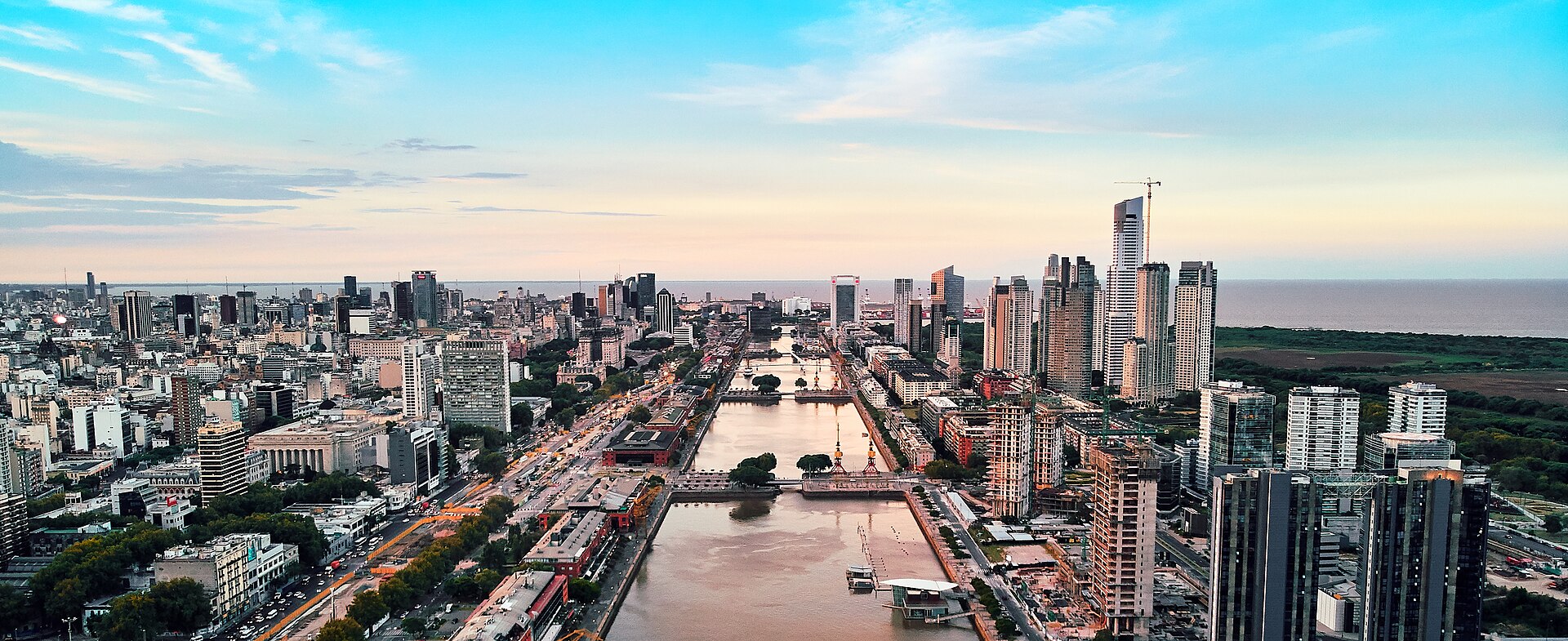
Buenos Aires rejects classification. Walk three blocks in any direction, and you pass through what feels like several continents stitched together. A wide, tree-lined Parisian boulevard, flanked by elegant apartment blocks with wrought-iron balconies, gives way mid-block to Italianate symmetry and arched windows. This, in turn, merges into the austere, whitewashed walls characteristic of colonial Spanish architecture before the street suddenly opens into a kaleidoscope of boutique cafes and dimly lit bars reminiscent of Manhattan. And yet none of it is a direct translation. Everything is thrown slightly off kilter.
A change in the sun’s beam exposes the reptilian skin of the Parisian mansion block: blistered, broken, its peeling paint flaking like dandruff. Campaign posters and political protest announcements are plastered across Italianate stonework like a tattoo sleeve, indifferent to the elegance that lies beneath. Black cables scrawl across Colonial facades with the messy abandon of a child let loose with a marker pen. The city has been performing one identity, and then, as if it can’t be bothered to keep up the pretence, the mask crumbles, revealing another underneath. The grandeur is genuine. So is the grit. Splendour and struggle exist together, unresolved, on the same walls, in a city chiselled from political trauma, economic instability and inherited grief.
In Buenos Aires, history rarely feels distant. Stepping out of the metro, on the 24th March at Plaza de Mayo, the air pulses with drums, the rhythm fusing grief and rage into a collective roar. Fifty years had passed since the military coup that brought Jorge Rafael Videla to power and began what would become the bloodiest period in Argentine history: seven years of dictatorship during which the armed forces detained, tortured and disappeared an estimated thirty thousand people.
That afternoon, amid the tidal wave of chanting protesters, people strained to hold high placards bearing the black-and-white photographs of the disappeared: faces peering out from the 1970s, frozen in time. Among them were the faces of pregnant women who had been detained and gave birth in captivity, their babies seized and handed to other families. Beneath the photographs, the words – ¿Dónde están? Where are they? – held aloft in a sea of unanswered grief.
Nunca más – Never again. Against a system designed to erase itself – bodies disappeared rather than buried, records burnt, babies given false identities – the plaza still shakes with grief and rage fifty years on.
The plaza that had shaken with grief shook, weeks later, with a bassline. Portuguese priest Guilherme Peixoto hosted a free electronic music show – a tribute to Pope Francis – attended by more than 120,000 people. Vast screens projected clips of Pope Francis before a constellation of glowing halos, techno beat drops infused with spiritual messages. Trading placards for halos, Buenos Aires inhabits its contradictions, transforming a square where a nation mourns its disappeared into a dancefloor.
In this city, collective identity feels fierce, joyful and defiant, forged amid decades of political trauma and instability, as though belonging has been seized where the state failed to provide it. Nowhere is that more apparent than in La Boca on match day.
Given the match was being played at River Plate’s ground across the city, where Boca fans were banned from attending, the barrio transformed itself into the stadium instead. Every bar had dragged a television onto the pavement, chairs spilling out onto the road, enormous flags hanging from every window frame, the streets humming with anticipation.
When Boca scored, the crowd erupted into a single heaving mass of blue and yellow. Children in Boca shirts so oversized they draped like dresses were hoisted onto their fathers’ shoulders, each one grinning with unselfconscious joy. A city with this much to grieve is somehow fiercely alive.
For all the city’s cosmopolitan self-fashioning, Buenos Aires remains tethered to the gaucho traditions on which Argentina built much of its national identity. At Caballos 2026 at La Rural, an equestrian exposition in Palermo, riders put horses through movements of extraordinary precision: lead changes, sliding stops, fast pivots. Competition masked in a festive smile.
Outside, the cattle-sorting trials were underway. A single cow was released into the arena, tasered beforehand to rile it, and a pair of riders on horseback had to guide it toward the exit, horses slamming against the animal’s flanks, the cow lurching and panicking.
The porteños were outnumbered by a different kind entirely: gauchos in voluminous trousers tapered at the ankle, high leather boots and soft woollen berets, moving with the bowlegged gait of someone who has spent more time on a horse than on foot, each carrying mate as though it were an extension of their body. Beside them sauntered their children, carbon copies of their fathers, cowboy boots clattering across the gravel, hats slipping down over their eyes, not unlike the children in their oversized Boca shirts – identity worn before the body has grown into it.
Buenos Aires should not hold together. It is a city assembled from fragments – European facades, gaucho traditions, political fury, electronic music in a plaza still burning with grief. Grandeur sits beside decay, aspiration beside instability, trauma beside celebration. And yet, Buenos Aires coheres not despite its contradictions but through them, bound together by a collective spirit: unruly, unresolved, unapologetically itself.