



 BBC News
Borrowing was £17.4bn last month, the second highest October figure since monthly records began in 1993.
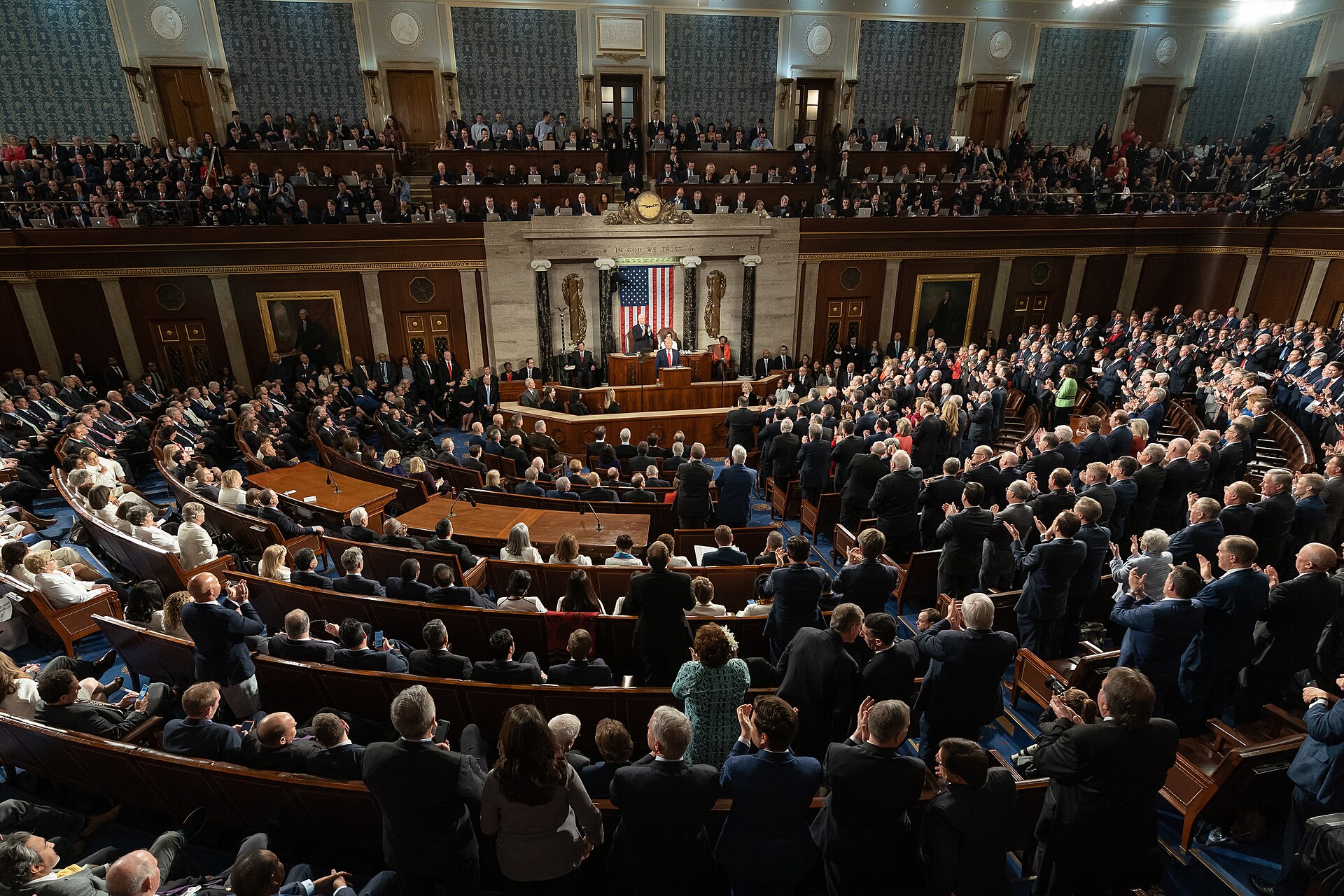
Trump’s 2026 State of the Union was sold as a progress report. It was really a labour-market story, told at national scale, with the theatrics of a campaign rally and the implied promise that employability will follow patriotism as naturally as night follows day. “The Golden Age of America” is not just a slogan in this context; it’s a hiring narrative. It says: the country is winning, the economy is roaring, and therefore you—worker, employer, investor—should behave as if the future is settled. But employability is never settled. It is a set of incentives and frictions, sector by sector, and the speech was essentially a map of where the White House wants those incentives to fall, and where it is prepared to let the frictions land.
Trump repeatedly framed the economy as an achievement already delivered rather than a problem still to be managed. That matters because confidence changes behaviour. It changes whether firms recruit or hoard cash, whether households switch jobs, whether someone takes the risk of retraining. Yet even sympathetic observers noted the underlying political headwinds: voters remain uneasy about affordability, and markets were listening not for mood music but for clarity—especially on trade. One investor reaction captured it cleanly: people wanted “something more definitive” on tariffs. That’s the first employability lesson of the speech: hiring hates uncertainty more than it loves optimism.
Now to the sectors.
In manufacturing and trade-exposed industries, tariffs are not an abstract instrument; they are a daily cost and a strategic headache. Trump treated tariffs as a badge of strength and a revenue engine, the kind of policy you can point to while promising reshored jobs, revived plant towns, and supply-chain sovereignty. Critics hear something else: higher input costs, volatile pricing, retaliatory risk, and investment decisions delayed while lawyers, procurement teams and CFOs try to guess the next twist. The employability outcome is not one national trend but a patchwork. Some domestic producers will hire; some exporters will freeze; many small and mid-sized firms will simply struggle to plan. In a tariff world, the “good jobs” narrative can be true in one county and false in the next.
In tech and AI infrastructure, the most consequential labour-market moment of the speech may have been about electricity, not algorithms. Trump announced a “ratepayer protection pledge” and put it in language designed to sound like common sense: “We’re telling the major tech companies that they have the obligation to provide for their own power needs.” He went further: they can “build their own power plants” so “no one’s prices will go up.” However this is implemented—and several analysts immediately noted the lack of detail—the direction is clear. The administration is pushing the AI buildout to internalise its energy footprint. That is a huge employability shift. It means the next wave of “AI jobs” won’t only be in model training and product design; it will be in power generation, grid interconnection, permitting, construction, compliance, and everything that sits between a data hall and a substation. It also tilts the geography of opportunity. Jobs will cluster where energy can be secured, approvals can be won, and communities can be persuaded. If you are advising on employability, the mantra changes: yes, software matters, but so do electricians, project managers, turbine technicians, environmental consultants, and the people who understand how to build big things in the real world.
In energy more broadly, Trump’s instinct is to make it the master key: cheaper energy equals cheaper living equals more jobs. He spoke in the idiom of production, confidence, and abundance. But employability in energy is not a single lane. If policy and capital swing hard toward fossil expansion, you may see pockets of hiring in extraction and services, while clean-energy pipelines stall, or at least become more politically contingent. Workers then experience volatility as the norm: boom-and-pause cycles, regionally uneven demand, and a growing premium on portable credentials. The new career advantage is not simply “choose the winning energy source,” but “build a skill that travels across the transition”—grid, controls, safety, heavy construction, instrumentation, systems maintenance.
In healthcare, Trump aimed straight at the employability nerve of the service economy: benefits and cost pressure. He touted lower drug prices and pushed proposals framed as taking on “big insurance companies,” including the idea of redirecting federal payments more directly to individuals so they can “buy their own health care.” Supporters hear consumer power; critics hear destabilisation and a risk-transfer from institutions to households. Either way, healthcare is the labour market’s hidden governor: when costs rise, wage gains get eaten; when coverage is unstable, job mobility drops; when workers fear gaps, they stay put. If reforms truly reduce costs, employability improves across sectors because people can move, retrain, start businesses. If reforms create uncertainty, the opposite happens: workers cling, employers struggle to recruit, and the labour market becomes stickier and less dynamic.
Housing and construction were threaded through the speech as an affordability storyline: make it easier to build, bring costs down, restore the “starter” dream. Here the employability consequences are immediate and practical. If permitting reforms and incentives really do accelerate building, you get a surge in demand for trades, planners, surveyors, site managers, and the supply chain around materials. If the headline remains rhetorical while rates and materials costs bite, you get the familiar squeeze: young workers stuck at home, geographic mobility constrained, employers in high-cost areas unable to attract talent without paying ever-higher wage premiums. Housing is employability infrastructure as surely as roads and broadband are.
In consumer services—hospitality, care, retail—the speech’s immigration posture matters as much as its tax lines. Trump claimed the border is “secure” and leaned into the idea of “legal” entry tied to hard work. The employability trade-off is obvious but rarely spoken plainly. If labour supply tightens in sectors that rely on migrant work, wages may rise for some roles, but businesses also raise prices, cut hours, automate faster, or simply shrink. If enforcement becomes more aggressive and more visible, it adds compliance risk and reputational risk, particularly for national brands. A tight labour pool can be good news for workers in the short term; it can also be the accelerant that pushes employers to invest in labour-saving tech and redesign jobs around fewer people.
Then there is the cultural labour market—the white-collar and institutional world where norms and compliance shape hiring. Trump made a point of declaring an end to DEI. Supporters hear a rollback of bureaucracy and ideology; opponents hear a chilling signal that could reshape workplace language, training, complaint handling, and the risk calculus around recruitment. The immediate employability effect is less about who is “right” and more about what HR departments do on Monday morning. Do they rewrite job ads? Do they pull back from outreach programmes? Do they double down quietly? Do managers become more cautious in feedback and promotion decisions? In a polarised environment, employability is shaped not only by skills but by how safe companies feel making decisions, and how defensible those decisions are.
And hovering over the whole thing is the reaction speech, because it framed the counter-argument in a way employers should take seriously. Governor Abigail Spanberger’s rebuttal boiled down to one claim: “We did not hear the truth.” She centred affordability and the everyday squeeze, implicitly arguing that the administration’s macro story doesn’t match the micro experience. Whether you agree or not, that’s politically potent—and it matters for employability because affordability is the condition for risk. People invest in skills when they believe they can survive the transition. They change jobs when they believe the new wage will actually improve life. They start businesses when they believe inputs and rules won’t shift overnight.
So what is the employability thesis of Trump’s State of the Union? It is not primarily about creating a single, broad-based labour boom. It is about picking arenas where the administration wants visible “wins” and letting the labour market reorganise around them: trade pressure to force industrial decisions, energy dominance to tame prices and power AI, enforcement to tighten labour supply, a cultural reset to change institutional behaviour, and a set of consumer-facing pledges (drugs, savings accounts, taxes) designed to make people feel richer even if their weekly arithmetic remains tight. For some sectors, that will mean opportunity and a surge of demand. For others, it will mean planning paralysis, compliance fear, and a faster turn toward automation.
The practical conclusion is simple: employability under this agenda becomes less about generic “future skills” and more about reading the new bottlenecks. Electrons are a bottleneck. Housing is a bottleneck. Regulation and uncertainty are bottlenecks. In that kind of economy, the winners—workers and firms alike—will be those who can move across sectors, translate their skills into infrastructure and delivery, and stay resilient when the story changes faster than the labour market can. The speech promised a golden age. Employability will be determined, as ever, by the unglamorous work of matching policy signals to real demand—industry by industry, region by region, job by job.