

 BBC News
Borrowing was £17.4bn last month, the second highest October figure since monthly records began in 1993.
By Rt Hon. Robert Halfon, Executive Director of Make UK. Former MP for Harlow and Apprenticeships & Skills Minister. This article is written in a personal capacity
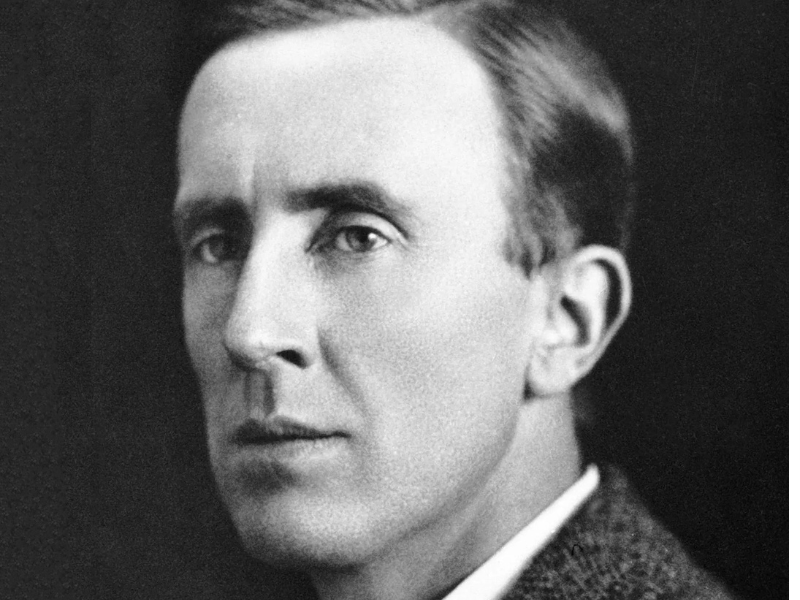
In 1967, a 75-year-old J.R.R. Tolkien published his last ‘faery’ tale. Smith of Wootton Major runs to 60-odd pages in its original edition, yet it contains everything he understood about talent, prejudice, and the passing of gifts between generations.
The story begins when the old Master Cook retires and brings back a young apprentice named Alf. Though Alf receives three years of excellent training, when his master departs, the villagers refuse to trust him with the position. Tolkien’s explanation cuts to the bone: Alf “had grown a bit taller, but still looked like a boy” – and was not one of their own.
Instead, they appoint Nokes, an idle local man who spends his tenure taking credit for Alf’s work and wasting the apprentice’s talent on absurd tasks, such as stoning raisins. That sentence haunts every conversation about skills education. Some brilliant people are overlooked not because they lack ability, but because they learned through doing. Because their qualifications don’t fit conventional moulds. Because their backgrounds make establishment gatekeepers uncomfortable.
Some apprentices I’ve met carry Alf’s story in their experience. The assumption that practical learning is inferior to academic theory. The need to prove themselves twice over simply because they chose a different path.
Hidden in Nokes’s Great Cake is a fay-star that a blacksmith’s son, Smith, accidentally swallows. On his tenth birthday, the star appears on his forehead, granting him passage to the Faery Realm for twenty-four years. Smith lives a double life: working at his forge by day, but walking in realms of wonder that transform his understanding. The star changes him. His work becomes exceptional. His vision deepens. He experiences beauty and danger that few mortals ever witness.
When Smith’s time comes to surrender the star, he meets Alf again. The overlooked apprentice—now Master Cook—reveals his true identity as the King of Faery. Alf takes the star and bakes it into a new Great Cake for another child to find. Smith returns to his forge to teach his craft to his son. The gift passes. The cycle continues.
The Professor’s Apprenticeship
Tolkien understood this through his own academic formation. When he arrived at Exeter College, Oxford, in 1911, he at first found Classics difficult and nearly came unstuck in his early examinations.
Yet the example and scholarship of Professor Joseph Wright helped shape his intellectual path. In a letter written years later, Tolkien acknowledged the importance of Wright’s books: “It was your works that came into my hands by chance as a schoolboy, that first revealed to me the philology I love.”
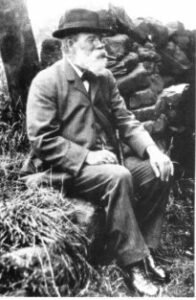
Joseph Wright
Wright’s story deserves its own telling. Born in 1855 in Yorkshire, he started work at age six as a “donkey-boy” in a quarry, leading a cart of tools to the smithy. With very little formal schooling. He learned to read and write at fifteen, became fascinated by languages, saved enough money to study in Germany, and eventually became Professor of Comparative Philology at Oxford.
When Tolkien applied for the Rawlinson and Bosworth Professorship in 1925, Wright wrote: “I have known Professor Tolkien intimately since the beginning of his undergraduate days at Oxford, and have greatly admired his keen interest in the philological study of Latin, Greek, and more especially the Germanic Languages.”
Master and apprentice. Experienced practitioner developing emerging talent. Someone who recognised potential when conventional measures suggested failure. Tolkien named Wright as one of the executors of his will. That level of trust says everything.
The Fay-Star
The fay-star in Tolkien’s tale represents something profound about how knowledge transfers. Smith doesn’t own it permanently. He receives it, benefits from it, grows through it—then surrenders it willingly so another can experience the same transformation.
This matters for apprenticeship policy. We’re building pathways where expertise transfers deliberately, where masters teach knowing their apprentices will eventually surpass them. Smith returns to his forge to teach his son, carrying forward what he learned.
Degree apprenticeships represent that Fay-Star in modern form. They provide university-level qualifications through employer-led training, while apprentices earn competitive salaries. No student debt, guaranteed employment, and academic credentials open international opportunities.
The UK now has over 50,000 degree apprenticeship starts annually, with cumulative participation exceeding 300,000 since 2017. Nearly 90 universities deliver these programs. According to analysis, 99% of employers agree that degree apprenticeships positively influence organisational performance. Apprentices achieve median salaries of £34,620 one year after completing Level 6. From Level 2 to degree and higher apprenticeships, earnings outcomes are strong, with median salaries rising from just over £24,000 to almost £50,000 one year after completion
Yet we still encounter Nokes figures—people who dismiss apprenticeships because they don’t match their narrow definition of education. Those who assume academic credentials automatically signal greater worth than demonstrated competence.
Recognizing the Overlooked
The most powerful moment in Tolkien’s tale comes when everyone finally understands who Alf truly is. The humble apprentice cook reveals himself as royalty. The overlooked young man possessed more knowledge and power than anyone in Wootton Major imagined.
Tolkien wrote about another apprentice in The Lord of the Rings. Samwise Gamgee started as an apprentice gardener. He helped Frodo deliver the Ring to Mount Doom, was eventually elected Mayor of the Shire seven times, and became advisor to the King.
I’ve watched Councillor Dan Swords progress from parliamentary apprentice in my previous office as MP to Leader of Harlow Council—reportedly, when elected, the youngest council leader in British political history. I’ve seen countless young people transform their lives through apprenticeships, proving that dedication and skill matter more than the letters after your name.
Tolkien called Smith of Wootton Major “an old man’s book, already weighted with the presage of bereavement.” Was he thinking about legacy—what we leave behind, how we ensure the next generation receives what we were given?
That question faces every generation: Will we create pathways for talent to flourish, or will we maintain barriers that serve no purpose other than preserving outdated hierarchies?
The Gift Continues
Smith’s journey matters because he understands when to let go. He doesn’t hoard the star until it loses its shine. He surrenders it at the right moment, ensuring another child receives the same wonder. Then he returns to his forge to teach his craft to his son. The work continues. The knowledge transfers. The forge stays lit.
As Bilbo Baggins says in The Return of the King: “Let others follow it who can! Let them a journey new begin.”
That is the spirit of apprenticeship: not merely preserving a craft, but entrusting it to others to continue, renew, and pass on.
In Smith of Wootton Major, Alf became king. Smith discovered wonder and passed it on. Wright transformed a struggling undergraduate into one of Oxford’s finest professors. Samwise became Mayor. The apprentice model works when we let it, when we recognise talent wherever it emerges, when we stop demanding that brilliance arrives only through conventional gates.
Tolkien understood this profoundly. He lived it. He wrote about it in his final tale, condensing everything he’d learned about recognising others’ worth.
The fay-star still waits in the Great Cake. The question is whether we’ll provide a ladder of opportunity to the child who finds it, or overlook them
because they don’t look like “one of our own.”