



 BBC News
Borrowing was £17.4bn last month, the second highest October figure since monthly records began in 1993.
Sarah Tucker on what mountains can teach entrepreneurs about ambition, consent and building something worth returning to
Business has an altitude problem. Everyone wants to reach the summit, become a peak performer, scale rapidly, rise above the competition and produce a photograph above the clouds looking as though they have personally negotiated with gravity.
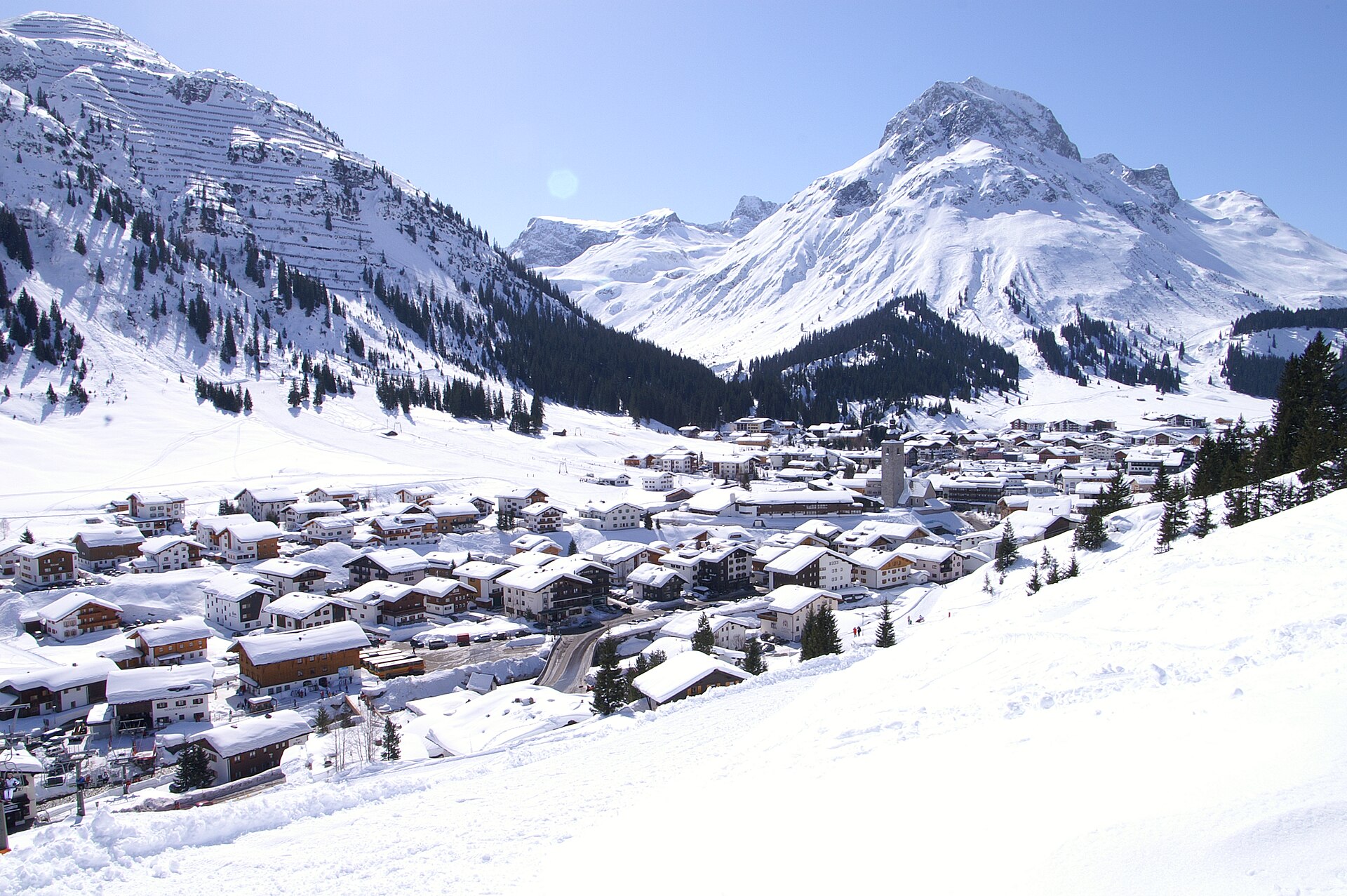
I began to question this in Lech and Oberlech, in the Arlberg region of Vorarlberg in western Austria, just beyond the Tyrolean border, where the mountains are real enough to make corporate metaphor appear slightly underdressed.
A summit is dramatic, measurable and excellent for LinkedIn. It is also exposed, difficult to inhabit and somewhere one leaves almost immediately. Nobody builds a thriving community on its sharpest point, yet business treats arrival there as the only ending worth photographing.
The first error is to confuse height with progress. A mountain path respects gradient, weather, energy and terrain. It uses contours, pauses and reversals, sometimes moving sideways in order to keep moving at all.
In corporate language this can look insufficiently ambitious. In mountain language it is how people get home.
I once stood at the top of an icy black run while my former husband told me to follow because “we will go slowly”. The slope was close to vertical. The surface was ice. His confidence altered neither fact.
I froze.
A ski guide approached and asked, “Do you want to ski down this slope?”
“No.”
He turned to my husband. “She does not want to ski down this slope.”
This remains one of the clearest demonstrations of the difference between leadership and one-upmanship. A leader who shouts “Follow me” while transferring the risk to the follower is not leading. He is converting his appetite into somebody else’s obligation.
Years later I learned he repeated the exercise with another woman. She froze too but eventually followed. My refusal did not make me stronger, nor her compliance weaker. The pattern belonged to the person applying the pressure.
Consent is not a soft skill. It is information.
The right guide does not make courage compulsory. He reads the conditions, listens and finds another route. Organisations often treat hesitation as resistance, caution as poor commitment and obedience as enthusiasm, then wonder why the team reaches the bottom exhausted and calls the experience culture.
Lech itself offers a better model of growth. Many of its hotels remain family owned by people who live in the village and inherit both opportunity and responsibility. A proprietor expecting grandchildren to live with today’s decision asks a different question from an investor planning an exit before the consequences become fully picturesque.
Lech calls this thinking in generations rather than seasons. Sustainability includes the landscape, school, local clubs, family businesses and the reason visitors came in the first place.
Most organisations plan for the next quarter and speak solemnly about the next decade. Lech has reversed the order.
The Goldener Berg, where I stayed, demonstrates another neglected measure of success: return. Many guests come back year after year. “Repeat business” sounds transactional, but genuine return is emotional. People revisit places where they feel recognised without being managed.
Owner Daniela Pfefferkorn has not made the hotel resemble every other expensive refuge. Fuchsia meets pistachio, local art fills the walls and each window gives the mountains a different role. The hotel has a point of view.
Brand consultants praise distinctiveness, then remove anything that might alarm a focus group. The result offends nobody because it has ceased to exist in the imagination.
The Goldener Berg is memorable because it allows personality to survive professionalism.
Lech’s planning rules offer the same lesson. Timber, stone and pitched roofs preserve a common architectural language, while interiors are free to experiment. Constraint has not killed creativity; it has prevented creativity from becoming noise.
A useful boundary asks better questions. How can we surprise without destroying trust, or innovate without flattening the mountain and naming the rubble transformation?
At Balmalp, Snøhetta’s Mountain Mirror changes the frame rather than the landscape. It may also be the world’s highest catwalk, although transporting models to 2,100 metres would test any fashion house.
Its lesson is simple. When everyone is staring at the same object, alter the angle. Innovation may require a new relationship rather than a new product.
James Turrell’s Skyspace makes the opposite move by removing almost everything except a section of sky. Subtraction can be entrepreneurial. Remove the meeting, the decorative feature and the process designed to protect another process, and the useful thing may finally become visible.
Business often rewards visible activity because stillness is difficult to invoice. Mountains are less easily impressed.
Lech also experiments with the conditions of thought. Impact Lech brings together scientists, business leaders, technologists, political figures and public thinkers, but does not confine every exchange to a stage, branded lectern and several bottles of room temperature water.
Its formats include mountain hut discussions, conversational hikes and a Kitchen Party. Change the setting and hierarchy changes with it. Polished certainty may give way to better questions once everybody’s shoes are equally muddy.
A walk rearranges conversation. People fall into pairs, drop behind, catch up and look outward. The most senior person is not always in front. Silence becomes permissible.
This is not team building, where adults construct a raft while someone photographs collaboration. It changes the conditions to change the thought.
Philosophicum Lech has grown from a small gathering into a major forum without converting philosophy into six colourful slides and a branded tote bag. Lechwelten provides permanent infrastructure for debate and culture, which is more ambitious than hiring a motivational speaker to explain resilience before lunch.
People do not necessarily reject complexity. They reject complexity presented without care.
There should be more joy in enterprise. Seriousness is not proof of intelligence, nor exhaustion of value. In Lech, a surprising room, an unhurried meal, a mountain path and laughter created more mental space than fluorescent lighting.
A strong organisation should not feel like an expedition endured for the person at the front. Curiosity, play and pleasure show that people retain enough energy to think.
Leadership culture loves the summit because it places one person visibly above everybody else. Mountain intelligence is more distributed. The guide reads weather, the lift engineer reads machinery, the hotelier reads guests and the village reads the limits of growth. Knowledge moves across levels rather than descending from the top.
The person at the summit may have the widest view, but also the least shelter and the weakest contact with what is happening below.
We need fewer summits and more contours, terraces, base camps and paths. A summit makes a fine moment. A system makes continued movement possible.
The best entrepreneur may not be the person who climbs fastest or stands highest. It may be the one who knows when to traverse, when to turn back, when to ask rather than command and how to build something people want to return to after the photograph has been taken.
The correct guide helps people encounter the mountain without making himself the mountain.
WEBSITES
Lech Zürs Tourism
Goldener Berg
Impact Lech
Philosophicum Lech
https://www.philosophicum.com/
Lechwelten
https://www.lechzuers.com/en/lechwelten
Lech Mountain Mirror and Balmalp