


 BBC News
Borrowing was £17.4bn last month, the second highest October figure since monthly records began in 1993.
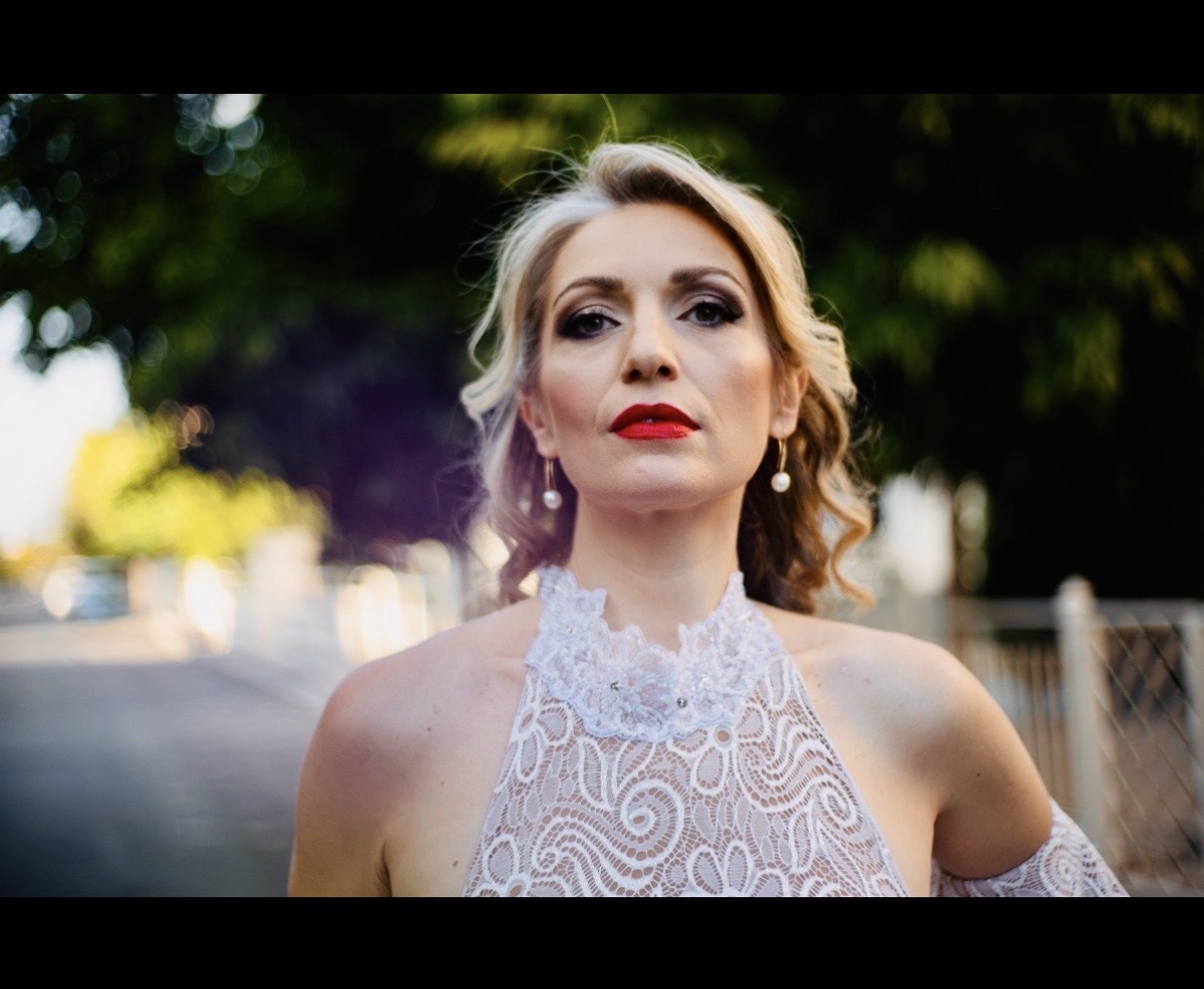
The singer on her passion for Wagner, mentorship, and why the setting matters when it comes to live performance
FW: You are preparing to sing the role of Brünnhilde in Opera Forge’s inaugural production of Wagner’s Die Walküre, one of the most demanding roles in the repertoire. What first drew you to Wagner, and why does this role feel like the right moment now?
KM: A couple of years ago I was asked to sing Senta from Wagner’s opera Der fliegende Holländer in an orchestral concert at the Cadogan Hall in London. I accepted the engagement without being entirely sure Wagner was for me … That was, however, exactly what drew me to Wagner! The feedback after the concert was mind-blowing, and the vocal direction towards Wagner became a reality. Together with my husband’s huge passion for Wagner’s music, and a visit to Bayreuth that same summer, the signs were loud and clear. Over these last few years, I have worked intensely on building the technical foundation, stamina, and dramatic understanding required for this repertoire, and now feels like the moment where those elements are beginning to align naturally. Preparing this role for Opera Forge has therefore become much more than learning the score; it feels like the beginning of a major artistic chapter.
FW: How has your experience understudying the roles of Helmwige and Gerhilde informed your understanding of the world of the Ring Cycle as you move into Brünnhilde herself?
KM: Understudying Helmwige and Gerhilde verified to me that Brünnhilde herself would be my next role! The Valkyries embody the atmosphere, energy, and moral tension of the entire Ring Cycle. Being inside those ensembles taught me how Wagner constructs drama on an almost symphonic scale, where every musical line and every character relationship carry psychological and philosophical weight. What was especially valuable was observing Brünnhilde from within the sisterhood of the Valkyries. You begin to understand why she stands apart — not only vocally, but spiritually. That experience became an invaluable foundation as I now approach Brünnhilde. In many ways, it felt like an apprenticeship within Wagner’s mythological world — one that prepared me not only vocally, but artistically and psychologically, for the extraordinary journey of Brünnhilde.
FW: You are mentored by Susan Bullock, one of the great Wagnerian sopranos of our time. What has her guidance given you, both technically and psychologically, as you approach these roles?
KM: Working with Susan Bullock has been one of the most remarkable experiences of my life. She brings not only an extraordinary technical understanding of the Wagnerian repertoire, but also the rare perspective of someone who has truly lived these roles on the world’s great stages. Technically, her guidance has been invaluable in teaching me how to approach Wagner with freedom and lyricism, rather than force. The role of Brünnhilde demands immense stamina, vocal discipline, and emotional range, and Susan has consistently emphasised the importance of grounding the voice in line, breath, and text, rather than ever trying to just “sing heavily”, She has helped me understand how to pace the role intelligently, how to conserve energy across the long dramatic arc, and how to allow the orchestral texture to support the voice rather than compete with it. Psychologically, her mentorship has been equally profound on my journey to sing one of the greatest dramatic soprano roles in opera. I feel incredibly privileged and honoured to be mentored by Susan Bullock, who I admire not only for her voice but also for her honesty and strength. She understands both the immense demands and the immense rewards of this repertoire, and she has given me the confidence to trust my own artistic instincts while remaining disciplined and patient in the process. Working with Susan has strengthened not only my vocal technique, but also my psychological resilience and sense of artistic identity as I move deeper into Wagner’s world.
FW: Wagnerian singing is often described as requiring not just vocal power but stamina, architecture and emotional control. How do you prepare for that level of demand?
KM: I increasingly see these roles almost like athletic events combined with profound psychological storytelling. For me, preparation begins long before stepping into the rehearsal room. I have my everyday regimes that keep me spiritually grounded; other daily regimes that help my body muscles to relax and at the same time tone, in order to build and sustain the physical stamina I need for Wagnerian singing. Aside of these, nutrition and hydration are also key, together with good quality sleep. Vocally, I follow the invaluable instructions of Susan Bullock and the rest of my vocal coaches, and I learn how to pace myself both vocally and emotionally. I spend a great deal of time studying the libretto and then working with the vocal score; finding where the climaxes truly are, where energy must be conserved, and how the text itself guides the vocal line. With Brünnhilde especially, the emotional evolution is immense, and I think emotional control comes from clarity of intention. If you truly understand why the character is saying something, the emotional intensity can remain truthful without becoming uncontrolled. What fascinates me about Wagner is that everything is interconnected — the orchestra, the libretto, the dramatic structure, the leitmotifs, the psychology. Preparing these roles feels less like learning isolated scenes and more like constructing a vast architectural world piece by piece. That is precisely what makes the experience so demanding, but also so rewarding.
FW: You have sung a remarkably wide repertoire, from Mozart and Verdi to Puccini and Strauss. How has that breadth shaped your voice as you begin to focus more on dramatic roles for the soprano?
KM: I believe that singing a broad repertoire has been one of the greatest gifts for my development as an artist. Each composer teaches you something fundamentally different about technique, style, discipline, and expression, and I feel that those experiences now form the foundation upon which I can approach the more dramatic repertoire with maturity rather than impatience. Mozart, for example, teaches honesty and technical precision. There is nowhere to hide in Mozart; the line, the breath control, the purity of legato, and the relationship between text and music must all function with absolute clarity. Verdi brings an entirely different discipline — a heightened sense of dramatic pacing, vocal line, and emotional intensity while still maintaining elegance and structure. Puccini requires vulnerability and immediacy, an ability to sustain emotional truth while allowing the voice to bloom lyrically through the orchestral texture. Strauss, meanwhile, introduces a richer orchestral landscape and a more symphonic approach to vocal writing, which in many ways becomes an important bridge toward Wagner. What has been invaluable is that these composers collectively taught me flexibility rather than force. I have never wanted to rush into dramatic repertoire simply because I knew I had to buy time until my voice would naturally move in that direction. As I now move into the pure soprano dramatic roles, I feel I carry elements of all those worlds with me. I still want the clarity of Mozart, the line of Verdi, the emotional immediacy of Puccini, and the orchestral awareness of Strauss inside the Wagnerian repertoire. In many ways, the dramatic voice is not about abandoning lyricism, but about expanding it while retaining beauty, control, and colour. A bel canto approach to Wagner is, for example, what Opera Forge and our Artistic Director and Conductor Kelvin Lim, are working towards for our inaugural production of Die Walküre at the end of this year!
FW: You were born in Cyprus and are now based in London, having trained at the Guildhall School of Music & Drama. How did that journey shape your musical identity?
KM: Being born in Cyprus and later building my life and career in London has shaped me profoundly, both personally and artistically. Cyprus gave me a very strong emotional connection to music from an early age. Even though Cyprus hasn’t got a massive tradition in classical music, it has a culture with deep warmth, passion, and an instinctive relationship to storytelling and expression, and I think those qualities remain at the core of who I am as a performer. At the same time, moving to London and training at the Guildhall School of Music & Drama opened an entirely new world for me artistically. I initially entered the GSMD as a concert pianist, and I graduated as an opera singer! What was particularly transformative about London was the sense of possibility. It is one of the great cultural capitals of the world, and being surrounded by its opera houses, orchestras, theatres, and artists constantly challenged me to grow. You are continually exposed to the highest level of artistry, and that inevitably shapes your standards and ambitions. I also think living between cultures has given me a certain dual perspective artistically. I carry the Mediterranean emotional instinct and intensity of my upbringing, but it has been refined through the structural discipline and musical rigor of my training and professional life in Britain.
FW: Your debut album Angel of Fire included not only core operatic repertoire but also world premieres of songs you wrote the poetry for yourself. How does writing your own texts influence your approach as a performer?
KM: Working on my debut album ‘Angel of Fire’ with the Royal Philharmonic Orchestra and maestro Grzegorz Nowak, was an unbelievably fascinating experience; it allowed me to inhabit not only the role of performer and recording artist, but also that of creator. Including world premieres of two songs that were set to music by Swiss composer Stephan Hodel, on two of my poems, changed my relationship with interpretation in a very profound way. When you write your own texts, you become acutely aware of the weight and intention behind every single word, every silence, every emotional shift. That process has greatly influenced the way I now approach all repertoire as a performer. It has made me far more attentive to language and to the psychology hidden inside the text. Writing also gives you enormous vulnerability. When performing your own material, there is nowhere to hide because the emotional world comes directly from you. That experience taught me a great deal about honesty in performance and about the importance of communicating something authentic rather than merely producing beautiful sound. I think it also deepened my empathy towards composers and librettists. ‘Love’ and ‘Angel of Fire’ are the two poems from my poetry collection EROS that are part of my debut album. Later on this year, I will premiere the song cycle ‘At Your Touch’ composed by Richard Blackford, on seven of my own poems, from the same poetry collection. The premiere concert with pianist Andrew West will take place in Folkestone New Music Festival.
FW: You have performed in a wide range of venues, from major concert halls to more intimate spaces. How does the setting affect the way you inhabit a role or communicate with an audience?
KM: The relationship between performer, space, and audience is incredibly important, and I think every venue changes the psychological atmosphere of performance in a unique way. Singing in a major concert hall requires a certain breadth of communication — vocally, physically, and emotionally — because the scale of the space demands a larger dramatic architecture. You have to project not only sound, but presence, intention, and energy across an enormous environment while still maintaining nuance and truth. In more intimate spaces, however, the experience can become almost microscopic. The audience is close enough to perceive the smallest emotional or vocal detail, which creates a very different kind of intensity. In those settings, communication often feels more immediate and vulnerable, almost like chamber music or spoken theatre. What fascinates me is that the essence of the role should remain truthful regardless of scale, but the means of communication inevitably adapt. I also think different venues shape the audience’s energy in very distinct ways, and performers feel that immediately. There are spaces with tremendous historical and/or spiritual weight where you become intensely aware of the artistic legacy attached to them, and there are intimate venues where the connection with the audience feels almost conversational. Both experiences can be equally powerful, but in very different ways. Ultimately, I believe opera is about human connection above all else. Whether singing for two thousand people in a large hall or for a much smaller audience in an intimate setting, the responsibility is the same: to make the audience feel that something real and emotionally necessary is happening in that moment.
FW: Opera can often feel rooted in tradition, yet your involvement work with organisations like Opera Forge suggests an interest in how the form evolves. What do you think opera needs to do to remain vital now?
KM: I think opera remains profoundly relevant because it deals with the most fundamental aspects of human experience — love, power, loss, sacrifice, conflict, transcendence — and those themes never cease to matter. The challenge today is not whether opera still has something to say, but how we communicate its emotional power to contemporary audiences in a world that moves very differently from the one in which many of these works were created. Working with Opera Forge, the newest London-based opera company, has been incredibly inspiring in that respect, because the company approaches opera with imagination, flexibility, and a real desire to connect with audiences in fresh ways while still respecting the integrity of the art form. I think that balance is crucial; and for opera to remain vital, I believe accessibility is essential — not in the sense of simplifying the art form, but in removing unnecessary barriers around it. Opera should not feel like an exclusive world that audiences are afraid to enter. I also think storytelling must remain central. Whether through new productions, imaginative performance spaces, educational outreach, digital engagement, or the commissioning of new works, opera must continue finding ways to speak directly to contemporary life without losing the depth and richness that make it unique. Ultimately, I do not believe opera survives by abandoning tradition, nor by preserving tradition as something untouchable. It survives by allowing these extraordinary works to continue breathing, evolving, and communicating with each new generation.
FW: You have already built an international career across Europe and beyond. How do different audiences respond to this repertoire, particularly the more dramatic works?
The emotional core of opera is universal, but the way audiences engage with it can indeed vary enormously. With the more dramatic repertoire especially, I have found that audiences often respond very instinctively and emotionally, regardless of language. Certain countries also carry very deep historical relationships with specific repertoire, and you feel that collective familiarity and expectation in the theatre. Performing Wagner, for example, in front of audiences with a long Wagnerian tradition like in Bayreuth, where audiences are famously knowledgeable, attentive to orchestral detail, sensitive to interpretive traditions, and highly opinionated about staging. The Maestro’s tempo choices may be scrutinized, orchestral transparency matters enormously, and vocal endurance is judged against historic Wagner singers. A Bayreuth audience may remain almost silent during a performance, but then erupt into extremely long ovations, or intense booing directed at stage directors or conductors. The Teatro alla Scala audiences, for example, are notorious for booing, including booing the opera singers, if they don’t like them! What I have personally learned is that audiences everywhere ultimately respond to sincerity and conviction. Even in very different cultural contexts, music has an extraordinary ability to create shared emotional understanding. It reminds us that despite differences in language or tradition, human emotion itself remains remarkably universal.
FW: Looking ahead, with roles like Isolde and Turandot on the horizon, how do you think about pacing a career in repertoire that is both vocally and emotionally demanding?
I think pacing is absolutely essential in this repertoire, perhaps more than in almost any other area of singing. Roles such as Isolde and Turandot require enormous physical and vocal endurance, emotional maturity, psychological resilience, and a very stable vocal foundation. Because of that, I believe one has to approach them with great patience and long-term perspective. For me, the most important principle is allowing the voice to develop organically rather than forcing it towards any repertoire prematurely. Dramatic roles can be incredibly rewarding, but they also demand respect. I have always felt that longevity in this profession comes from understanding not only what you can sing, but when you should sing it. That is why I value the journey through repertoire as well my own life journey so much. Ideally, by the time one arrives at roles like Isolde or Turandot, the voice has acquired not only the necessary power, but also the technical efficiency and interpretative depth to sustain them healthily. Emotionally, these characters also require a certain life experience and psychological understanding. Isolde, for example, is not merely vocally demanding; she inhabits an immense emotional, spiritual, and philosophical world. I think some roles reveal themselves fully only when an artist has reached a certain stage of artistic and personal maturity. I also believe it is vital to maintain balance and variety within the repertoire. Even while moving towards heavier dramatic roles, I never want to lose lyricism, musical refinement, or flexibility. The goal is to sing with beauty of sound, colour, and expressive range within a larger dramatic framework. These great heroines deserve patience, preparation, and respect; when approached at the right moment, they can become some of the most profound experiences an opera singer can have.