




 BBC News
Borrowing was £17.4bn last month, the second highest October figure since monthly records began in 1993.
Robert Golding
If I had to select my favourite sporting moment since I’ve been alive, I’d probably have to choose that drop goal in 2003. If I close my eyes, I can still see it: the disorganisation of the scrum, moving towards the Australian line, and the commentator’s explosive: “And Dawson now!” On the replay you can see Jonny Wilkinson hovering, just where he needs to be — waiting for the ball. And the ball comes to him.
Let’s let the ball pause mid-air and remind ourselves of everything which brought Wilkinson to that moment: how he always wanted to be a rugby player, how he would train on Christmas Day. Let’s imagine that too — how no day for Wilkinson, for as long as he could remember, had ever been entirely rugby-free. And for what? For this precise moment, when the scores are level, and the World Cup is on the line – and the ball comes towards him.
We can’t say for sure that any particular practice session made the difference, but we can say with precision that the desire to commit absolutely to rugby is impossible to divorce from what happened next: Wilkinson catches the ball, and he drop-kicks it, and it sails through the posts — and like that, in a moment shored up by thousands of days of unseen endeavour behind the scenes, and even those Christmas Days, England are world champions.
I think of this moment as we come up again to the Six Nations and England will compete once more. Wilkinson’s story is a perfect metaphor for those who want to succeed in any walk of life — sometimes it can seem remarkably simple. Identify what you’re good at — and then go for it.
But rugby itself is now an industry, and a rapidly evolving one. It is a sport of tradition, yet it has also become a sophisticated employment ecosystem. People often make the mistake of thinking that the only way to “work in rugby” is to lace up a pair of boots and run onto a pitch. In truth, rugby today is a global, multi-layered professional environment. Behind every match lies a vast network of analysts, medical staff, nutritionists, logistics teams, marketers, broadcasters, community officers, data specialists, groundskeepers, commercial strategists, psychologists, events planners, and more.
So the question becomes: what does Wilkinson’s moment teach us, and how might this year’s Six Nations illuminate a world of work opening up from grassroots to the professional game?
Let us step back from the 2003 final and take a broader view of the sport — a view that sees rugby not just as a game, but as a workplace with hundreds of potential doors.
The Modern Rugby Landscape
Rugby in 2026 is not what rugby was in 2003, or even 2015. It is a sport balancing on a tightrope: deeply rooted in tradition yet pushed towards reinvention by financial pressures, player-welfare concerns, and the relentless need to compete in a saturated entertainment market.
The Six Nations itself remains one of the crown jewels of world sport. Its mixture of old rivalries, national pride, winter sunlight on cold pitches, and the satisfying feeling that one match can tilt the course of a season continues to draw millions. But behind the scenes, the tournament is supported by a quiet army of professionals whose roles barely existed when Wilkinson first caught that pass from Dawson.
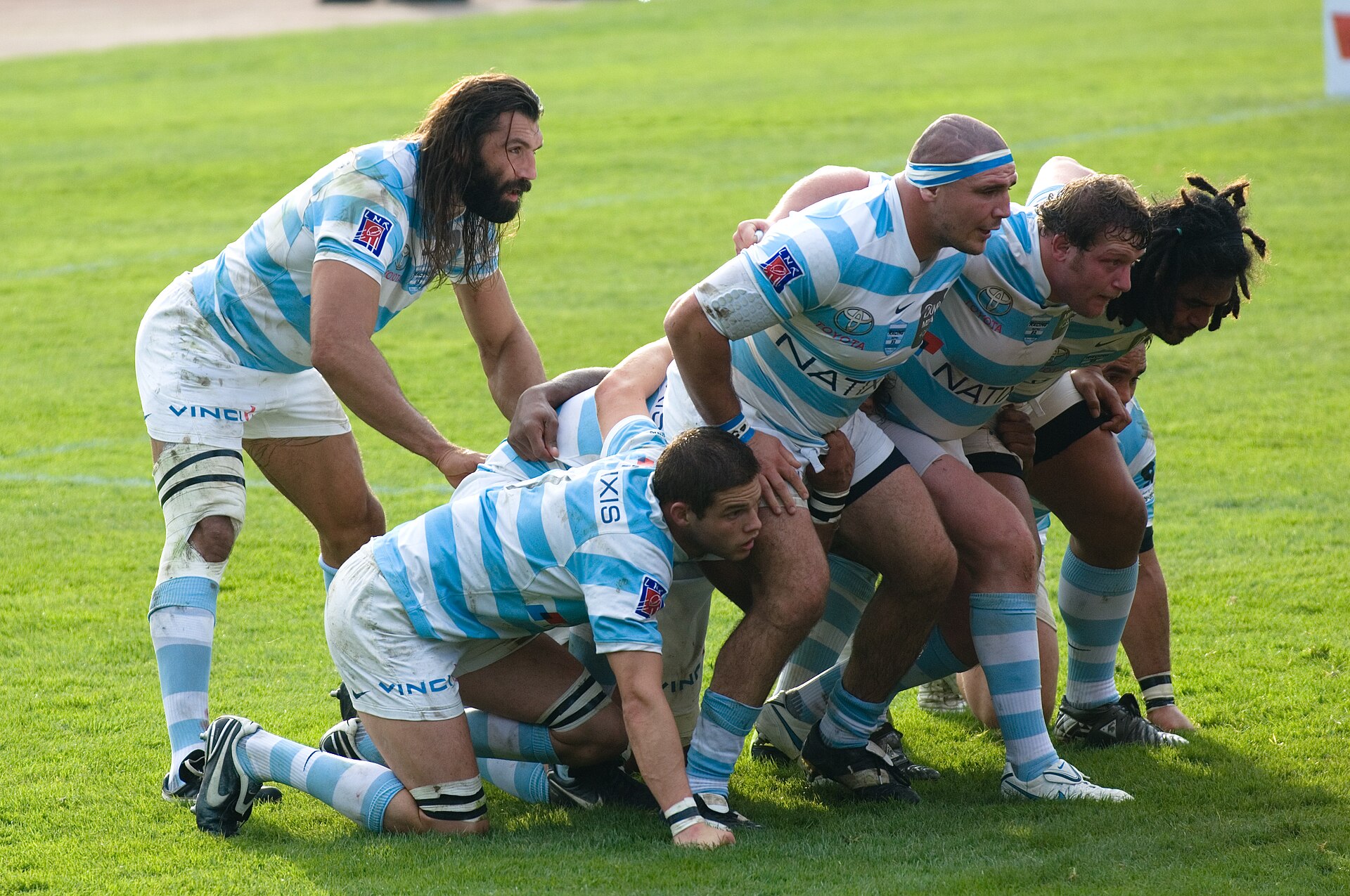
The modern rugby economy requires people who understand business development, bio-mechanics, sponsorship negotiation, international logistics, mental-health support, social-media management, digital broadcasting, hospitality, and community engagement. Just as every scrum requires eight bodies moving in harmony, modern rugby requires an industrial pack working behind the frontline.
This is a sector that has professionalised at speed. And with that professionalisation come jobs.
Careers on the Pitch
Let’s begin with the most visible layer: the players. They remain the sport’s most recognisable ambassadors, and playing professionally is a career path first mapped by dedication similar to Wilkinson’s own. But the path is far more structured now, with academies acting as training grounds for future internationals and offering opportunities for coaching, mentoring, physiotherapy, and talent development.
In the past, academy roles were few; now, every major club runs a comprehensive system, requiring development officers, conditioning coaches, youth-engagement managers, pastoral support officers, and educators. The emphasis on welfare — mental and physical — has created entirely new categories of work. Few realise how many jobs now cluster around the single task of protecting a young player’s body and mind.
There are nutritionists, performance chefs, data-driven diet planners, and sleep coaches. There are analysts who track GPS metrics from training sessions, generating detailed reports on workload, fatigue risk, and sprint profiles. There are recovery specialists who manage cold-water immersion, compression protocols, and soft-tissue interventions.
And then there are the medical teams: sports doctors, physiotherapists, osteopaths, chiropractors, trauma specialists. Rugby unions increasingly employ concussion fellows and neuro-specialists. These roles simply did not exist thirty years ago.
For those who wish to work close to athletes without being athletes themselves, the pitch is now surrounded by a cluster of rewarding, intellectually demanding professions.
Business Machine
Off the pitch, the commercial landscape has grown rapidly. Rugby may not generate the television revenue of football, but the Six Nations remains one of the most lucrative annual tournaments in world sport, producing more than £430 million in revenue and drawing TV audiences exceeding 120 million each year. Globally, rugby’s financial footprint has expanded as well — World Rugby reported £493 million in revenue for the latest cycle, participation has grown to over 9.6 million players worldwide, and the sport’s fanbase now exceeds 500 million. Women’s rugby, in particular, has surged, with registered players increasing more than 60% in the last decade.
Sport has always relied on storytellers, and rugby now has many: content creators, writers, broadcasters, archivists, media-producers, live-streaming specialists. The digital revolution has opened posts for people who can manage online communities, cut social clips, produce insight-driven analytics, and market players as personal brands.
Working in communications in a modern rugby environment bears little resemblance to the press-release-driven past. Now it demands fluency with algorithms, image management, fan engagement, and crisis prevention.
Commercial teams manage sponsorship portfolios worth millions. A shirt sleeve, training ground naming rights, grassroots programme sponsorship — each requires contracts, activation, measurable KPIs, and brand storytelling. A sponsorship manager in rugby today must be both strategist and diplomat, translating sporting identity into commercial value.
Events management within rugby requires even more. A Six Nations match is a logistical symphony involving security, catering, hospitality, travel, ceremonial protocol, dignitary management, fan engagement, merchandise, ticketing, queueing strategy, and sustainability compliance. Entire companies specialise in stadium operations, and each match day employs thousands.
Someone once said that to work in rugby is to work in a small city: because everything a city needs — safety, organisation, power, communication, atmosphere — a rugby match needs too.
Growing Workforce
One of the less glamorous but profoundly meaningful areas of rugby employment is community development. In many towns across England, Ireland, Scotland, Wales, France and Italy, rugby clubs function as civic anchor institutions. They need administrators, coaches, safeguarding leads, fundraisers, inclusion officers, referees, groundskeepers, and volunteers — increasingly supported by part- and full-time staff.
For readers of Finito World, who often look for roles with impact, the community game is a quiet treasure. These jobs blend sport, education, mentoring, social work, and youth development. Rugby’s values — respect, teamwork, resilience, discipline — lend themselves naturally to programmes for young people, and many rugby foundations work closely with schools, prisons, charities, and youth centres.
There are opportunities for teachers integrating rugby into PE; for programme designers structuring after-school clubs; for referees climbing development ladders; for administrators overseeing competitions; for grounds staff becoming environmental specialists managing sustainable pitches.
If Wilkinson stands for dedication, the community game stands for something equally valuable: continuity.
New Frontier
There was a time when match analysis involved a coach with a clipboard and a VHS tape. Now rugby is a data-driven sport. Every professional squad employs analysts who interpret video systems, drone footage, AI-powered metrics, and GPS trackers. Software companies produce detailed heat maps of where a match was won or lost.
This technological evolution has created work for coders, statisticians, machine-learning specialists, graphic designers, and systems engineers. Broadcasters too rely on these insights, generating demand for on-air analysts, production researchers, archive statisticians, and visualisation designers.
Rugby today is as much about information as collision. The young graduate capable of turning match data into insight is every bit as valuable as a classical rugby thinker.
Global Dimension
The Six Nations is part of a wider international calendar which includes the Rugby Championship, the World Cup, sevens tournaments, and an increasingly global club ecosystem from Japan to South Africa to the United States. That means jobs in international travel logistics, tournament operations, compliance, customs, team-liaison, and multilingual management.
Rugby is no longer confined to its traditional heartlands. The US is investing heavily. Japan continues to expand. South American rugby has strengthened since Argentina’s World Cup heroics. Even nations with no historical connection to the game are beginning to see its educational and cultural value.
This globalisation mirrors the wider employment trend of international mobility. Working in rugby can mean working anywhere — a fact that should encourage any young person with ambitions beyond their home country.
As we approach the Six Nations once again, the stories of the players on the pitch will dominate the headlines. But behind them lies a vast workforce whose stories rarely make print. And yet the essence of their work — commitment, excellence, craft — mirrors Wilkinson’s journey to that drop goal.
Wilkinson did not succeed because of one magical moment; he succeeded because he did the unglamorous work relentlessly. Rugby as an industry rewards the same quality. The analyst poring over footage at midnight; the physio easing an injury in the cold; the community coach organising Saturday morning drills; the commercial manager structuring a sponsor’s activation plan — all of them are doing their version of training on Christmas Day.
That is what the rugby workplace teaches: that excellence, in sport or any profession, is cumulative. It is built not from heroics but from habit.
And perhaps that is why that 2003 moment still lodges in the British imagination. It is not simply triumph. It is a collective vindication of thousands of hours of work done by hundreds of people — coaches, family, teammates, medics, administrators, teachers — whose efforts converge on one act executed under pressure.
As England prepare for another Six Nations campaign, it is worth remembering that Wilkinson’s kick was not just a sporting moment; it was a career moment. It showed what happens when skill and preparation collide with opportunity.
And so the Six Nations this year will offer us more than matches. It will show us again the power of teamwork, specialisation, craft, and dedication — not just for the players, but for anyone seeking their place in the world of work.
Rugby, like life, rewards those who find what they are good at and then go for it — fully, relentlessly, courageously. And if a drop-goal sails through the posts every now and then, that is merely the punctuation mark at the end of a sentence written by years of unseen effort.
In that sense, rugby remains one of the great teachers. And Wilkinson, running onto the ball in Sydney two decades ago, remains one of its finest lessons.