



 BBC News
Borrowing was £17.4bn last month, the second highest October figure since monthly records began in 1993.
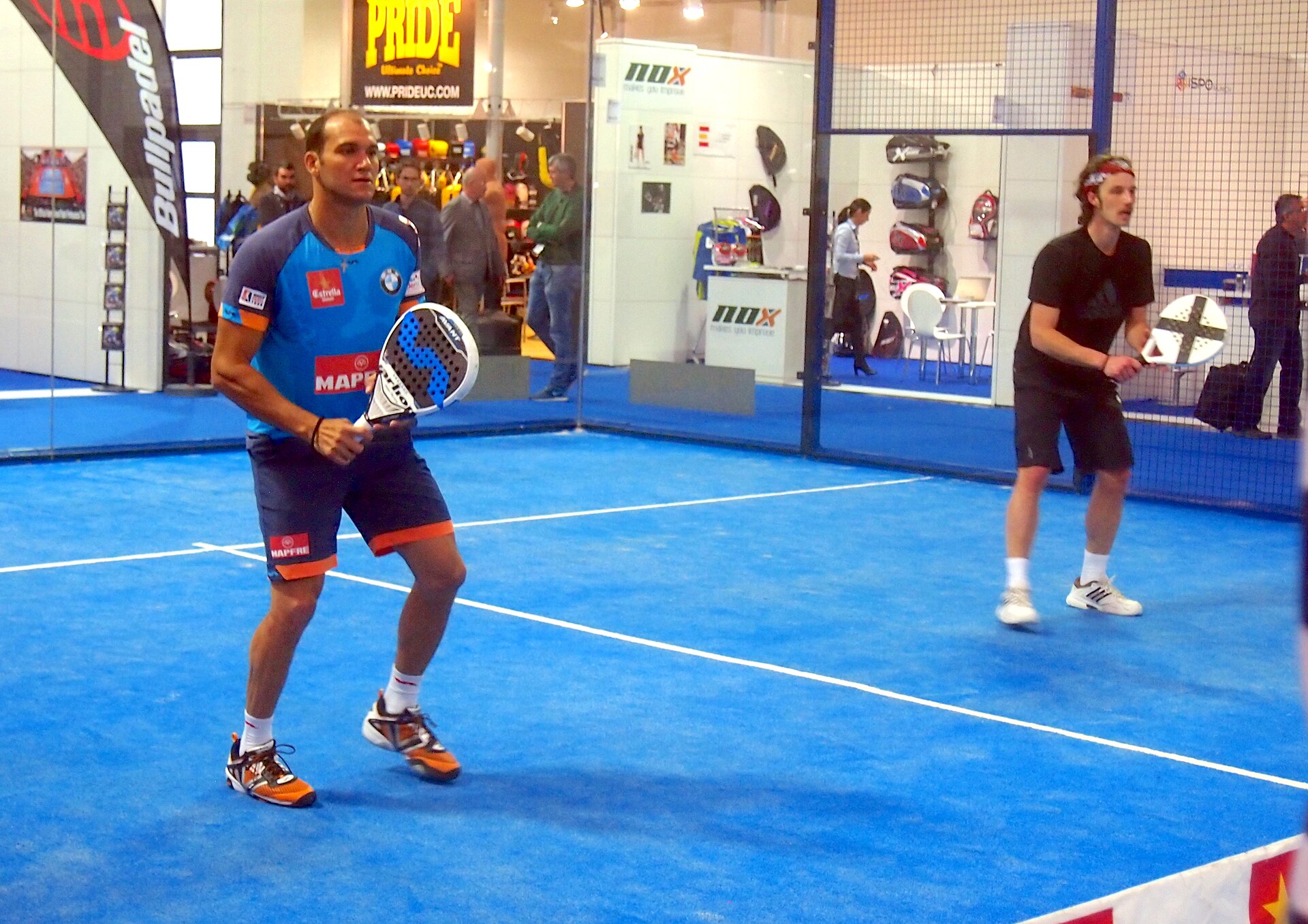
We catch up with Stewart Hosford, the CEO of Sela International, a leading player in a new sporting phenomenon
FW: Padel seems to have gone from a niche sport to a major global phenomenon in a relatively short period. What, in your view, has driven that acceleration?
SH: In the UK, padel has been growing as a participation sport exponentially for a few years now. I think this is due to a couple of things: firstly, the accessibility of the sport. It’s quick to learn, rallies start almost immediately, and beginners can have fun from their very first session rather than spending weeks trying to master the basics. Many of the clubs opening across the UK have been built with today’s audience in mind – not just as places to play sport, but places to meet friends, spend time together and be part of a community. There’s music, atmosphere, fast points and a real sense of energy around the sport.
Why do you think padel has resonated so strongly compared to more established racket sports like tennis or squash?
I think padel has arrived at exactly the right moment. People increasingly want activities that are social, energising and easy to fit into busy lives. Compared to some more traditional racket sports, padel feels less intimidating and more dynamic. It gives people competition, fitness and social connection all in one experience, which is exactly what modern audiences are looking for.
How would you describe the current stage of development in the UK market? Are we early, mid, or already at a point of real maturity?
It still feels early – but early with momentum. The LTA data released last month shows that the participation numbers in the UK have doubled in the last year, which is a strong sign the sport is still in its breakout phase rather than anywhere near maturity. Padel court numbers have doubled, yet in certain parts of the country it is still difficult to find a court. Bringing London Premier Padel P1 to the UK is the next logical step in the sport’s development here. The response to ticket sales has been hugely encouraging and shows there is now genuine appetite not just to play padel, but to watch the world’s best players live.
What role is Sela playing in shaping that growth, particularly through events like London Premier Padel P1?
Sela is new to padel in the UK, and we see this as both a tremendous opportunity and responsibility. We want to accelerate the sport’s growth by creating moments that bring new audiences in and give existing fans something truly world-class to rally around. London Premier Padel P1 is about much more than one week of competition. It is a chance to put padel on a bigger stage, raise awareness nationally and show people how exciting, dynamic and entertaining the sport can be.
It will also play an important role in the elite pathway. Seeing the world’s best players compete live can inspire the next generation of British talent to believe they can reach the Qatar Airways Premier Padel Tour one day. Through our partnership with the Lawn Tennis Association, we are also able to offer wildcard opportunities into the men’s and women’s draws, helping create tangible opportunities for homegrown players now and in the years ahead.
To what extent is padel a participation story versus a spectator sport? Do you see it evolving into something with real broadcast and commercial scale?
Right now, in the UK, padel is primarily a participation story – the growth in people playing the sport has been remarkable. But in markets across continental Europe and Latin America, padel has developed passionate fanbases, strong event attendance and growing media interest.
Sela is a global sports and entertainment business, so we are always looking at where sport and culture are heading next. Our decision to partner with Premier Padel was based on commercial opportunity. We are realistic that growth takes time, but the early signs are encouraging, with strong interest from fans, positive momentum in ticket sales and commercial partners already coming on board. That gives us real confidence in padel’s long-term potential to become both a major participation sport and a meaningful spectator proposition in the UK.
One of the striking things about padel is its accessibility. How important is that to its long-term success?
Hugely important. It is no coincidence that the biggest participation sports in the world are often the ones that go on to build the strongest and most sustainable ecosystems. A large player base drives demand for courts, coaching, equipment, events and future fans.
What are the biggest barriers to growth in the UK right now? Is it infrastructure, awareness, or something else?
As an event operator, we would be cautious about speaking definitively on club operations or facility development, but from what we can see awareness is rising quickly, supported by the latest Lawn Tennis Association participation data.
Anecdotally, from discussions I have had with people in the UK padel industry, it can be a challenge to find sites for new clubs, so this will certainly have an impact on the speed of growth. However, when you look at other countries, such as Scandinavia, where the growth and development of infrastructure boomed and went bust, a more sustainable trajectory could ultimately be healthier for the UK market in the long term.
There’s clearly strong interest from investors and developers. What does a successful padel business model look like in 2026?
Our expertise is primarily on the events side, so we would be careful not to overstate views on club operations or the wider facility market, where the economics can be quite different. The business model for a major professional event is very different to that of a club, coaching venue or everyday participation business.
How do you see the relationship between padel and traditional tennis evolving? Complementary, competitive, or something else?
There will naturally be some overlap, particularly around leisure time, facilities and participation choices, but overall, I see the relationship as more complementary than competitive. They are distinct sports with different dynamics, experiences and audiences, and there is room for both to thrive.
Are we seeing a particular demographic driving growth, or is the appeal genuinely broad-based?
The appeal is genuinely broad, but like any fast-growing sport there are still barriers to address. Right now, demand for courts is outstripping supply and the cost of developing facilities remains high, which can make participation more expensive than some other sports. As more courts come online, we would expect access and affordability to improve.
What is encouraging is the work being done across the UK to ensure padel grows in an inclusive way. Organisations such as Empower Padel are doing excellent work to bring more women and girls into the sport, while the Jason Manford Padel Academy is helping introduce young people from all backgrounds to the game. That kind of work is vital to ensuring padel remains broad-based rather than becoming exclusive.
What have been the most interesting commercial partnerships or brand opportunities emerging around padel so far?
One of the most exciting aspects of padel commercially is the breadth of brands it can attract. The sport sits at the intersection of performance, lifestyle, fashion and culture, so it creates opportunities beyond traditional sports sponsorship categories.
A strong example of that is the partnership between Oysho and London Premier Padel P1. It brings together a modern, style-led activewear brand with one of the most anticipated new events on the UK sporting calendar. That feels very natural for padel, where what happens around the court can be just as important culturally as what happens on it.
Looking ahead, what does the next five years look like for padel globally, and where does the UK fit within that picture?
The sport is already well established in parts of Europe and Latin America, so I think the next major growth market looks set to be the US, where momentum is building quickly. Events such as Miami P1 show the scale of opportunity when participation growth is matched by world-class events and growing audience interest. More broadly, I think we can expect continued expansion into new cities, stronger broadcast reach, bigger commercial partnerships and a deeper global fanbase. It is hard to see the sport slowing down anytime soon.
Do you think padel has the potential to become an Olympic sport, and if so, what would that mean for its trajectory?
Of course it has potential. There wouldn’t be the noise around this story if it wasn’t possible. The International Padel Federation is doing strong work to grow the sport internationally, and if it believes Olympic inclusion is right for padel’s future, I am sure it will continue to pursue it.
One of the key questions is the continued internationalisation of the elite level. Today, the sport’s top end remains heavily concentrated, with around 83 of the world’s top 100 players coming from Argentina or Spain. That reflects the sport’s heritage and strength in those markets, but broader global representation would only strengthen the Olympic case further.
It certainly ticks a lot of boxes for modern Olympic sports, gender equality, international footprint, compact facilities etc. But does padel need to be an Olympic sport to sustain its continued growth? I am not so sure, I think it is doing pretty well at the moment without it.
From your perspective, what would “success” look like for Sela in this space?
Our ambition is simple. We approach all events with the same mentality: to produce incredible live experiences for fans. We passionately believe in the enduring value – and fundamental human need – for live experiences. As more of our lives become digital and increasingly synthetic, the desire for authentic, shared moments continues to grow. Audiences are seeking experiences they can truly feel, events that surprise, capture attention and imagination, and bring people together in meaningful ways.
We hope to establish one of the leading padel events in the world and ensure that London Premier Padel P1 is one of the unmissable events on the UK sports calendar.
Finally, for someone who hasn’t yet played, what is it about padel that tends to hook people so quickly?
Padel hooks people because it’s fun straight away. Padel gives people something many sports take longer to deliver – instant enjoyment. Within minutes, you are involved in rallies, covering the court, celebrating good points and laughing at the chaotic ones.
Most importantly, people usually leave the court feeling better than when they arrived – energised, challenged and wanting another go. That combination is what brings people back so quickly.