


 BBC News
Borrowing was £17.4bn last month, the second highest October figure since monthly records began in 1993.
Tamsin Aston
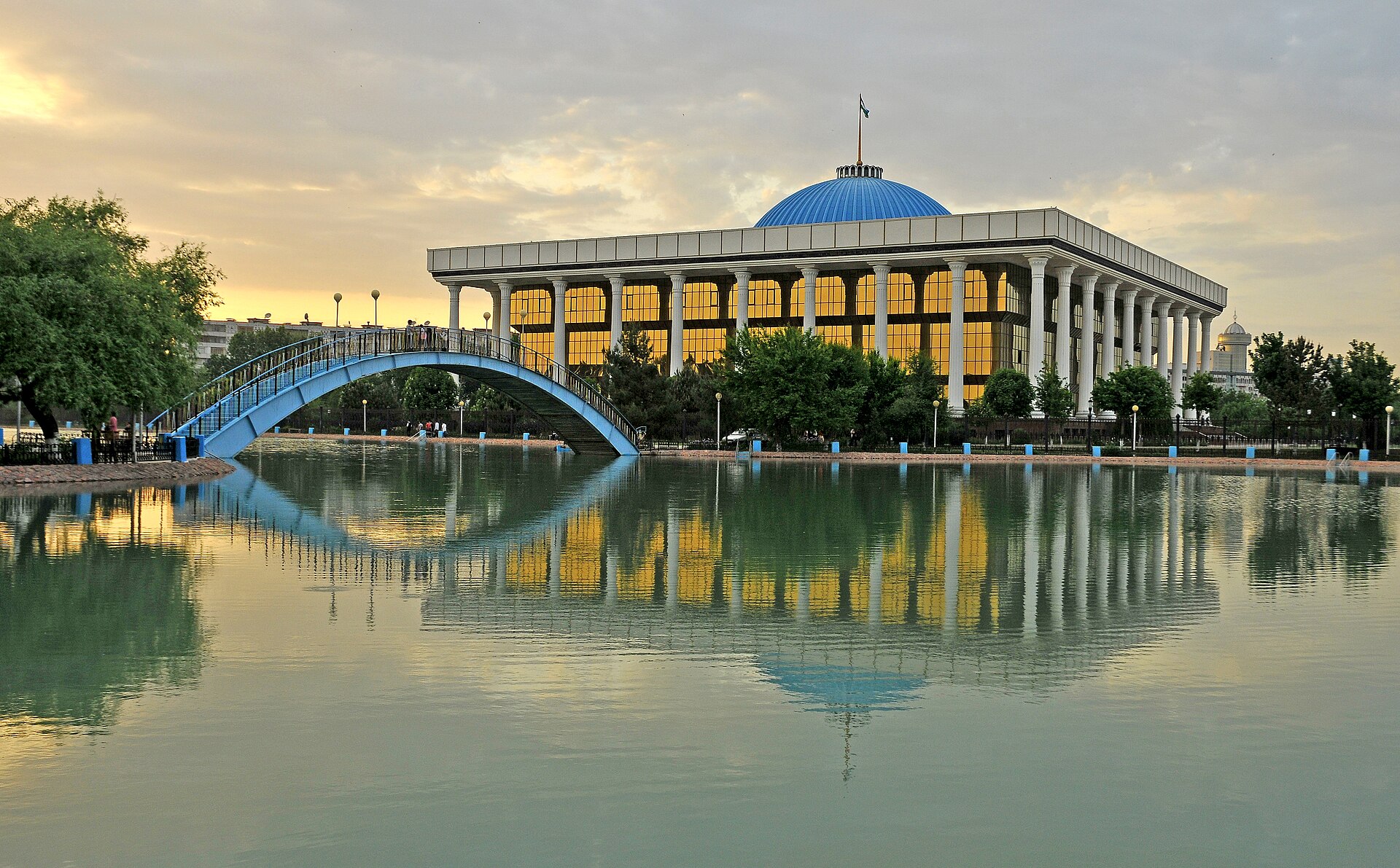
Uzbekistan is a vast, double-landlocked country in Central Asia, with an extensive history and culture, strongly influenced by its strategic location on the ancient Silk Road, between China and Europe. The territory was invaded multiple times through history by near-legendary characters including Timur (also known as ‘Tamerlane’), Alexander the Great and Genghis Khan. The practice of those invaders was to raze the conquered cities to the ground and rebuild entirely, so there was plenty of history to explore, but maybe not quite so ancient as one may expect.
I was intrigued by some pictures I had seen of the ancient city of Samarkand’s domes and minarets and an article I’d read on the country, so on impulse I booked myself a place on an organised group trip for solo travellers. In the weeks immediately prior to my departure, I was alternately excited and utterly terrified about what I might encounter, as it promised to be so different from all my previous travel experiences.
My tour group comprised 16 solo travellers (including myself), with an age range from late 40s to early 80s. Nearly everyone in the group had significant solo travel experience, covering all seven continents between us. I was lucky enough to be one of the youngest and fittest. Our route through Uzbekistan formed a 9 day loop from Tashkent to the historic cities of Khiva, Bhukara, and Samarkand, then return to Tashkent to fly back to the UK.
Tashkent, the Uzbek capital is mostly modern as it was extensively destroyed by an earthquake in April 1966, and now has a large modern-built market, selling all kinds of produce. Several unusual (to me) items caught my eye, including dried strawberries; large displays of strong-smelling and colourful spices; decorative round loaves of traditional Uzbek bread; sugar sold in large golden crystals on sticks, like exotic shining kebabs; long strings of dried chillies; and huge displays of beautifully woven baskets.
The historic centre of Samarkand was my high point of the trip, with a fabulous complex of blue-domed and intricately tiled mosques and madrasas (educational institutions often relating to Islamic studies, usually including rooms for visitors), at Registan Square. Registan Street, next to the square of the same name, has been included in a recent list of the most beautiful streets in the world in the British press. We were given some free time to explore the buildings around the square, so I grabbed the opportunity to climb the ‘leaning minaret’, which was hot work to climb up, check out the stunning view and race back down again in less than 25 minutes, as the spiral stairs were made of old bricks, extremely steep, irregular and with no handrail, just a looped rope to hold onto.
We visited a local bath house, or ‘hammam’, one morning in Bukhara. For a country with desert forming a significant proportion of its territory, and the air having extremely low humidity (around 35% for most of my trip, compared to 70 – 90%+ in the UK), the Uzbeks really love to bathe.
During our visit, the women were only allowed into the reception area, while the men were allowed further access, as a group of local men were already using the facilities.
I was just lining up to take a photo of a rather decorative interior door, when one of the Uzbek bathers suddenly appeared through the same door, bare-chested, somewhat dishevelled and flushed, to ask for another towel. He looked extremely shocked to see the reception area full of European women… and I took my picture at that exact moment, purely by reflex!
Also in Bhukara, we dined on a home-cooked version of the Uzbek national dish, ‘plov’, a rice-based dish usually served with meat and closely related to the Turkish ‘pilaf’. The meal was delicious, plentiful and also included portions of the traditional decorative Uzbek bread we had seen at the markets.
Unfortunately, by the following morning, several of the group were already suffering with ‘Bukhara Belly’, and had dropped out of the planned excursion. Most of us managed to keep going, but gradually through the next night, 13 out of the 16 started with one or more symptoms, including diarrhoea, sickness, physical weakness and dehydration.
Our supplies of Imodium and rehydration salts were shared with other travellers as needed and we found a pharmacy with a stock of the local Imodium equivalent. I was fortunate to be able to control my symptoms well enough to continue sightseeing. A depleted group attended the tour of the Bukhara Royal Palace and Harem, with most of the women carrying a full change of clothing, just in case of an accident. Suffice to say that one of the men was not so well prepared that day.
Four weeks after our return to the UK, two of our group (including me) were tested as we had continuing symptoms. It was confirmed that our bug was a form of dysentery, caused by a bacteria called ‘shigella’ – a nasty critter that can cause noticeable symptoms even with only six bacteria present. I had a low level of infection, but it was extremely persistent.
Uzbekistan was a revelation in some areas (for example, the very clean and odourless markets despite the September heat), but in the toilets, not so much. Most of the women on my tour refused to use squat toilets in favour of the seated designs which are more typical in Western Europe.
There was one memorable occasion in a highway service station, when I couldn’t wait, and ventured to use a squat toilet that was clearly home-made, with shiny ceramic tiles placed above a manufactured white bowl. Those tiles provided no grip at all for one’s feet. On the plus side, I noticed there was a strategically-placed handle, to assist with standing up afterwards.
After I had completed what I needed to do, I reached for the handle to help myself stand up… and nearly fell backwards into the toilet bowl. One end of the handle was already loose, so it twisted off the wall towards me! I managed to stand up with no further assistance, and blissfully unaware of what was about to happen, I pushed the handle. This toilet had a positively volcanic flush! I found myself leaping out of the way almost by instinct, as a torrent of water loudly gushed down from the cistern. I saw it erupt upwards and out of the toilet bowl, reaching an impressive height, before a tidal wave of foamy water spread rapidly across the tiles towards my feet.
I had experienced squat toilets in South-East Asia, where I learned to ensure I was already decent, re-zipped, and standing on the edge of the backwash danger zone before I pressed the flush. I was very grateful for my training on that day.
Considering the dramatic water eruption, there must have been an extended time since anyone had ventured to use that cubicle. I was laughing hard as I made my exit, as I was delighted to have escaped an unpleasant drenching. Before I left, I warned the other intrepid travellers about the beast within.
There were several other things I learned during my visit, which may not appear in the guidebooks:
– consider an exercise programme including squats and steps, to practice getting vertical again after toilet use and to prepare for exploring historic minarets with steep and uneven steps.
– pack a good supply of Imodium, rehydration salts, like Dioralyte, plus lip and face moisturisers (the low humidity dries out the lips and skin really quickly).
– take extra memory cards for your camera, or clear out plenty of space in your mobile phone, as there are a lot of photogenic sights to catch your eye.
– take US Dollar cash in preference to UK Sterling money or travellers’ cheques, and change some into Uzbek money on arrival at the airport. Collect low value Uzbek coins for paying for public toilets – they all have a charge for foreigners.
– for any solo female travellers who would like to visit, I would strongly recommend joining an organised tour. It became obvious that the locals are not used to European females walking alone, even in Samarkand, a city with long established tourist footfall.
As I was writing this article, I noticed an item in a British newspaper reporting that Uzbekistan tourism had a record breaking 2025 which pushed the country into the league of fastest growing global destinations. It aims to attract another 12 million international tourists in 2026. I was not surprised to learn of the planned increase, and I would encourage anyone to visit soon if you want to go. The clash of blue Islamic domes with imposing Soviet-era brutalist architecture only occurs at the heart of Central Asia. In Uzbekistan, it can be seen simultaneously at its most jarring and wonderful.
I was asked shortly after my return if I would visit Uzbekistan again, even after my experiences with those pesky bacteria, and the ongoing side-effect of raw lactose intolerance. My answer six months later remains unchanged: Yes, absolutely I would. It’s a fascinating country, with lots to see. It was even worth missing out on brandy butter and cream with my Christmas pudding.