



 BBC News
Borrowing was £17.4bn last month, the second highest October figure since monthly records began in 1993.
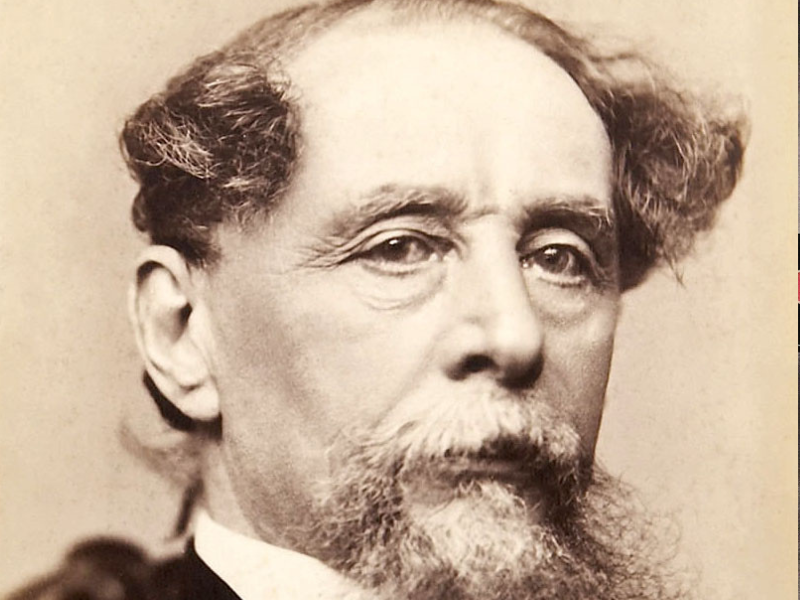
Iris Spark on how the man who invented Christmas also invented the impossible standard of moral capitalism
Every December, Charles Dickens haunts the modern workplace: he is Scrooge, and he is Marley, he is Tiny Tim and he is Bob Cratchit. Like Shakespeare, our greatest novelist has all bases cover. His A Christmas Carol, published in 1843, didn’t just give us a seasonal story – it created the template for every corporate social responsibility initiative, every workplace wellness program, and every CEO’s year-end message about “values-driven leadership.” Dickens essentially invented the idea that capitalism could have a conscience, that businesses could transform overnight, and that moral awakening could solve systemic economic problems.
Of course, Christmas can sometimes seem to unfold quickly and we don’t always have time to observe the uncomfortable truth that Dickens, literature’s patron saint of Christmas compassion, was himself a deeply problematic figure of personal contradictions.
The Dickens Industrial Complex
Dickens didn’t just write A Christmas Carol – he performed it. For decades, he toured Britain and America giving dramatic readings that earned him enormous fees while promoting the story’s message of social responsibility. The irony was palpable: Britain’s most famous advocate for the working poor had become a one-man entertainment corporation, charging premium prices to deliver moral instruction to middle-class audiences.
Simon Callow, who has performed Dickens’ work for decades, understands this dynamic intimately. In his Christmas Carol performances, Callow notes that “the narrator of Christmas Carol in our version is a conjurer and that makes sense” – acknowledging the theatrical manipulation inherent in Dickens’ moral storytelling. The author wasn’t just writing about transformation; he was engineering it as a consumable experience.
This contradiction runs deeper than simple hypocrisy. Dickens created what we might now recognize as the first “impact brand” – using social conscience as a marketing strategy while building personal wealth through the commodification of compassion. It is sometimes said that his Christmas readings were theatrical spectacles that allowed affluent audiences to experience moral catharsis without requiring actual behavioural change.
I think this view is somewhat hard on Dickens – and we must remember tends to be promulgated by people who didn’t, and couldn’t, write David Copperfield. Especially it underestimates the real impact reading his story can have on the reader: Scrooge really is awful at the beginning, and he really has changed by the end – and so might we. The fact that Dickens didn’t is a pity, as we shall see, but it doesn’t let us off the hook when it comes to learning from his great work.
A Christmas Carol’s publishing history has an interesting financial history. Dickens expected the book to earn him £1,000 but received only £230 – proving that stories about workplace transformation face market realities. His response wasn’t to question the system but to tour more aggressively, turning Scrooge’s redemption into a product that could be consumed repeatedly without losing its emotional impact. He was helped in this by being a superb actor and entertainer. Callow tells me: “Dickens was using music hall gags basically stuff from the variety stage which he transmuted into something so life enhancing and generous.”
The Domestic Dictator
That generosity is something we must hold to ourselves, while we consider with another part of our brain that it wasn’t so present at home. While Dickens portrayed Scrooge’s transformation from workplace tyrant to compassionate employer as a moral ideal, his own approach to managing domestic staff reflected the hierarchical norms of Victorian society. He expected punctuality, formality, and dedication from his servants—standards common for the time. Though their working conditions were demanding and their pay modest, they enabled the stable home environment that allowed Dickens to write passionately about social justice. This contrast invites reflection on the complexities and contradictions between personal practice and public advocacy in historical figures.
More troubling, perhaps, was Dickens’s treatment of his wife, Catherine. Over time, he appears to have increasingly side-lined her within their domestic life, culminating in their separation in 1858. In the aftermath, Dickens used his considerable public influence to shape the narrative, portraying Catherine in ways that damaged her reputation – suggesting she was emotionally unstable and unfit as a mother. He retained custody of their children and maintained a close connection with Ellen Ternan, a much younger actress, whose presence near his home raised questions about the nature of their relationship. While Dickens wrote movingly about love, redemption, and empathy, his private actions in this case suggest – to the put the matter somewhat mildly – a more complex and contradictory emotional landscape.
Claire Tomalin’s ground-breaking biography The Invisible Woman revealed the extent of Dickens’s deception regarding his relationship with the young actress Ellen Ternan. Tomalin uncovers how Dickens, in protecting his own reputation, systematically erased Ternan from the public record. “This is the story of someone who – almost – wasn’t there; who vanished into thin air,” Tomalin has said. Ternan, she explains, “played a central part in the life of Charles Dickens at a time when he was perhaps the best-known man in Britain,” yet her presence was deliberately concealed. Tomalin argues that Dickens went to great lengths to maintain secrecy, even destroying correspondence and distancing himself from people who might compromise the illusion of respectability. In her words, “he had everything to lose by being found out.” The biography tells, with empathy and forensic care, the story that Dickens himself “would never have cared, or indeed dared, to write” – not just a tale of love and secrecy, but of the social and moral pressures that allowed one of Victorian England’s most powerful voices to silence another’s completely.
Dickens’s personal papers suggest a man who valued order and influence in his domestic life, sometimes exercising a firm hand over his children’s correspondence, education, and social circles. While such behaviour may seem heavy-handed today, it reflected both the norms of Victorian patriarchy and Dickens’s own restless energy and sense of responsibility. The same man who created Bob Cratchit as a symbol of patient dignity under oppressive management could, in his private life, adopt a managerial role that others experienced as overbearing. Yet this tension between control and compassion, authority and empathy, fed directly into his art. As Peter Ackroyd observes in his biography, “This was indeed Dickens’s genius: to remove his private concerns into a larger symbolic world so that they became the very image of his own time” – transforming his personal anxieties and contradictions into stories that spoke to the social realities of an entire age.
The Charity Performance
Dickens’s philanthropic work was driven by a sincere desire to alleviate suffering, particularly among the poor and marginalized, but it was also deeply intertwined with his sense of self and public identity. His involvement in projects like Urania Cottage showed real commitment – he helped write the rules, selected residents, and envisioned it as a place of moral restoration. At the same time, Dickens’s public readings for charity, often emotionally charged and heavily promoted, reinforced his reputation as the conscience of Victorian England. As Claire Tomalin notes, these performances allowed him to present an “ideal self” to the world.
While the money raised was often modest in comparison to the scale of poverty, the events functioned as much as moral spectacle as they did relief work. In this way, Dickens helped pioneer a model of philanthropy that served both public good and personal brand – an approach not unfamiliar in today’s world of media-savvy humanitarianism.
The Impossible Standard
The lasting influence of A Christmas Carol lies not in a flaw, but in a paradox: its central message of transformation is both emotionally profound and socially idealistic. Scrooge’s overnight conversion – brought about by memory, fear, regret, and hope – is not meant as a literal model for structural reform, but as a moral parable. Dickens presents the possibility that a single awakened conscience can radically change not only a man’s life but the lives of everyone around him.
The power of the story lies in how complete that transformation feels. At the start, Scrooge is described as “a squeezing, wrenching, grasping, scraping, clutching, covetous old sinner,” one who keeps himself locked away from the world and warmth of others. But by the end, he is “as good a friend, as good a master, and as good a man as the good old city ever knew.” This is not just a moral U-turn – it’s a resurrection. Scrooge emerges from his long night of the soul with a new vision of what matters: “I am not the man I was,” he says. “I will not be the man I must have been.”
This is the kind of change that, Dickens suggests, truly transforms the world – not through policy or protest, but through the beating of a human heart newly awakened to compassion. When Scrooge asks the Ghost of Christmas Yet to Come, “Assure me that I yet may change these shadows you have shown me,” he is articulating the central hope of the story: that it is never too late to begin again.
While it’s true that modern institutions have sometimes adopted the language of transformation without committing to deeper change, it would be unfair to fault Dickens for that. He wasn’t writing a manual for corporate responsibility; he was giving voice to the longing for redemption. As Claire Tomalin observes, Dickens “could not cure the world’s ills, but he could make people feel them more sharply.” That feeling – of empathy, fear, love, and joy – is what gives A Christmas Carol its enduring force.
Ultimately, Dickens proposes that the only thing that can truly change a person’s world is the person themselves. Scrooge’s transformation is so powerful precisely because it arises from within. “Spirit!” he cries near the end, “hear me! I am not the man I was. I will honour Christmas in my heart, and try to keep it all the year.” The promise is not that society will change overnight – but that the human soul, given the right vision, can.
The Seasonal Solution
Dickens’ decision to set his story of personal and workplace transformation at Christmas was no accident – it was deeply intentional. The season, in Victorian culture and beyond, represents a time when ordinary hierarchies are softened by goodwill, when generosity is both expected and permitted. Within this temporary suspension of strict economic roles, Scrooge is able to offer Bob Cratchit a turkey and a raise—not as a systemic overhaul, but as a heartfelt gesture of personal redemption.
This seasonal framing has echoed through time, shaping the modern tradition of Christmas in the workplace – holiday bonuses, parties, and small tokens of appreciation that offer a momentary sense of warmth without shifting the underlying structure of employer-employee power. Dickens did not invent this logic, but he gave it emotional clarity and enduring symbolism.
Contemporary workplace culture has extended this logic year-round, in the form of “employee appreciation days,” wellness initiatives, and recognition campaigns. These well-meaning programs often echo the emotional pattern of A Christmas Carol — using sentiment and symbolic kindness to humanise work, while leaving deeper issues like pay equity, job security, and autonomy largely untouched.
This raises important questions about one of Dickens’ most compelling characters: Bob Cratchit. Cratchit is not merely a victim; he is a moral anchor of the story. His dignity, gratitude, and deep love for his family are portrayed as heroic. He does not resist or protest his conditions, but instead finds meaning within them. For Dickens, this was a powerful moral statement: that goodness can survive hardship, and that the human spirit can remain generous even under strain.
And yet, Cratchit’s silence and loyalty have come to define the ideal of the “good worker” – one who remains cheerful, loyal, and hardworking regardless of conditions. It’s a portrait that modern culture has sometimes taken literally, encouraging resilience and positivity while overlooking the structural causes of workplace stress. This is not necessarily a flaw in Dickens’ writing, but a reflection of how his work has been interpreted.
The literary establishment has long debated these tensions in Dickens’s vision. Simon Callow praises his “sense of social justice” and “comic genius,” while acknowledging his occasional blind spots. Virginia Woolf found him “too sentimental,” yet even she recognised the extraordinary vitality of his characters. Dickens was not a theorist of class or labour, but a dramatist of the human heart, and in A Christmas Carol, he offered a vision of personal moral growth rather than collective social revolution.
Still, the story’s influence endures, shaping both how we see work and how we express care within systems that don’t always reciprocate. Cratchit’s patience, Scrooge’s transformation, and the warmth of the Christmas table continue to inspire—reminding us that kindness matters, even if it must one day be joined by justice.
Beyond the Carol
Understanding Dickens not as a flawless moral authority but as a profoundly human and often contradictory figure may be one of the most meaningful ways to honour his legacy. His personal struggles – with money, power, family, and reputation – don’t undermine the social vision in his work. Rather, they reflect the very tensions he was trying to navigate: how to live ethically within systems that reward selfishness, hierarchy, and exploitation.
The enduring lesson of A Christmas Carol isn’t that workplaces can be transformed overnight through sheer goodwill. It’s that the gap between our values and our behaviours is real and persistent – and that closing that gap, even partially, demands continual effort, reflection, and imagination. Scrooge’s transformation, while dramatic, is not a blueprint but a fable. It reminds us of what is possible, not what is typical.
In this sense, modern readers might find more strength in Dickens’s contradictions than in idealizing his moral clarity. He used his writing to elevate conscience, and at times that also enhanced his reputation – but that tension isn’t evidence of hypocrisy. It’s evidence of a person wrestling with the same dilemmas we face now: how to work with integrity in systems that often reward its absence.
Rather than viewing Dickens as the patron saint of holiday generosity, we might instead recognize him as someone whose imperfections make his vision more powerful, not less. His own life bore the marks of compromise, ambition, and emotional complexity – but also of compassion, empathy, and a lifelong effort to awaken those qualities in others.
Perhaps the real ghost haunting modern workplaces is not the fantasy of Scrooge’s overnight redemption, but the unresolved tension Dickens himself lived with: the gap between moral aspiration and practical reality. That tension remains deeply relevant in a world where many still hope to align their values with their labour.
The Christmas spirit Dickens helped shape continues to enchant because it holds out the promise that goodwill, generosity, and redemption are always possible. That hope matters. But so does the harder truth – that these things are not easy, not guaranteed, and not solved by sentiment alone. Acknowledging that truth doesn’t diminish Dickens – it deepens our understanding of both his legacy and our ongoing task: to imagine, and to build, lives and workplaces that serve human dignity not just for one day a year, but all the year.