



 BBC News
Borrowing was £17.4bn last month, the second highest October figure since monthly records began in 1993.
Finito World
For most of human history, where you were born determined where you worked.
A farmer in Yorkshire farmed Yorkshire. A merchant in Bristol traded in Bristol. Even the industrial age, despite its upheavals, merely shifted people from village to city. Geography remained destiny.
Then came the internet.
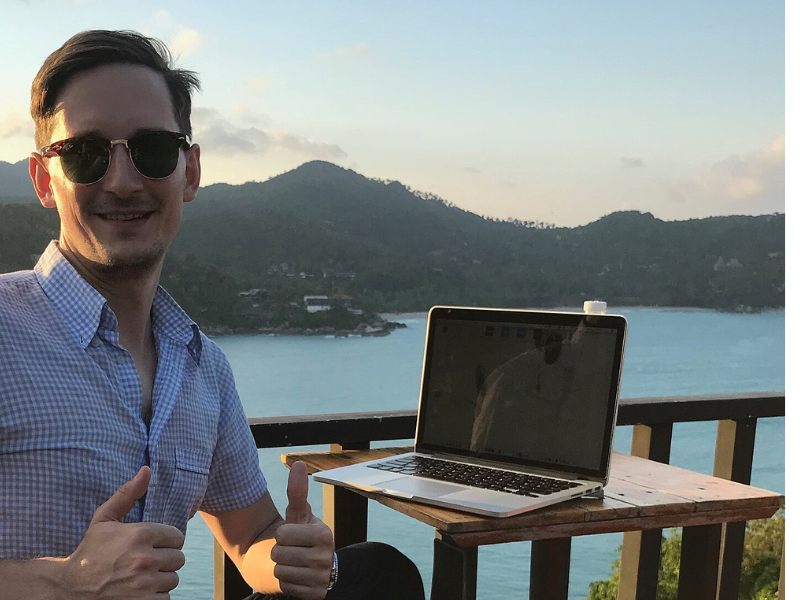
Now, for the first time in history, millions of people can earn a living in one country while living in another. According to recent estimates, around 165,000 Britons are now living abroad as digital nomads, while global interest in the phenomenon continues to rise. What once sounded like a niche lifestyle choice has become a serious economic trend.
The immediate attractions are obvious. Why endure a grey February in Croydon when you could be working from Valencia? Why pay London rents if your employer no longer cares where your laptop is located? Why commute at all?
A recent study by luxury travel advisers Bailey Robinson placed Spain at the top of its rankings for digital nomads, ahead of Portugal, Croatia, Georgia and Costa Rica. The winning formula was familiar: generous visa arrangements, fast internet, affordable living costs and an enviable quality of life.
Yet the rise of the digital nomad raises a more profound question than where one should live.
What exactly is a nation for if work no longer requires us to remain inside one?
For generations, the social contract was relatively straightforward. People lived, worked and paid taxes in roughly the same place. Businesses depended upon local workers. Workers depended upon local institutions. Governments provided roads, schools, healthcare and security.
The digital nomad challenges that arrangement.
Today’s software engineer can earn a British salary while drinking coffee in Lisbon. A consultant can advise clients from a beach in Costa Rica. A designer can work for a company in Manchester while living in Málaga.
This sounds like freedom, and in many respects it is.
But freedom often arrives accompanied by trade-offs.
The first is community. One of the striking features of modern life is how many people already feel disconnected from the institutions around them. Church attendance has fallen. Political parties have shrunk. Local associations struggle. Friendships increasingly exist online.
The digital nomad movement can sometimes intensify this tendency. A person who moves every six months acquires experiences but struggles to acquire roots. They collect destinations but not necessarily belonging.
The second challenge concerns fairness.
The countries now competing to attract remote workers are not really seeking immigrants in the traditional sense. They are attempting to attract income. Governments have realised that a professional earning a foreign salary can contribute significantly to the local economy while placing relatively little pressure on the labour market.
This explains the proliferation of digital nomad visas from Spain to Thailand. Nations increasingly compete not merely for investment but for individuals.
We are witnessing a form of global competition that previous generations could scarcely imagine.
Cities once fought for factories. Countries now compete for laptop users.
The winners are likely to be places that combine good governance, pleasant weather, cultural vitality and reliable infrastructure. The losers may find that their most productive citizens gradually drift elsewhere.
Britain should pay attention.
For years policymakers worried about companies relocating abroad. Increasingly they may need to worry about people doing the same. If highly skilled workers can choose between London and Lisbon, taxation, housing costs and quality of life begin to matter in entirely new ways.
A young professional earning £70,000 may no longer compare Manchester with Birmingham. They may compare Manchester with Barcelona.
That changes the calculation for governments.
Yet there is also a deeper philosophical question lurking beneath the spreadsheets and visa applications.
Human beings are not merely economic actors. We do not live by internet speed and sunshine alone.
The paradox of digital nomadism is that it promises precisely the thing many modern people desire: freedom from constraint. But constraints are often what create meaning. Family obligations, local loyalties, familiar streets and longstanding friendships can feel restrictive. They can also provide the foundations of a good life.
The future probably belongs neither to permanent settlement nor permanent wandering.
Instead, digital nomadism may become another stage in humanity’s search for balance: the attempt to enjoy the opportunities of a global economy without losing the local attachments that make life worth living.
The challenge for the twenty-first century will be discovering whether we can remain citizens of somewhere while working from anywhere.