


 BBC News
Borrowing was £17.4bn last month, the second highest October figure since monthly records began in 1993.
Christopher Jackson
It was the summer of the Paris Olympics, and the closing ceremony had just happened. If you were watching, you will remember the sideways piano — a Steinway hung vertically on a wire, dangled above the Trocadéro like a surrealist provocation nobody had asked for. France had deployed its cultural confidence at full blast, which is to say at full volume and with the self-satisfaction of an institution that has been right about so many things that it can no longer imagine being wrong about anything. My eight-year-old looked at the screen during the handover to Los Angeles. Tom Cruise appeared. “Daddy,” she said, “who is that old actor?”
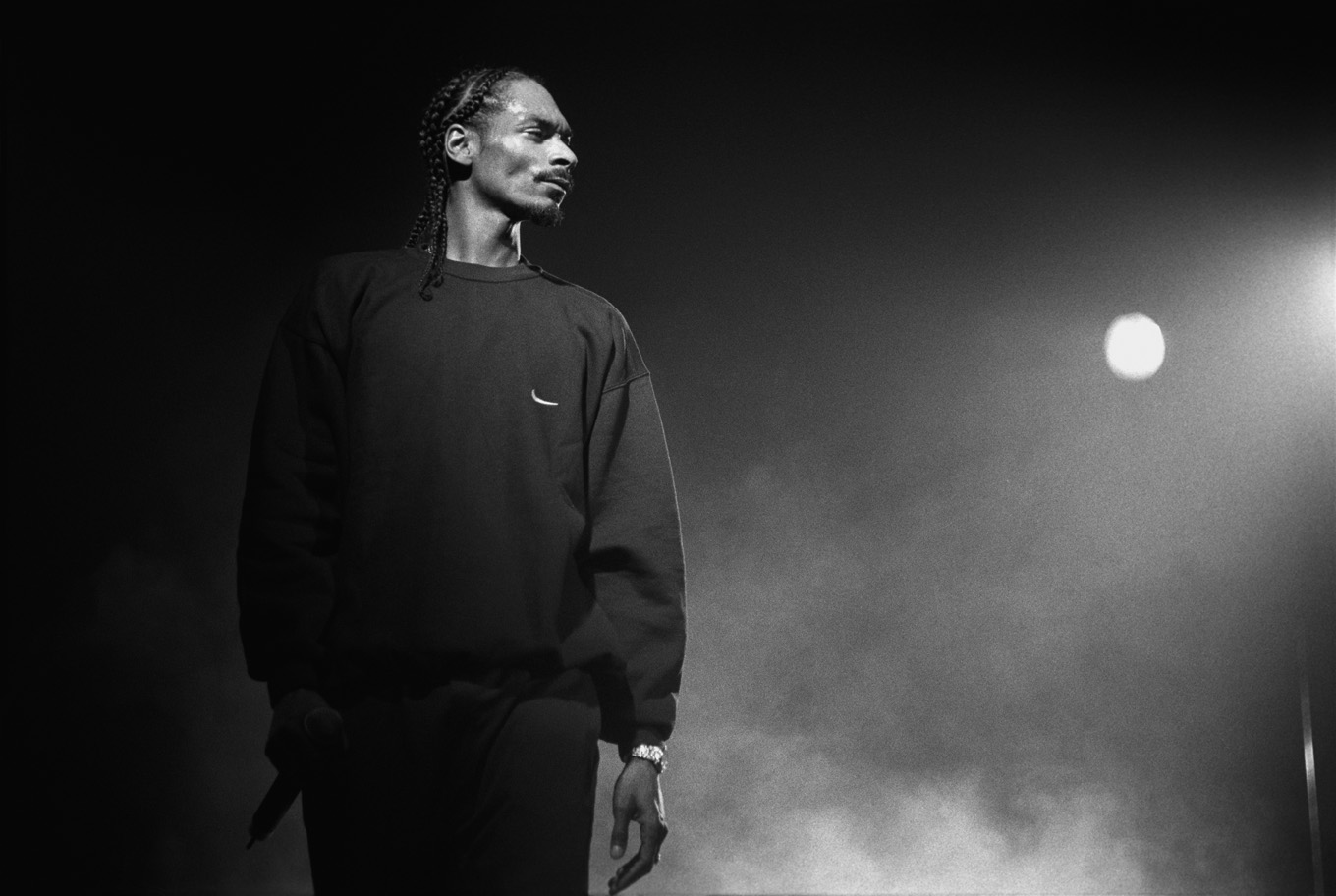
And then we were in Los Angeles. And then Snoop Dogg was onstage, and “Drop It Like It’s Hot” was filling the beach — that lazy, insolent, perfectly constructed track — and something shifted. If Paris had been culture as argument, this was culture as energy. There is a quality to American popular confidence, at its best, that is almost physical: it moves through a crowd like weather. Snoop embodied it, as he has been embodying it since 1993, which is itself a remarkable fact. The man has been famous for thirty-three years and is still, indisputably, Snoop Dogg.
A few months later, an email arrived from Cameo — the platform where you can pay celebrities to record personalised video messages. “Snoop Dogg is back.” That was the entire email. Curious, I looked up the price: approximately £1,200 for a video that, according to the platform’s own data, runs to an average of around twenty-seven seconds. That works out at roughly £44 per second. For context, the average UK junior doctor earns less than that per hour. The economics are, depending on your perspective, either outrageous or simply the market being efficient about cultural value. Probably both.
For perhaps two billion people alive today, Snoop Dogg needs no introduction – he is one of the most recognisable humans on the planet, and what he represents is one of the genuinely transformative cultural and economic forces of the past half-century. Rap music. The hustle made audible.
Out of the Bronx: The Origin Story
Rap was born in a specific place at a specific moment: the South Bronx, New York City, August 11, 1973. A teenager named Cindy Campbell threw a back-to-school party at 1520 Sedgwick Avenue. Her brother, Clive — known as DJ Kool Herc — was the DJ. He developed a technique he called the “Merry-Go-Round”: isolating the percussion breaks in funk and soul records and extending them by switching between two copies of the same disc. From that isolated beat, an art form grew.
The South Bronx of the early 1970s was, by most measures, one of the most deprived urban environments in the Western world. Whole city blocks had been burned out — some by arson for insurance, some by accident, some by the city’s own urban renewal policies that had severed communities from their moorings. Unemployment ran above thirty percent. The official economy had largely withdrawn. What remained was what the sociologists call the informal economy and what the people living there called, more simply, the hustle.
Rap emerged from that hustle. This is not incidental to what it is. The obsession with money, status, and the mechanisms of survival that characterise so much of rap’s DNA are not a pose or a marketing strategy. They are the subject matter that was immediately to hand for the people who made the music – the same way that the blues emerged from the sharecropping South, or that punk emerged from the deindustrialised Britain of the mid-1970s. When DJ Kool Herc played those break beats, and when MCs began to speak over them, they were doing what artists have always done: making the specific conditions of their lives into something universal enough for other people to hear themselves in.
The parallel with rock and roll is instructive. Rock was also born from poverty, also emerged from a Black musical tradition that the white mainstream then colonised, also spent years being regarded as a menace before becoming a multi-billion-dollar industry that employs hundreds of thousands of people. Elvis Presley, born in poverty in Tupelo, Mississippi, took Black music into white living rooms. The outrage was almost identical in character to the outrage rap would later provoke. The parents of the 1950s who worried about Elvis’s hips were the grandparents of the parents who worried about NWA’s lyrics. The anxiety is always the same: this music is coming from somewhere we don’t understand, and it is aimed at our children, and it doesn’t respect the conventions we spent our lives maintaining.
The Founding Figures and the Grammar of a Genre
The history of rap’s founding figures is the history of people creating an entirely new professional infrastructure where none existed. Grandmaster Flash and the Furious Five, Afrika Bambaataa, Run-DMC, LL Cool J, Public Enemy, N.W.A — each of these acts was not merely making music but inventing the mechanisms by which that music could sustain careers. Independent labels. Street-level distribution. A fashion industry oriented around the music. A touring economy built on loyalty rather than radio play.
Run-DMC, in particular, understood something that the established music industry took years to grasp: that rap was a total lifestyle culture, not merely a genre. Their collaboration with Adidas in 1986 — which resulted in the first major endorsement deal between a hip-hop act and a sportswear brand, worth $1.6 million — was the moment the boardrooms began to pay attention. Before Run-DMC, the idea that a rapper could anchor a brand partnership would have seemed faintly absurd. After them, it became the template. Jay-Z, in due course, would build an empire — Roc Nation, the D’Usse cognac brand, the Armand de Brignac champagne, the Tidal streaming service, a net worth estimated by Forbes at over $2.5 billion — that is essentially a scaled-up version of what Run-DMC intuited in a hotel room in 1986.
The scale of what hip-hop has built is now genuinely difficult to overstate. The global hip-hop market is projected to reach $30 billion in 2025. In the United States alone, the industry contributes over $15 billion annually to the economy. Rap and hip-hop accounted for nearly 28 percent of all music streamed in the US in 2024, making it far and away the most listened-to genre on the planet. Kendrick Lamar and SZA’s joint tour generated $358.7 million in a single run. The global streetwear industry, shaped almost entirely by hip-hop aesthetics, is valued at $185 billion and growing. In 2020, eight of the ten most streamed songs in the United States were hip-hop tracks. Jay-Z, Drake, Kanye West, and Diddy have all appeared in Forbes’s annual lists of the highest-paid entertainers — alongside, increasingly, their business interests rather than their music alone.
The jobs this industry has created are not only the obvious ones. Yes, there are rappers, producers, DJs, and label executives — but there are also intellectual property lawyers who specialise in sample clearances, nutritionists and personal trainers attached to major acts, documentary filmmakers, merchandise designers, social media strategists, data analysts tracking streaming performance, brand partnership managers, and a whole ecosystem of event production, logistics, and security that travels with any major tour. The hip-hop industry’s expansion into fashion, alcohol, cannabis, tech, and film has created employment opportunities that would have been literally unimaginable when Kool Herc was playing those break beats on Sedgwick Avenue.
Literature in Disguise
In 2003, a journalist asked Seamus Heaney — then among the most celebrated poets in the English language, a Nobel laureate, a figure of such cultural authority that his opinions on prosody were reported as news — whether there was anyone in popular culture doing for his generation what Bob Dylan and John Lennon had done for theirs. Heaney replied without hesitation: “There is a guy Eminem. He has created a sense of what is possible. He has sent a voltage around a generation. He has done this not just through his subversive attitude but also his verbal energy.”
It was a remarkable endorsement, and it caused the kind of controversy that only the endorsement of an unlikely figure by an unlikely admirer can cause. The establishment was divided: was this a Nobel laureate extending the boundaries of literary seriousness, or had the man simply lost his mind? But Heaney was onto something real.
Eminem is, by any technical measure, a poet of unusual gifts: his command of internal rhyme, his ability to sustain complex rhyme schemes across multi-syllabic chains, his use of persona and dramatic monologue, would be impressive in any literary form. The fact that he deploys these skills over a beat rather than on a page does not diminish them. Take, for instance, his song Stan where a slightly unhinged fan is writing to Eminem:
Dear Slim, I wrote you, but you still ain’t callin’
I left my cell, my pager, and my home phone at the bottom
I sent two letters back in autumn, you must not’ve got ’em
There probably was a problem at the post office or somethin’
Sometimes I scribble addresses too sloppy when I jot ’em
I don’t know too many poets who can sustain that rhyme scheme (‘bottom’ ‘autumn’ ‘got ‘em’ ‘jot ‘em’), while at the same time capturing that awkward friendliness, lack of self-awareness and insecurity of the fan as Eminem does here. Zadie Smith, who interviewed Eminem for Vibe magazine and later wrote about him at length, put it precisely. Rap, she wrote, uses “a narrative medium that mixes story-telling with dramatic monologue, boasting with political mission-statements, original poetry with endless quotation.” Elsewhere she has said that the part of her brain that should be reserved for poetry is occupied entirely by rap lyrics – a confession that would resonate with anyone who has found that they can recite the verse from Jay-Z’s “Izzo (H.O.V.A.)” while being unable to remember even the first line of a poem they were required to study at school.
The literacy argument matters beyond aesthetics. Hip-hop songs average 3,869 unique words per song — more than any other genre. The density of reference in a Kendrick Lamar album — to the Bible, to Compton street geography, to jazz tradition, to Greek myth, to the specific inflections of AAVE — is comparable to the density of allusion in a poem by Geoffrey Hill or a novel by Toni Morrison. This is not accidental. The form demands it. To rap well is to do something genuinely difficult, and the people who do it with mastery know exactly how difficult it is. “I don’t consider myself a genius,” Lin-Manuel Miranda has said. “I consider myself someone who works really, really, really hard.”
Eminem’s relationship to the question of race and rap is itself a literary subject. He is, as Zadie Smith put it with characteristic precision, one of perhaps four white men in the history of the genre — the Beastie Boys being the others — who have been accepted as legitimate rather than derivative. “When I met him I felt that he gave me a poster,” Smith said. “He was coming at that tradition from the outside and I thought I was coming at my tradition from the outside. And it struck me that if you are coming inside-out that way, you have to work twice as hard.” As Chris Rock once observed, something had changed in America when the best golfer was Black and the best rapper was white. The racial dynamics of who gets to speak, in what idiom, with what authority, have never been more legibly dramatised than in the career of Marshall Mathers.
Hamilton, Disney, and the Institutional Reckoning
Hip-hop’s arrival in the institutional mainstream was signalled, with unusual drama, on May 12, 2009. Lin-Manuel Miranda was invited to perform at the White House Evening of Poetry, Music, and the Spoken Word. He stood in the East Room, in front of Barack and Michelle Obama, and performed the opening song of what he described as “a hip-hop concept album about the life of Alexander Hamilton.” The audience –poets, academics, dignitaries – laughed at first, nervously. Then they stopped laughing and started listening.
Six years later, Hamilton opened on Broadway. It won eleven Tony Awards, including Best Musical, Best Book, and Best Original Score. It won the Pulitzer Prize for Drama. It grossed over $650 million in its first three years. The cast album became – and remains – the most streamed Broadway musical on Spotify. When it transferred to Disney+ in 2020, it was watched by more than ten million households in its first month.
What Hamilton demonstrated, at a scale that could not be ignored, was that rap is a vehicle for storytelling sophisticated enough to carry any subject. Miranda had taken the rhythmic and lexical tools of the South Bronx – the fast-syllabled boasting, the battle rhymes, the verbal dexterity that Heaney had recognised in Eminem – and used them to tell the story of an immigrant founding father, the revolution, the birth of a nation. “Hip-hop is the language of revolution and it’s our greatest American art form,” Miranda told Apple Music’s Zane Lowe in 2020. “It was the fact that Hamilton got everywhere on the strength of his writing. That was the whole idea. That’s what my favourite MCs do.”
Miranda then took those same skills into Disney – writing the songs for Moana, Encanto (“We Don’t Talk About Bruno” became one of the most streamed Disney songs in history), and effectively creating a pipeline between hip-hop’s aesthetic values and the largest entertainment company on earth. The integration was complete. The music that had emerged from a burned-out borough in New York City was now scoring animated films watched by toddlers in 193 countries.
The Complications
It would be dishonest to write about rap without acknowledging what has always been its most contested dimension. The misogyny in the genre – the long-standing tradition of referring to women in terms that would not be permitted in any professional environment and would constitute harassment in any other context – is not peripheral. It is, in too much of the canon, central.
The careers of several major figures have intersected with violence, sexual assault, and exploitation in ways that the music itself sometimes anticipated, sometimes glorified, and sometimes directly documented. Tupac Shakur, Biggie Smalls, XXXTentacion – the genre has lost a series of artists to violence that was never entirely separable from the world the music described. The recent legal difficulties of Sean “Diddy” Combs are a reminder that the industry’s founding generation operated in an environment of power with limited accountability, and that the cost of that was, in some cases, borne by others.
Kanye West – a figure whose musical genius is matched only by his capacity for self-destruction – has in recent years descended into a series of public antisemitic statements that have cost him his Adidas partnership (worth an estimated $1.5 billion), his record deal, and a significant portion of his cultural standing. West once said, with characteristic grandiosity, “I’m a creative genius and there’s no other way to word it.” He may have been right about the first part, but his behaviour has become increasingly erratic: sometimes genius can blur for its possessor into rank confusion.
These are not footnotes to the history of rap. They are part of it. The same culture that produced Kendrick Lamar’s To Pimp a Butterfly — a meditation on Black identity, trauma, and resilience so densely realised that it was immediately entered into the literary canon by people who had previously insisted that literary canons could not include rap — also produced a great deal that celebrates the exploitation of the powerless. The genre’s admirers owe it to the form, and to themselves, to hold both things in mind simultaneously.
What Snoop Knows
Return, then, to Snoop. He was born Calvin Cordozar Broadus Jr., in Long Beach, California, in 1971. He was raised on funk and gospel. He was arrested multiple times in his teens. He was introduced to Dr. Dre by Warren G in 1992, and the rest is not history so much as an ongoing event: thirty-three years of sustained commercial viability, cultural relevance, and genuine affection from audiences who have grown up alongside him.
What is remarkable about Snoop is not his longevity per se — Elvis lasted twenty years, the Stones have lasted sixty — but the nature of his transformation. He has moved from gangster rap to reggae (as Snoop Lion), to cooking shows with Martha Stewart, to Olympic punditry, to NBC News correspondent at the Paris games, to the Cameo inbox. He is, in a sense, the complete picture of what rap has become: a genre so embedded in mainstream cultural life that one of its founding figures can serve as a national mascot at a sporting event and this strikes no one as incongruous.
The Cameo price — and let us be honest, approximately £1,200 for twenty-seven seconds of Snoop looking directly at a camera and saying your friend’s name is an extraordinary piece of pricing — tells us something precise about the economics of cultural celebrity in 2025. Does he even need the money? It’s hard to imagine he does. Even so, the market for Snoop’s attention, even at this most attenuated level, is robust. He has reportedly earned more than a million dollars on the platform. There are producers who have spent their entire careers in the music industry and not earned as much from a decade of work as Snoop earns from a few hundred short videos. This is not an argument for or against anything. It is simply what the market, in its disinterested way, has decided.
The genre that began at a back-to-school party in the Bronx — with a teenage DJ, a crate of records, and the percussive intelligence to hear what everyone else had been hearing but not quite listening to — has become, in fifty years, the dominant cultural force of our time. It is the most streamed music on earth. It employs lawyers, data scientists, brand strategists, tour managers, streaming analysts, and merchandise designers in numbers that would have seemed fantastical to Kool Herc. It has produced a Pulitzer Prize-winning musical. It is in the Disney canon.
“Hip-hop is the language of revolution,” Miranda said. He was right, though not quite in the way he meant. It is the language of revolution in the economic sense: it has revolutionised how music is made, distributed, and monetised; how careers are built; how brands are constructed; how storytelling is taught in schools. Seamus Heaney heard it. Zadie Smith absorbed it. Lin-Manuel Miranda channelled it into one of the most successful theatrical productions of all time.
And Snoop, as he has always been, is back.