



 BBC News
Borrowing was £17.4bn last month, the second highest October figure since monthly records began in 1993.
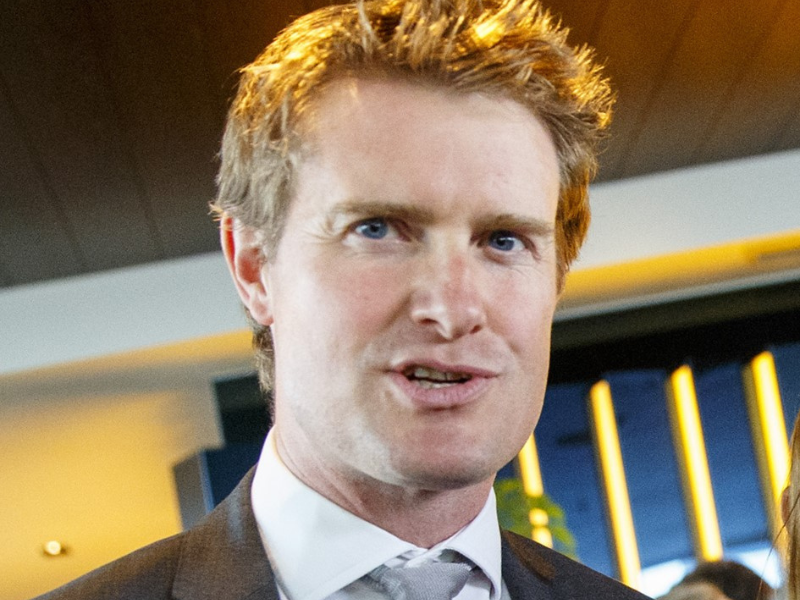
The director of the V&A and former Labour MP on Manchester, the curriculum, and the limits of state power
If you want to see a working model of how culture and political leadership reinforce one another, you don’t need to look to Whitehall. You need to look at Manchester. I think Andy Burnham has done a good job telling a story about the city, but the people who actually delivered Manchester were Howard Bernstein and Richard Lee, the council’s former chief executive and leader.
What distinguished their approach was that they put culture at the heart of it from the start: the Manchester International Festival, which they partnered; the support for the city’s nightlife; the cultural support for institutions; and yes, sport as well, which is kind of handy. Liverpool, by contrast, didn’t manage that same integration for years, and is only beginning to get there now. The deeper lesson is that Manchester’s success was both local and global at once; they always wanted Manchester to be this place on the world stage, not just a city with strong local identity. You don’t have to choose between the parochial and the global. Done well, culture can be both.
That same instinct for institutional independence runs through how I think about restitution and repatriation, where I don’t think the answer is as simple as people sometimes want it to be. On the question of whether the state should intervene in labelling, my answer is no. Incidentally, that’s literally what they’re doing at the White House right now, asking institutions, most notably the Smithsonian, to go through all their labels to hunt out particular content.
But the fact is that institutions are largely capable of self-correcting. If you go too far, there are systems in place – the media, donors, civil society, government – that pull things back. I don’t think you’d want to end up in a situation where one government rewrites a label the wrong way, then there’s an election, and the next government rewrites it back. That’s not a stable basis for anything. For the most part, curators and museum professionals have a very strong professional ethic about how they approach these questions.
On restitution specifically, my view is that museum trustees should be accountable and have real responsibility over their collections. At the moment, because of various pieces of legislation, the British Museum, the V&A and the Science Museum are unable to repatriate objects at all. We have a wonderful monstrance from a cathedral in Spain, which was stolen in 1910; we have a photograph of it in place in 1905, and a photograph showing it gone by 1950. We know it was stolen in 1910, and we know it came onto the market and made its way to us. The source is stolen. We can’t return it. We’ve sent it back on loan, but legally we cannot restitute it, and to my mind that’s not right. I would want a situation where the trustees of a museum could express an intention to do something, and it then goes to an advisory panel, as already happens with Nazi-looted material, which says yes or no, object by object.
In truth, there’s some material in the V&A which was looted or stolen that I would give back, and there’s some material that I wouldn’t, because it has built up a relationship with the collection that makes sense, relative to its position, given that there’s often no longer really a source community in the form it was taken from. But the key thing is that I would then be open to criticism for that decision, and held accountable for it. At the moment, all I can do is point to the law, and I don’t think that’s a mature position for an institution to be in.
That’s why across our society, we need to be thinking longer term. On education, the reforms of the last ten years – the so-called Gove reforms – made some real improvements in literacy and numeracy. But we also stripped away a great deal of creativity from the curriculum in the process. Some of that needed to go; some of it was a mistake. My bigger concern, though, isn’t really about any one curriculum’s content; it’s that changing a curriculum every five years with each government is a disaster. You need cross-party consensus, the way they have it in Finland, Singapore and Lithuania, where it embeds itself over fifteen or twenty years. We are nowhere near that conversation at the moment.
We also need to look at the BBC. It’s fun to bash the BBC – it is unbelievably annoying at times – but over time, institutions tend to self-correct. Safeguarding and securing it is a really important part of any cultural framework for the future, making sure that access to culture through television, which has been such a hallmark of the BBC for half a century, is somehow preserved, because your Paramounts, your Disneys and your Netflixes don’t care. There’s no sense of public service in them.
Across the landscape we see a need for deeper and long-term thinking. Again, on the built environment, Michael Gove was getting there towards the end of his time as Housing Secretary on some of the housing and building-rate questions, and at least he had an aesthetic vision. But governments more broadly have built, built, built without any real sense of what the aesthetics are. They’re going ahead with an absolute monstrosity at Euston station, destroying a great deal of civic fabric and Victorian heritage.
There’s little sense of design spirit in it at the moment. Some local authorities are better than others and have a feel for this, but they’re under real pressure to deliver housing numbers. It doesn’t help that the professionals who once had the confidence to say no to certain developments until sensible conditions were met are now in short supply. So my advice, if you care about this, is: stand for office. Become a councillor. Hold the line.
Underlying a lot of this is something about institutional trust. Indices of trust show that people working in cultural institutions and education are still very highly rated, more highly, in a sense, than some of what people in tech or elsewhere think or expect. So we should utilise them appropriately. Politicians need to be careful here: democracy is fragile, and institutions and civil society are a really important part of that ecology.
That same concern about fragility shows up when I think about the gap between London and the rest of the country. The disparity now between London and a place like Barrow, for instance, is really shocking. That’s a particular UK problem, partly because of how political investment is structured, and partly because of something older: since the Tudors, London has combined the court, the city and the politicians all in one place in a way no other British city does, and it keeps all of it. Globalisation, and the acceleration of wealth concentration that comes with it, has only made that worse. Which is why work like Andy’s, work that’s rooted in a particular place rather than just London, really matters.