


 BBC News
Borrowing was £17.4bn last month, the second highest October figure since monthly records began in 1993.
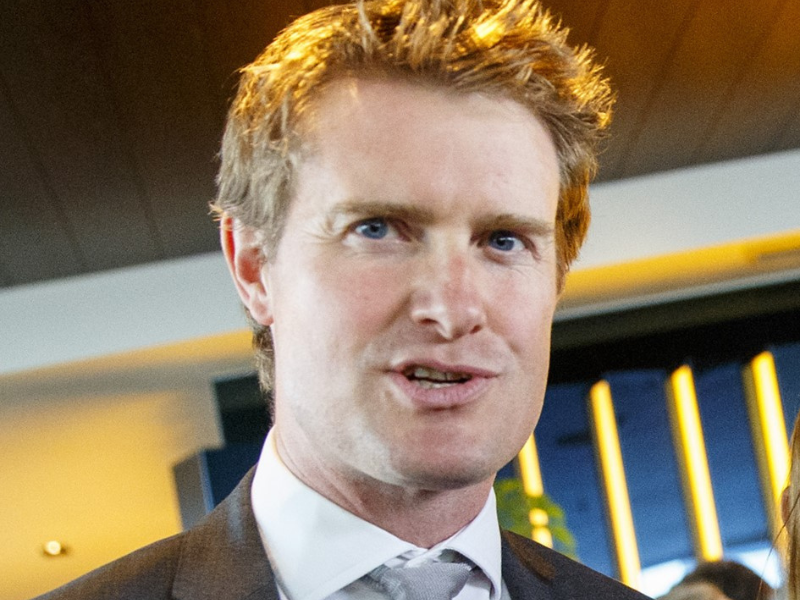
The V&A director on Britain’s untapped strengths, the future of science and the danger of talking ourselves down
I sometimes think Britain has become rather too accomplished at describing its own decline. We know the statistics. Growth is low, our position in the world is not what it was, and the challenges facing government are considerable. But there is a danger that we talk ourselves into a kind of doom loop, in which the story of national weakness becomes so familiar that we lose sight of what is still extraordinary about this country.
People from around the world still want to come here. Some are literally risking their lives to do so. That ought to tell us something. There is a brilliance and a wonder about Britain which we are not always very good at recognising ourselves. Our institutions have a responsibility, in however small a way, to make that visible, and to create the civic space in which it can flourish.
You can see that confidence at certain moments almost without anyone having to organise it. Think of the BRIT Awards, the BAFTAs, Wimbledon, or a World Cup. These occasions have a remarkable ability to capture attention and remind us of the things we can do exceptionally well. They emerge from different worlds, but they tell a story of talent, ambition and international reach. The question is how to generate something of that energy in other fields, where the achievements may be less immediately visible.
Science is an interesting case. We have excellent universities, an entrepreneurial spirit and, of course, London. Put those things together and I think there is potentially a real opportunity for Britain to play a leading part in the conversation around artificial intelligence. That is not to pretend we have the resources of the United States, or that the competition will be easy. It is to recognise that we have assets which could be put to much better use.
There is also an opportunity arising from what is happening elsewhere. As the American federal government cuts scientific projects and seeks to remove language around subjects such as climate change, the ability to study and research freely becomes more valuable. Britain cannot simply match American spending. But it can offer intellectual freedom, and that is not a small thing. It may become one of our great competitive strengths.
What worries me is that government seems increasingly nervous about making big bets. There is an incapacity, or at least a reluctance, to commit to ambitious projects of the sort we might have contemplated ten or fifteen years ago. Perhaps that is understandable in a low-growth economy. But there is a circularity to it. If you are always waiting for the conditions to become favourable before making an ambitious decision, you may never make one at all.
I don’t have a neat answer to that problem. And I am wary of pretending that a museum director can produce a programme for national renewal. But I do think our institutions have a role in sustaining the conditions in which confidence and originality can survive, particularly when the political system is finding it difficult to articulate a convincing direction.
One encouraging sign is the appetite for the real thing. People still queue around the block for exhibitions. There is an extraordinary demand for experiences which take place in person, for the encounter with an object, an idea, or other people in a shared space. At a moment when so much of life is mediated through screens, that thirst for connection is worth taking seriously.
Perhaps the first step is simply to stop assuming that the story of Britain has already been written. We have genuine weaknesses, and it would be absurd to deny them. But we also have universities, creative people, institutions and freedoms which others continue to value. The challenge is to turn those strengths into a sense of possibility, rather than allowing them to become footnotes in an endlessly rehearsed account of decline.