



 BBC News
Borrowing was £17.4bn last month, the second highest October figure since monthly records began in 1993.
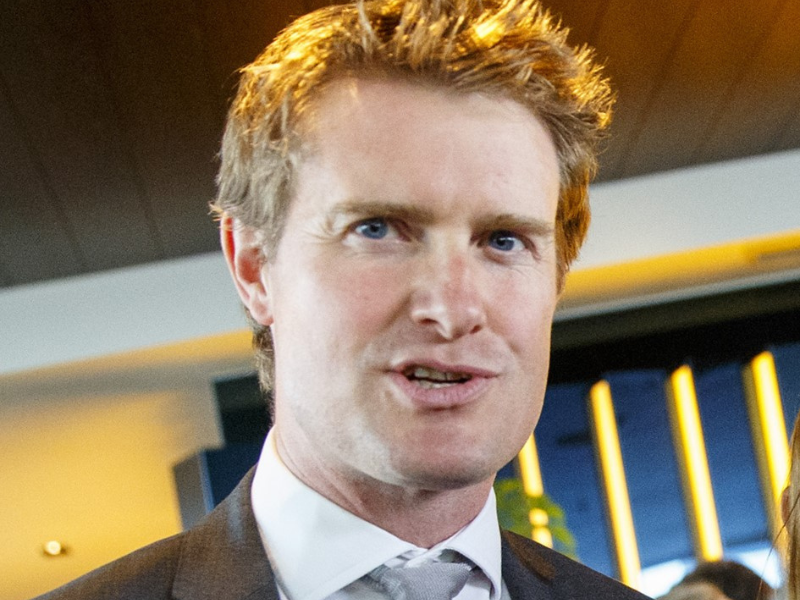
The historian, former MP and current director of the Victoria and Albert Museum surveys the cultural landscape
I have been thinking a great deal about the relationship between art and the future of Britain, less as an abstract question and more as a practical one. For all the noise of contemporary politics, this remains one of the quiet determinants of what kind of country we are, and what kind of country we might become.
It is easy to forget that the institutions we now take for granted were born not out of confidence, but anxiety. The Victoria and Albert Museum, where I now serve as director, traces its origins to the Great Exhibition of 1851. We often remember that moment as a triumphant display of imperial prowess, Britain as workshop of the world, basking in its industrial supremacy. In truth, it was something closer to a national moment of self-doubt. Prince Albert was deeply concerned that Britain was falling behind in design, manufacturing and the applied arts. The Exhibition was intended not to congratulate but to provoke, to expose British industry to the superior workmanship of others, and in doing so, to force improvement.
From that act of nervous self-reflection came a collection that has grown from a handful of objects into millions, spanning thousands of years of human creativity. Yet the founding purpose has remained remarkably consistent. The museum is not simply there for passive enjoyment. It exists to inspire, to provoke the next generation of makers, designers and thinkers into producing something new. Culture, in that sense, is not decorative. It is functional.
This, I think, is where we have lost our way in contemporary political thinking. There is a tendency, particularly in the centre, to treat culture as an optional extra. Something pleasant, something worthy, but not quite essential to the business of governing. That is a mistake. If you look across Europe, or indeed to the United States, it is often the populist right that has most clearly grasped the importance of culture as a tool of politics. Ministries of culture are not afterthoughts. They are instruments of power. They shape narratives, identities, and the sense a nation has of itself.
Britain, by contrast, has been oddly hesitant. And yet historically this was not always the case. Conservative governments, in particular, have often had a much clearer sense of the relationship between culture and national identity than they are sometimes given credit for. Harold Macmillan’s willingness to sweep away Victorian architecture in favour of modernism was not merely an act of vandalism, but an attempt, however flawed, to project a vision of a new Britain. Margaret Thatcher, for all the ideological battles of her era, had a strong sense of the symbolic importance of culture, of how power should look, how it should be staged, how it should be experienced.
Even more recent governments, though less coherent, have understood that culture can be politically potent. The debates around statues, around heritage, around what is remembered and what is removed, are not incidental. They are arguments about national identity. The problem is not that culture has been politicised, this is inevitable, but that it has too often been done in a shallow or reactive way, as a kind of short-term skirmish rather than part of a sustained governing vision.
All of this matters not only for reasons of identity, but for reasons of economics. The creative industries are one of the few sectors in which Britain genuinely excels. They generate well over one hundred billion pounds a year and continue to grow. They are flexible, innovative, and disproportionately attractive to young people entering the workforce. In an era where growth is elusive, this is not a marginal advantage. It is a central one.
But creative industries do not exist in isolation. They depend on a broader ecology of education, institutions and public investment. If you hollow out arts education in schools, if you allow local museums and cultural spaces to wither, you are not merely cutting costs. You are undermining one of the most productive sectors of the economy.
There is also the question of Britain’s place in the world. We often talk about hard power, military strength and economic leverage, but Britain’s cultural influence remains extraordinary. Our museums, our music, our literature, our film and television, these are global assets. They shape perceptions of Britain far beyond what any diplomatic initiative can achieve. In a multipolar world, where influence is increasingly diffuse, this kind of soft power matters enormously.
And yet there is a more intimate dimension to all of this. We are on the cusp of a technological transformation driven by artificial intelligence that will fundamentally alter the nature of work. It is not implausible that within a generation, many people will work fewer hours, whether by choice or necessity. The question then arises: “What fills the space that is left? What gives shape and meaning to lives that are no longer organised entirely around employment?”
Here, again, culture becomes central. Not in a didactic sense, but as a means of engagement, reflection and fulfilment. There is a growing tendency to speak of the arts in therapeutic terms, of museums as sites of wellbeing, of galleries as spaces of mindfulness. I am slightly sceptical of some of this language. But the underlying intuition is sound. Culture offers a way of structuring experience, of making sense of the world, that is not easily replicated elsewhere.
None of this is to deny the policy challenges. They are considerable. Local authority museums face severe financial pressure, caught between rising demands for social care and constrained budgets. Libraries, galleries and regional institutions are often the first to feel the squeeze. There are difficult questions about funding models, about whether free entry to national museums remains sustainable, about how best to allocate resources in a low-growth economy.
There are also more contentious debates, around restitution, around the legacies of empire, around what it means to hold global collections in a national institution. These are not always issues that resonate widely with the public, but they are nonetheless important. They go to the heart of how Britain understands its past, and how it presents itself to the world.
What is required, above all, is a clearer sense of purpose. What is culture for. What role should it play in the life of the nation. These are not questions that can be answered definitively, but they must at least be asked.
Because without that, policy becomes reactive, piecemeal, incoherent. You end up lurching from one controversy to another, from one funding crisis to the next, without any underlying framework to guide decisions.
There is, of course, a delicate balance to be struck. One of the great strengths of Britain’s cultural landscape is its relative independence. We do not have a tradition of heavy-handed state direction of the arts, and that is something to be cherished. Creativity thrives on a degree of freedom, of unpredictability, of dissent.
But independence does not mean indifference. The state still has a role to play, in setting conditions, in providing support, in articulating a broader vision. The question is not whether culture should be part of a political project, but how.
If there is a lesson to be drawn from the history of institutions like the V & A, it is that culture can be both reflective and transformative. It can hold up a mirror to society, and it can also help to reshape it. It can tell us who we are, and it can suggest who we might become.
At a moment when Britain is searching, once again, for a sense of direction, that seems to me not a peripheral concern, but a central one.