



 BBC News
Borrowing was £17.4bn last month, the second highest October figure since monthly records began in 1993.
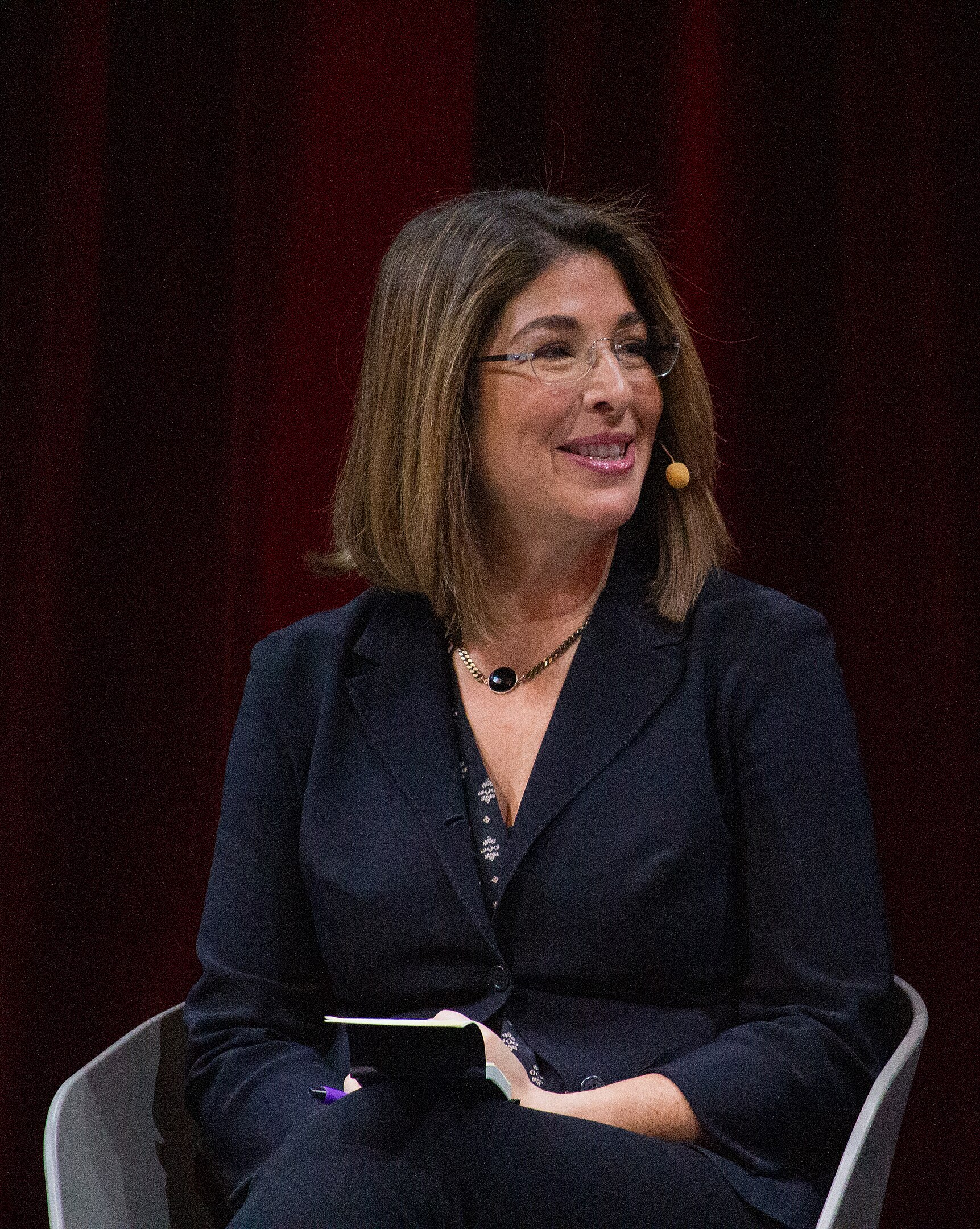
The Doppelganger author on the speed of progress we see all around us
It is a very large question, perhaps too large to answer cleanly, but one feature of this moment stands out with unusual clarity: the speed at which transformative technologies are being deployed without anything like the level of public debate they warrant.
Listen carefully to the people building these systems and a definition emerges. Artificial general intelligence, they say, arrives at the point where the majority of human economic activity can be performed better by machines. Taken at face value, that threshold ought to prompt a pause. It ought to open a serious, collective conversation about whether we want to replace most of what we do with automated systems. The implications are not abstract. They go directly to the question of how people earn a living, how economies function, and how meaning is organised in everyday life.
Yet that conversation is continually deferred. The reason most often given is urgency. We are told that we are in an arms race, that hesitation carries the risk of falling behind, that if one country or company slows down another will accelerate. This framing has a predictable effect. It narrows the space for democratic deliberation and recasts political choice as technical inevitability.
Against this backdrop, it is worth looking closely at how younger people are navigating the pressures of the present. For years, the dominant story has been one of internalised surveillance. The algorithm teaches you to see yourself as a brand. From an early age, you are encouraged to imagine how you will be perceived, to curate your actions in anticipation of future judgement. The advice is constant and familiar: do not post anything you would not want a future employer to see. The result is a kind of temporal dislocation, a life lived partly in the present and partly in a projected future where every action is assessed.
What is striking now is the extent to which that logic is being disrupted. The scale and persistence of student protest movements have been surprising, not least because they are unfolding under conditions of heightened scrutiny and real consequence. The risks are not hypothetical. They are immediate and tangible. And yet participation continues.
There were reasons to expect a different outcome. The dramatic increase in tuition fees, the growing burden of debt, and the economic precarity faced by many students all seemed likely to act as disciplinary forces. If education requires extraordinary financial sacrifice, it is reasonable to assume that students would become more cautious, less willing to jeopardise their prospects. That assumption has not held.
Instead, what has emerged is a level of risk-taking that is difficult to ignore. Students are organising, sustaining pressure, and doing so without the kinds of recognition that once accompanied high-profile activism. There was a period when visibility itself functioned as a reward. Media attention, public recognition, even a form of celebrity could attach to political engagement. That is not the primary dynamic here. These actions are not being widely celebrated in mainstream culture. In some cases, they are actively marginalised or condemned. And still they continue.
This is not to suggest that participants are untouched by the broader dynamics of digital culture. Social media remains a system that amplifies certain behaviours and suppresses others. It can reward conformity, intensify group dynamics, and create its own hierarchies of attention. It would be a mistake to idealise any movement operating within that environment. But it would also be a mistake to overlook what is genuinely distinctive.
At the same time, the question of leadership is being reframed. There is a recurring claim that we are living through a crisis of moral leadership, particularly at the level of large institutions. That may be true in some respects, but it risks obscuring another reality. Moral leadership does exist. The issue is not simply its absence, but our willingness to recognise and support it.
Recognition is not neutral. It is shaped by choices about whose voices are amplified and whose actions are legitimised. In the current moment, many individuals are stepping into roles that involve significant personal risk, often without institutional backing or protection. Their visibility may be limited, but their influence is not negligible.
How movements are described also matters. There is a pattern in which collective action is quickly reframed as individual performance. Activists are characterised as attention-seeking, self-interested, or driven by personal gain. This kind of framing is not accidental. It reduces political engagement to a form of narcissism and undermines the idea of solidarity.
Yet this framing is not always persuasive. There is a growing capacity to distinguish between actions motivated by self-promotion and those grounded in a broader sense of responsibility. That distinction is crucial, because it shapes how solidarity is understood and practised.
In an environment structured by algorithms, there is a constant pressure to individualise experience. Every action risks becoming content. Every statement can be folded into a personal narrative of branding and self-presentation. What is notable in some of the current organising is a refusal of that logic. There is a willingness to act collectively without clear reward, to take risks that are not easily converted into personal advantage.
This does not resolve the larger structural tensions. Economic pressures remain acute. Technological change continues at pace. The systems that guide behaviour are deeply embedded and highly influential. But within those constraints, choices are still being made.
Those choices matter because they speak to a deeper question. The issue is not only what kinds of systems are being built, but what kinds of people are being formed within them. Are individuals primarily oriented towards self-management, image control, and risk calculation, or is there still space for forms of action that involve sacrifice, commitment, and a sense of shared purpose?
There is no simple answer. The pressures towards conformity and self-surveillance are real and powerful. But the evidence, particularly among younger people, complicates the more pessimistic accounts. It suggests that even within highly constrained environments, there remains the capacity for resistance, for solidarity, and for moral courage.
That capacity does not guarantee any particular outcome. It does not settle the debates about technology, economics, or governance. But it is significant. It indicates that the future is not being shaped solely by the systems we build, but also by the ways in which people choose to live within and against them.
That, at the very least, is worth sustained attention.