



 BBC News
Borrowing was £17.4bn last month, the second highest October figure since monthly records began in 1993.
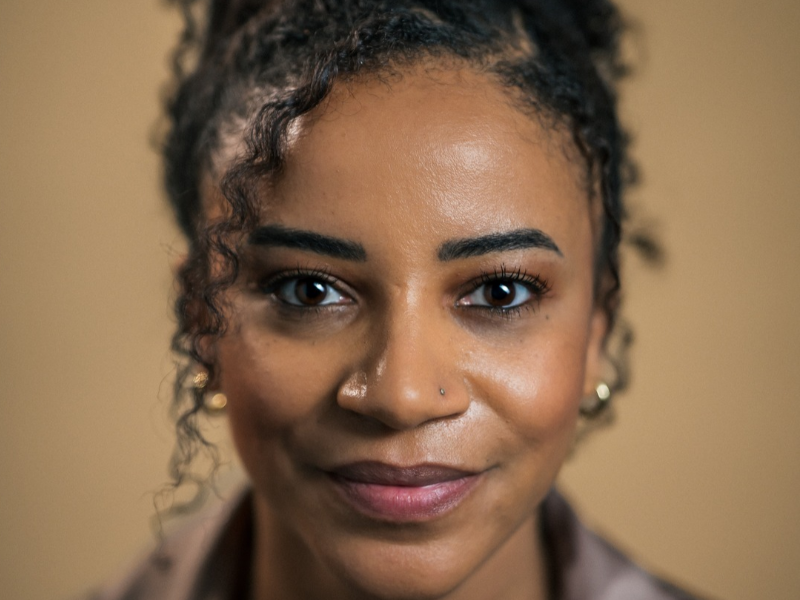
Larissa Hope
Photo credit: Jordan Pitt Photography
When I think back to my years at secondary school, there are things I wish I could have told myself. They are the same things I now share with schools and employers, because I have come to believe that nervous system regulation is a missing component of flourishing in education, work and quality of life.
When I started Year 7, I seemed to be in good stead with my peers. On the outside I was the same as everyone else, but internally something different was happening.
By Year 8 the lunchtime detentions had begun: for not concentrating, for not doing my work, but mostly for talking and being disruptive. By Year 9 I had been moved down two sets in maths and placed in the bottom set for English. I remember my English teacher choosing between my friend and me for the upper set. She explained that my friend was better behaved, even though my friend admitted I was better placed to be there. Instead, I joined a classroom where behaviour was scrutinised and punished, and the only expectation of us was that we would achieve a C at most.
It was in that moment I decided that I hated school, and that it hated me too. I daydreamed through most lessons, never understanding why my teachers’ words did not stick the way they seemed to for everyone else.
Then, through a twist of fate, a friend mentioned an audition for a new show called Skins. I went along with her on my lunch break from my job at New Look, and eventually I was cast as Jal Fazer. My confused teenage self did not quite understand what that meant, but I knew it paid better than New Look.
Skins was filmed at my school, so there was no getting away from the place. By the time I sat my GCSEs, I had resigned myself to being stupid. I could count my B and C grades on one hand, minus a finger or two. At A level I was failing again, and Skins became my get out of education card.
Then I saw myself on a billboard in Bristol city centre. Once the show became a hit, the confusion quickly became overwhelming. I went from feeling not good enough or smart enough, to being recognised by the public for a job I did not comprehend, with no formal training, no sense of self worth and no emotional stability. Strangers would ask if I was Jal, which always threw me, because until that moment I had simply been Larissa. I found myself running away, hiding and panicking when people stared at me. At 19, I had a severe mental breakdown.
I moved to London to begin my life again, but suffered another breakdown. Except this time,
I was referred to Guy’s and St Thomas’ for intensive outpatient treatment, and for three years I had weekly sessions with my psychologist, Kristina Sandstrom. It was there that I was diagnosed with complex PTSD and dissociation, anxiety and depression.
For the first year we focused on grounding me in the present, as I struggled with numbness or dissociated states. I was unable to regulate myself, so Kristina began with coregulation. She became an anchor of presence and helped me, gradually, to meet her there. We used breathwork and mindfulness to build my capacity for the present moment (alongside several other modalities), although for that first year I could not close my eyes during practice because of flashbacks. Eventually I began to build what psychiatrist Dr Dan Siegel calls a window of tolerance: the capacity to stay present, take in new information and, most importantly, connect, to Kristina and to myself.
As we continued, something shifted. I became calm, and then curious: curious about who I had been before trauma and before Skins, and about my place in the world. For the first time, I made a decision for myself without seeking approval. I went back to education, enrolling on a joint honours degree in psychology and creative writing.
Even with mentoring support, I would reread information and still not understand what was being asked, and the old voice returned: you are stupid. Using my regulation techniques to steady myself, I kept going year by year, and graduated with first class honours, having researched the effects of trauma on the brain and written a memoir about my adverse childhood.
I went on to study neuroscience at master’s level, but the techniques that had carried me through my degree did not work at this level, and I began to fail exams again. My disability adviser recommended an assessment, and in 2019 I was told, with certainty, that I have several specific learning differences, including dyspraxia and dyscalculia.
A specialist study skills tutor then transformed my understanding of my own brain. I learned that the way information was presented to me did not match how I process it; I attach meaning and structure through colour coding, for instance. When I returned to my studies, I received a first for my research, lab book and poster presentation, research inspired by the regulation practice I had first been introduced to as an outpatient.
We live in a time where we try to think our way into happiness, without realising how responsive our bodies are to our internal and external worlds. But before we can regulate, we need to feel safe. Dr Stephen Porges calls this neuroception: the way our nervous system scans, below conscious awareness, for cues of safety and threat. That is why how we show up in classrooms, workplaces and homes matters so much.
Far more information travels from body to brain than the other way around: most fibres in the vagus nerve carry signals upward (Berthoud and Neuhuber, 2000), a point touched on at the Boston International Trauma Conference. When the body is calm and regulation comes first, people can access top down processing, and with it their higher cortical functions: thinking, reflecting and learning. The TRC prioritises bottom up approaches first, in order to expand top down responses.
Alongside my studies, I have completed the Certificate in Traumatic Stress Studies at the
Trauma Research Foundation, founded by Dr Bessel van der Kolk, and The Sensitive Approach with Dr Liz Charles. Most recently, I have received my Polyvagal Informed certificate through the Polyvagal Institute, which Dr Porges helped to found, deepening the safety first approach at the heart of our work.
All of this led me to found The Restoration Collective (TRC), which makes the science of safety, regulation and connection accessible to everyone, drawing on living experience and current research in trauma and neurodivergence. Our first feature documentary, Caseid;113, now in late production, follows my journey from survival to sovereignty.
Our Regulate to Educate workshops have been delivered to the Cabot Learning Federation, a trust of over 35 schools across the South West, where I now sit on the scrutiny panels for secondary and special provision. We have also delivered neuroinclusion and race workshops in schools across London. In every session we reframe the “disruptive” student as a dysregulated one: the student I once was. Using diagrams of nervous system states, and a wheel that shows just how wide neurodiversity truly is, we invite educators to see their classrooms as places of attachment, and to notice their own nervous system state first, so that they can coregulate with their students. We then share the TRC’s own framework, Regulate, Restore and Reconnect, for healthy calming (parasympathetic) and energising (sympathetic) activation.
The same foundation applies at work, and it is what makes our corporate workshops, Regulate with TRC, different from resilience or mindset training: we start with the body. We ask one question: are your decisions driven by fear or by safety? Research led by Professor Amy Arnsten at Yale shows that stress which feels uncontrollable can rapidly impair the prefrontal cortex, which we rely on for planning and flexible thinking. When we return to a calm, parasympathetic state, we can reason, create and connect again. Participants learn to recognise the state they work from, then visualise how they want their nervous system to operate so they can succeed without living in survival mode. The TRC’s framework, alongside literacy in healthy calming and energising activation, gives them the tools to make that shift.
At its heart, the TRC is about safety, connection and belonging. When we feel safe within ourselves, our bodies give us what survival and dysregulation take away: the ability to rest and pause, so that we can reflect and respond rather than react. From there, we can connect with others and with the wider world, and truly flourish. Living experience runs through everything we do, and we offer nervous system literacy and practical regulation so that everyone can find their place, in themselves, their homes and in the wider world.
The TRC is now taking bookings for Regulate with TRC. For enquiries, contact info@therestorationcollective.co.uk