



 BBC News
Borrowing was £17.4bn last month, the second highest October figure since monthly records began in 1993.
Sarah Tucker
There is something faintly comic about creating a society for people whose defining characteristic is that they tend not to behave very well inside societies.
The idea is an appealing one: bring together people who work across disciplines, celebrate intellectual breadth and create connections between apparently unrelated areas of knowledge. The ambition is to encourage synthesis, cross-disciplinary thinking and an escape from the limitations of specialisation.
All good.
And yet something feels slightly off.
It is rather like inventing a free-range chicken club and then giving everyone a membership card, a classification system and a designated enclosure.
The problem isn’t the idea of a place for polymaths. Indeed, there is an obvious argument for it. People whose interests refuse to remain politely within one professional category could benefit enormously from meeting others whose minds wander in equally unhelpful directions.
The difficulty comes when polymathy becomes a category rather than a way of thinking.
There is an irony in trying to organise people whose intellectual value may lie precisely in their resistance to being organised.
It is rather like putting a sign on the door saying FREE SPIRITS WELCOME and then asking everyone to form an orderly queue.
Because a polymath does not merely possess several areas of knowledge. The interesting thing happens in the gaps between them.
A specialist generally asks: How do I become better at this?
A polymath is more likely to ask: What does this remind me of?
And then, inconveniently, wander off.
That wandering is not necessarily intellectual laziness. It may be the mechanism.
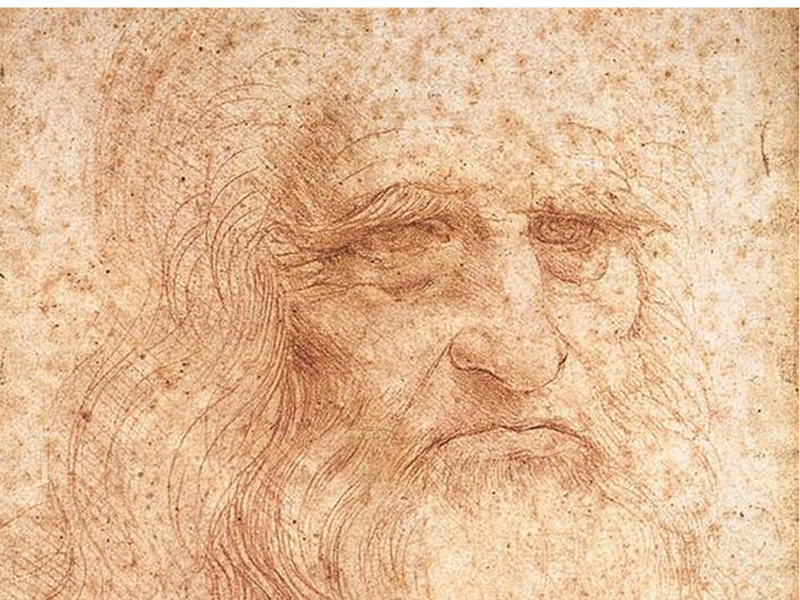
Leonardo did not have to complete an online application explaining whether his interest in anatomy was sufficiently relevant to painting before studying it. Ada Lovelace did not need permission for mathematics to become entangled with machinery. The polymathic mind is promiscuous with ideas. It borrows, steals, notices, connects, misreads and occasionally gets somewhere.
It is not particularly interested in staying in its lane.
Indeed, telling a polymath to stay in one lane is a little like telling a Labrador that the sofa is decorative.
Perhaps the better question, then, is not how do we create a society for polymaths?
It is what sort of environment actually makes polymathic thinking happen?
That is a rather different proposition.
Imagine an evening in which a marine biologist, choreographer, cryptographer, novelist, architect and pastry chef are given the same problem:
How would you redesign an airport?
No presentations about credentials. No PowerPoint called My Interdisciplinary Journey. No one explaining their personal framework for 27 minutes.
Just start.
The marine biologist might think about flow and schooling. The choreographer might think about movement and congestion. The cryptographer might think about security. The novelist might think about narrative and anticipation. The architect might think about space. The pastry chef might ask why airports have somehow managed to make food simultaneously expensive and depressing.
Suddenly you have something.
Not six disciplines sitting politely next to one another, but six disciplines contaminating one another.
That is where lateral thinking becomes interesting.
Take a garden.
A conventional discussion might ask how to make a garden more beautiful, productive or sustainable.
A more mischievous question might be:
What if the garden were an airport?
Now people have to think about arrivals, departures, terminals, routes, waiting, bottlenecks and unexpected destinations.
Or reverse it.
What if an airport were a garden?
Suddenly the airport might need quiet zones, sensory landscapes, slower routes, places to linger, seasonal change, natural navigation and something other than a WHSmith between Gates 43 and 44.
The point isn’t necessarily to build the thing.
The point is to make the mind leave the room it was sitting in.
And that may be the missing ingredient in many attempts to bring polymaths together. They concentrate naturally on the people – who qualifies, what they have achieved, which disciplines they inhabit -when the more interesting question is what happens between those people.
Generation requires uncertainty.
It requires random encounters. Bad ideas. Humour. Permission to be wrong. The intellectual equivalent of opening a cupboard and pulling out the first object you see.
An octopus, perhaps.
What does an octopus teach us about leadership?
Almost certainly nothing.
And then, irritatingly, perhaps quite a lot.
Eight arms. Distributed intelligence. Adaptability. Environmental sensitivity. Extraordinary flexibility. A creature that can solve problems while looking as though it has been assembled during a power cut.
Now put that beside a board meeting.
You have a conversation.
This is why humour matters.
Humour is not decoration. It is a cognitive crowbar.
It allows people to suspend the solemnity of being clever. It makes unlikely connections socially permissible. It gives someone permission to say the apparently ridiculous thing which occasionally turns out to be the only interesting thing anyone has said all evening.
The best polymathic environment might therefore be less like a professional association and more like an intellectual dinner party in which nobody quite knows who invited whom.
It might have salons, provocations, experiments and deliberately mismatched collaborations.
A physicist paired with a poet.
A lawyer with a landscape gardener.
A child with a quantum physicist.
A chef with a cybersecurity expert.
An historian given a future problem.
A futurist given an ancient one.
Give people a problem from another discipline and remove the instruction to behave sensibly.
Ask a mathematician to explain loneliness without using numbers.
Ask an artist to design a tax system.
Ask an economist to write a fairy tale.
Ask a novelist to redesign a hospital waiting room.
Ask a neuroscientist to improve a marriage.
Some of these ideas will be dreadful.
Excellent.
Dreadful ideas are often the compost from which better ones grow.
There is, of course, an important distinction here. Polymathy should not become an excuse for knowing a little about everything and a great deal about nothing. Breadth without depth is simply intellectual grazing.
The interesting polymath combines depth with the ability to construct bridges.
But the bridge is the important word.
You don’t build a bridge by putting two islands next to each other and admiring their geographical diversity.
You build it by crossing the water.
Perhaps that is the real challenge for anyone trying to create a home for polymathic thinking.
Stop asking polymaths to come together because they are polymaths.
Bring together people who would never ordinarily meet and see what happens.
Don’t begin with the disciplines.
Begin with the collision.
Don’t ask what everyone knows.
Ask what nobody has thought to connect.
Don’t make the environment too comfortable.
Leave a little intellectual furniture lying around for people to trip over.
And perhaps don’t be too surprised if the people who are supposed to be the most polymathic occasionally refuse to join the club.
That might not mean the experiment has failed.
It might mean the experiment has finally begun.