


 BBC News
Borrowing was £17.4bn last month, the second highest October figure since monthly records began in 1993.
George Achebe
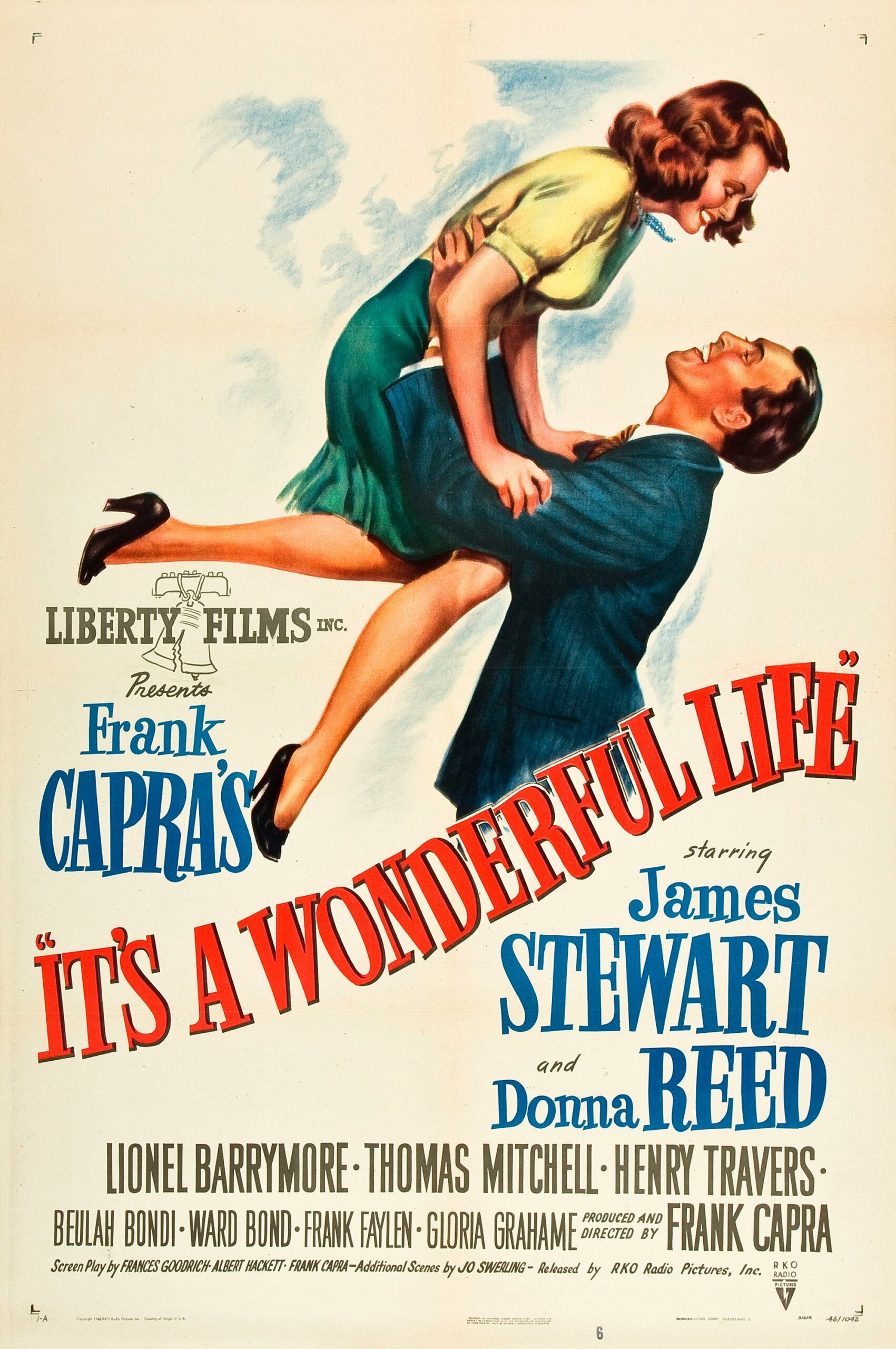
A friend of mine has a ritual every Christmas Eve. As the rest of the family wrap last-minute presents and fuss over turkey preparations, he is for some reason permitted to disappear into the living room with a glass of something warming and settles into his armchair for what he calls “the Bailey appointment.” For two hours and eleven minutes, he becomes completely unavailable, absorbed in Frank Capra’s 1946 masterpiece “It’s a Wonderful Life.” When pressed about this seemingly selfish Christmas Eve abandonment, he will simply say, “This is the film – the one that makes the year make sense.”
Years on since I first heard about this appointment, I vaguely imagine I keep to something like that ritual but I’m not sure I’m a tidy enough person to make it a definitely annual thing: let’s say instead that it’s part of my yearly Christmas reference point.
Besides, I have to understand what he means. George Bailey’s journey from small-town dreams to suicidal despair to profound awakening isn’t just cinema – it’s the most sophisticated meditation on career, purpose, and the meaning of success ever committed to film. In an age where LinkedIn influencers peddle hollow optimism and career coaches promise six-figure transformations, Capra’s 78-year-old film remains our most honest and useful guide to navigating the gap between ambition and reality, between what we thought we wanted and what we actually built.
Critical Consensus
The film’s enduring power isn’t mere nostalgia. In 2008, the American Film Institute acknowledged It’s a Wonderful Life as the third-best film in the fantasy genre, although I think it’s probably in many respects a far more realistic film than most people understand. Meanwhile Channel 4 airs the film to British viewers annually on Christmas Eve, treating it less as entertainment than as seasonal sacrament. Critics continue to marvel at how “Jimmy Stewart’s central performance has lost absolutely none of its magic” nearly 80 years after its release.
Interestingly, a dip into the archives shows that the film’s reputation wasn’t always secure. Film critic Manny Farber, writing in The New Republic in 1947, complained that “To make his points, [Capra] always takes an easy, simple approach]” – a critique that misses the sophisticated psychological territory the film actually explores. What Farber saw as simplicity, modern audiences recognize as surgical precision in dissecting the anatomy of middle-class disappointment and the subtle violence of unfulfilled dreams. It’s a reminder perhaps that for a certain kind of film critic, no film is quite good enough because nothing can quite fill the gap of not having made a film oneself.
Empire magazine captures something essential when it describes the film as “the kind of experience movies were invented for” – not because it offers easy answers, but because it asks the questions that matter most: What constitutes a successful life? How do we measure our impact on the world? And what happens when the gap between our dreams and our reality becomes unbearably wide?
The Bailey Trajectory
George Bailey’s professional journey reads like a case study in how careers actually develop, as opposed to how career guidance suggests they should. At 18, he’s full of plans: college, travel, architecture, building magnificent structures that will change the world. “I’m gonna do big things,” he declares with the confidence that only comes from never having tried to do anything significant.
But life, as it tends to do, intervenes. His father’s death chains him to the family’s Bailey Building & Loan – not through coercion, but through the more subtle pressure of responsibility and the needs of others. Each compromise feels reasonable in isolation: staying to help his brother Harry through college, postponing his own education, marrying Mary, taking over the business to prevent the rapacious Mr. Potter from swallowing the town whole.
By middle age, George has become something he never intended: a small-town savings and loan manager, married with children, living in a drafty old house, perpetually worried about money. From the outside, his trajectory looks like failure – a series of dreams deferred until they became dreams abandoned. Yet Capra’s genius lies in revealing how this “failure” actually represents something more complex and ultimately more valuable.
The Potter Problem
The film’s lasting relevance lies partly in its prophetic understanding of how unchecked capitalism can hollow out communities. Mr. Potter, wonderfully played by Lionel Barrymore as a plutocrat who views human misery as investment opportunity, represents everything George could become if he prioritized personal wealth over social responsibility.
Potter’s wealth is real – his success measurable in dollars and property holdings. But his prosperity depends on others’ failure, his profits extracted from community desperation. The film suggests that some forms of success are actually sophisticated forms of parasitism, creating wealth by concentrating rather than generating it.
George’s Building & Loan, by contrast, operates on what we might now call stakeholder capitalism – serving community needs while generating modest profits. His “failure” to accumulate significant personal wealth reflects his success at creating distributed prosperity. When his depositors face foreclosure, George uses his honeymoon money to keep them afloat. When they need decent housing, he develops Bailey Park, trading potential profit for social impact.
This tension between individual advancement and collective welfare runs through every career decision we make. The contemporary gig economy, with its promise of entrepreneurial freedom and its reality of economic precarity, represents the Potter model scaled to encompass entire industries. George Bailey’s approach – building institutions that serve broader purposes while providing personal meaning – offers an alternative framework that feels increasingly relevant.
The Clarence Intervention
The film’s supernatural element – Clarence the angel showing George what Bedford Falls would look like without him – functions as the ultimate thought experiment in professional impact assessment. Stripped of sentiment, this becomes a rigorous exercise in understanding how individual careers connect to broader social outcomes.
Without George, Bedford Falls becomes Pottersville – a town of rentals, nightclubs, and economic desperation. The Building & Loan never existed, so working families never achieved homeownership. Harry Bailey drowned as a child because George wasn’t there to save him, meaning Harry couldn’t later save a transport ship during the war. Violet Bick, without George’s loan and encouragement, turned to prostitution. Mr. Gower, the pharmacist, went to prison for accidentally poisoning a child because young George wasn’t there to prevent the mistake.
This isn’t sentimental fantasy – it’s sophisticated systems thinking applied to career evaluation. As one contemporary critic notes, the film shows “how a person can forget all of the good in their life in a moment of despair”, but more than that, it demonstrates how we systematically undervalue the indirect effects of our work and choices.
Modern career advice focuses obsessively on personal brand, individual achievement, and measurable outcomes. But most meaningful work operates through what economists call positive externalities – benefits that ripple outward beyond immediate transactions. George Bailey’s career generated enormous positive externalities: stable housing for working families, preserved community character, economic opportunity for local businesses, and countless small interventions that prevented larger disasters.
The Measurement Problem
Clarence’s final message to George – “No man is a failure who has friends” –initially sounds like greeting card philosophy. But examined more closely, it reveals sophisticated thinking about how to evaluate professional and personal success.
Friendship, in the film’s terms, represents something more than social connection – it’s evidence of trust, reciprocity, and value creation that transcends monetary exchange. When George faces financial ruin, his friends’ spontaneous fundraising isn’t charity – it’s return on decades of investment in social capital. George’s “net worth” in traditional terms was minimal, but his actual impact – measured through relationships, community stability, and lives improved – was enormous.
This alternative success metric feels particularly relevant in an economy where traditional career paths have fragmented. The gig economy promises entrepreneurial freedom but often delivers economic insecurity. Corporate employment offers stability but frequently at the cost of meaningful impact. Public sector work provides purpose but typically with significant financial sacrifice.
George Bailey’s model suggests a different approach: optimizing for positive impact while maintaining financial sustainability, building social capital alongside human capital, and measuring success through contribution to others’ flourishing rather than personal accumulation.
The Christmas Eve Crisis
The film’s central crisis – George’s suicidal despair on Christmas Eve – emerges not from external failure but from the gap between aspiration and reality. By conventional measures, George has achieved considerable success: stable marriage, healthy children, respected position in the community, and the satisfaction of having helped hundreds of families achieve homeownership.
Yet his despair is genuine and profound. The dreams of travel, architecture, and grand achievement haven’t disappeared – they’ve simply been postponed so long they’ve become sources of daily pain. Every morning brings fresh awareness of paths not taken, opportunities missed, and ambitions abandoned for the sake of others’ needs.
This psychological territory – the suffocation that can come from success achieved through self-sacrifice – remains remarkably under-explored in contemporary career discourse. We celebrate entrepreneurs who build unicorns and executives who climb corporate hierarchies, but we rarely examine the emotional costs of careers built around service to others, or the particular loneliness that comes from being indispensable to many while feeling invisible to yourself.
George’s crisis isn’t ultimately about money or status – it’s about meaning and agency. He has spent decades responding to others’ needs while his own desires atrophied. The Building & Loan succeeded, but George Bailey the individual dreamer has been slowly disappearing behind George Bailey the community servant.
Purpose Versus Prosperity
Today’s knowledge workers face a version of George’s dilemma scaled across entire industries. The most socially valuable work – teaching, social work, journalism, not-for-profit management, public service – typically offers personal satisfaction at the cost of financial security. The most financially rewarding work – finance, consulting, technology, law – often requires compromising social impact for personal advancement.
This isn’t accidental. Market mechanisms systematically undervalue work that generates broad social benefits while over-rewarding activities that concentrate wealth. A hedge fund manager who extracts value from companies can earn more in a year than a teacher makes in a lifetime, despite the teacher’s much greater contribution to human flourishing.
The film suggests that this trade-off isn’t inevitable – that it’s possible to build careers that generate both personal satisfaction and broader social value. But doing so requires rejecting the conventional success metrics that dominate career guidance and social media. It means optimising for impact over income, relationships over recognition, and community welfare over individual advancement.
The Pottersville Alternative
The film’s vision of Pottersville – Bedford Falls transformed by unchecked greed – offers a prophetic glimpse of what happens when communities lose institutions dedicated to broad-based prosperity. Pottersville has nightlife, neon signs, and commercial energy, but it lacks the social infrastructure that makes places liveable: affordable housing, local ownership, and institutions that serve residents rather than extract from them.
It isn’t really all that dissimilar to contemporary London. In fact most contemporary cities increasingly resemble Pottersville more than Bedford Falls. Venture capital has replaced community banking, private equity has hollowed out local businesses, and housing has become an investment vehicle rather than a social good. The result is places that generate significant wealth while failing to provide the social stability that makes communities functional.
George Bailey’s approach – building institutions that serve long-term community needs while generating modest profits – offers an alternative model that’s finding new expression in benefit corporations, community land trusts, and cooperative enterprises. These models prioritise stakeholder value over shareholder value, seeking to build sustainable prosperity rather than extract maximum short-term returns.
The Performance of Ordinariness
Perhaps the film’s most radical argument is that ordinary lives, properly understood, aren’t ordinary at all. George Bailey appears to live a small life – same town, same job, same routine for decades. But Clarence’s intervention reveals the extraordinary complexity hidden within apparent simplicity.
Each seemingly minor interaction – lending money to Violet, preventing Mr. Gower’s mistake, saving Harry from drowning – creates cascading effects that ripple across decades and continents. George’s ordinariness is actually a performance of deep social engagement, a daily choice to prioritize others’ welfare over personal ambition.
The Bailey Building & Loan operates on principles that seem almost quaint by contemporary standards: local ownership, community accountability, modest profits, and long-term relationship building. Yet these principles generate remarkable results: stable housing for working families, economic development that serves residents rather than extracting from them, and social capital that sustains the community through multiple crises.
George Bailey’s real innovation wasn’t financial – it was social. He created technology for community building that operated through personal relationships, local knowledge, and long-term thinking. The Building & Loan succeeded because George understood his neighbours’ needs, circumstances, and capabilities in ways that distant capital markets never could.
LinkedIn culture promotes constant self-optimization, personal branding, and network expansion as keys to career success. But George Bailey’s career trajectory suggests different priorities: deep local engagement, consistent service delivery, and relationship building that prioritizes others’ success alongside your own.
This isn’t anti-ambition – it’s sophisticated thinking about how professional advancement actually works over decades rather than quarters. George’s influence in Bedford Falls grew not through self-promotion but through demonstrated competence and genuine care for others’ welfare. His “network” consisted of people he had actually helped, creating loyalty based on performance rather than positioning.
The film suggests that sustainable career success requires what we might call “relational capital” – the trust, goodwill, and mutual obligation that develop through repeated positive interactions over time. This capital can’t be manufactured through networking events or social media engagement; it emerges only through consistent delivery of value to others.
A Wonderful Framework
Clarence’s gift to George – and Capra’s gift to audiences – is a framework for evaluating life satisfaction that transcends conventional success metrics. Instead of measuring achievement through wealth accumulation, status advancement, or individual recognition, the film proposes evaluating impact through relationships, community contribution, and positive influence on others’ opportunities.
This framework offers practical guidance for career decision-making: When choosing between opportunities, consider not just personal advancement but broader social impact. When evaluating professional satisfaction, measure not just individual achievement but contribution to others’ success. When planning long-term career development, prioritize building capabilities that serve community needs alongside personal goals.
Applied consistently, this framework might lead to different career choices than pure self-interest would suggest: choosing teaching over finance, staying local rather than following opportunities elsewhere, building institutions rather than extracting from them, prioritising relationships over recognition.
Integration Versus Sacrifice
So what really happens to George? He undergoes an internal transformation. George doesn’t receive external vindication for his choices; instead, he achieves internal reconciliation between his sacrificed dreams and his actual achievements. The money donated by his friends matters less than his recognition that his life has been meaningful despite – or perhaps because of – its apparent limitations.
This integration represents sophisticated thinking about how to manage the gap between ambition and reality that characterizes most careers. Rather than perpetually mourning paths not taken, George learns to appreciate the path actually travelled. Rather than measuring his life against external standards of success, he develops internal metrics based on contribution and relationships.
It was John Updike who wrote in his slightly ornate way: “Actuality is a running impoverishment of possibility.” What he meant was that at the age of two, it’s possible to be so many things: it’s just about doable, say, to be born in London and by 50 to be President of Egypt. At 35, if you haven’t moved to Egypt that won’t happen.
But lots of things will – and these are things we tend to forget. This psychological work – learning to value what you’ve built rather than lamenting what you’ve missed – represents perhaps the most important career skill rarely taught in business schools or career development programs. Most professionals spend decades building competence and achievements while simultaneously harbouring disappointment about alternatives foregone.
Enduring Gift
As one contemporary viewer notes, “George Bailey is a version of myself” – recognition that Capra’s character represents not just 1940s small-town America but the universal experience of navigating between personal dreams and social responsibilities, individual ambition and collective welfare.
The film endures because it addresses questions that remain central to professional life. How do we measure career success when market mechanisms systematically undervalue socially beneficial work? How do we build lives that generate both personal satisfaction and community benefit? How do we integrate our individual dreams with our responsibilities to others?
George Bailey’s life offers no easy answers, but it provides a framework for thinking about these questions that feels increasingly relevant as traditional career paths fragment and economic inequality widens.
The wonderful life, in Capra’s terms, isn’t the life that achieves the most by conventional metrics – it’s the life that contributes most to others’ flourishing while maintaining personal integrity and finding daily satisfaction in work that matters. In an age of LinkedIn optimization and personal branding, this might be the most radical career advice of all: that success might be measured not by what you accumulate but by what you enable others to achieve, not by how high you climb but by how many people you lift along the way.
Every Christmas Eve, as my friend understood, we need Clarence’s reminder that our impact on the world is larger and more complex than we imagine, that apparent failure might actually represent profound success, and that the most wonderful lives are often the ones that look most ordinary from the outside. In a world increasingly dominated by Potter’s values, George Bailey’s example remains our most sophisticated guide to building careers that matter – not just to ourselves, but to the communities we have the open opportunity to serve.