



 BBC News
Borrowing was £17.4bn last month, the second highest October figure since monthly records began in 1993.
The TV presenter and author reflects on what 20th century history can tell us about the state of things today
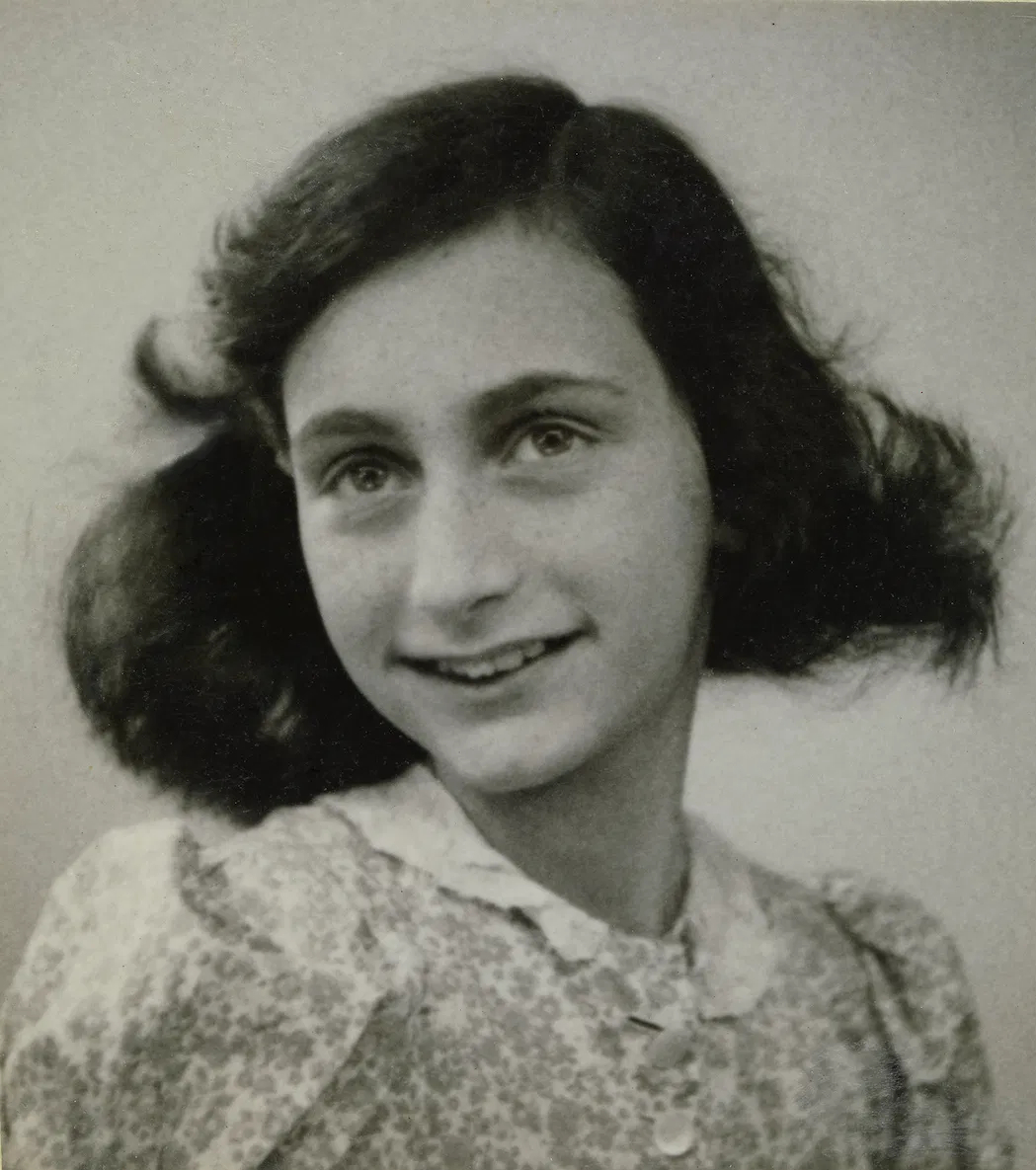
It is difficult to begin any reflection on moral responsibility without turning to a voice that still cuts through time with startling clarity. A teenage girl, writing in hiding in 1944, gave us a sentence we repeat so often that we risk draining it of meaning: “In spite of everything, I still believe that people are really good at heart.”
We quote it because it comforts us. But it was not written for comfort. It was written in defiance.
Anne Frank wrote those words after two years concealed behind a movable bookcase, cut off from school, friends, daylight, and ordinary life. Deportations were already underway. People vanished. Letters stopped. Rumours of camps, starvation, and forced labour circulated, though not yet in their full horror. Her world had already narrowed almost beyond recognition. And yet, at precisely that moment, she insisted on the possibility of human goodness.
That is what gives the line its power. Not innocence. Not naivety. Moral resistance.
A few years ago, I found myself in Vienna, a city that represents, perhaps more than any other, the height of a particular moment in Western civilisation. I had arranged a visit to the Konzerthaus, indulging a long-standing fascination with Mahler and the great composers of the late nineteenth and early twentieth centuries. It was a period of extraordinary cultural confidence. Science was advancing. Conversations about women’s rights and sexuality were emerging. The arts reflected a belief that humanity was progressing.
As I walked through those grand halls, with their chandeliers and painted ceilings, I asked an usher about the building’s history. She promised to send me details of past performances. Later, in my hotel, I realised the date: the ninth of November.
That date should trouble all of us.
By the time I returned to my room, she had emailed me the programme for that very day in 1938. Bruckner’s Seventh Symphony had been performed. A magnificent work, full of grandeur and hope, expressing the vast possibilities of human existence. The reviews were glowing. “What a great night had been had by all,” they declared, noting the standing ovation.
I remember the moment the translation was read to me. I froze.
Because those concertgoers, applauding Bruckner that evening, stepped out into a city where synagogues were burning. It was Kristallnacht.
“What a great night had been had by all.”
That is the moment that matters. Not only the violence, but the applause. Because catastrophe does not enter our world solely through hatred. It enters through our capacity to carry on as normal while others are pushed out of sight.
Anne Frank’s diary reminds us of something we often forget. The Holocaust did not begin with camps. It began with restrictions. With separation. With the quiet, bureaucratic shrinking of life. Jews could no longer go here, could no longer do that. Schools changed. Friends disappeared. “Life went on,” she wrote. Yes, life went on. For everyone else.
This is where our understanding so often fails. We begin at the end. We picture barbed wire and gates, the words “Arbeit macht frei,” the photographs taken after liberation when the horror is undeniable. But by then, the essential work had already been done.
Before the camps came the language. Jews described as vermin, as contamination, as a threat. Words that turned neighbours into enemies. Words that made cruelty sound like duty.
Before the violence came the law. Rights removed not through chaos, but through civilised edict. Professions closed. Movement restricted. Belonging made conditional.
And what did most people do?
They adjusted.
When people approach me to talk about the Holocaust, the conversation often follows a familiar pattern. They ask what they should read. They tell me they have visited Auschwitz. They say it moved them deeply, that they cried, that they returned changed.
And I am glad they went. But that is not enough.
Because the essential question is not what happened at the end. It is how it began.
The guards at Auschwitz were not born into that role. A man standing there at twenty-one had been an eleven-year-old child just a decade earlier. He had absorbed ideas gradually, through small steps, through a culture that normalised exclusion.
If there is one book I recommend above all others, it is Christopher Browning’s *Ordinary Men*. It shows how individuals who were not fanatics or ideologues, but ordinary people with families and jobs, became participants in atrocity. Not because they were uniquely evil, but because they did not want to stand out. They did what was expected.
We like to imagine that we would be the heroes in such a story. The rescuers. The brave few who resisted. But history tells us something far less comfortable.
People become bystanders first.
Those who hid the Frank family were courageous. But they were rare. They were the exception, not the rule.
I grew up in the shadow of a grandfather who survived the Holocaust. He did not speak about it often. His trauma revealed itself in fragments. In sudden flashes of memory. In small habits, like the handkerchiefs filled with food he kept hidden in drawers. When I asked him why, he said simply: “Just in case.”
Despite everything he had endured, he believed in this country. He described arriving here as coming from hell into heaven. He believed in democracy, in the rule of law, in the idea that these values could heal and protect.
That belief feels harder to hold now.
Not because history repeats itself in identical form, but because the early signs are familiar. The danger is not only open hatred. It is indifference. The moment when people decide that something is unfortunate, but not their concern.
Today, we hear language that echoes the past. Groups described as threats, as invasions, as contaminants. We see rights framed as privileges to be earned. Conspiracy theories spread with extraordinary speed, amplified by social media until fantasy takes on the weight of fact.
Antisemitism, in particular, has not disappeared. It has adapted. It dresses itself in the language of politics or inquiry. It appears in WhatsApp groups among educated professionals. It presents itself as “just asking questions.” But the patterns are unmistakable.
I have spoken recently with Jewish students about their sense of the future in this country. Too many do not feel safe. Too many believe their prospects here are narrowing.
That should concern all of us.
Because it signals a stage that history teaches us to recognise. Not the end of the story, but the middle.
This is why education matters. Not as a form of remembrance alone, but as a means of interruption. The point is not only to look back, but to identify the early signals. The shift in language. The joke that humiliates. The stereotype that hardens. The silence that permits.
Education can look like a student challenging a remark instead of laughing along. It can mean recognising conspiracy thinking and refusing to pass it on. It can mean standing beside someone who is being singled out, rather than looking away.
Goodness does not happen by accident. It requires effort. It requires practice. And above all, it requires courage.
As Maya Angelou reminded us, you can practise all the virtues you like, but without courage, none of them endure.
Anne Frank never stopped observing, even in hiding. She insisted on describing the world as it was, not as she wished it to be. Her words leave us with a question that remains urgent.
Are we willing to see what is happening around us, even when it would be easier not to?
“In spite of everything, I still believe that people are really good at heart.”
Whether that remains true is not a matter of quotation. It is a matter of choice. Of what we allow ourselves to see. And of what we decide to do once we have seen it.
Those are my principles. And they are only worth anything if we do not depart from them.