



 BBC News
Borrowing was £17.4bn last month, the second highest October figure since monthly records began in 1993.
Finito World
The midterm elections have delivered a devastating verdict on the president. But his greatest ambitions may now lie beyond America’s borders.
Donald Trump has suffered a remarkable defeat. The Democrats have captured both houses of Congress, winning in Republican strongholds and demonstrating that the president’s extraordinary political hold on America has its limits. The question now is what he will do about it.
There is a temptation to see the midterms as the beginning of the end of Trumpism. That would be premature. Trump has been declared finished too many times for such predictions to carry much weight. Besides, his historical importance has never depended entirely on the number of Republican seats in Congress.
Consider the distinction between Trump and his two immediate predecessors. Barack Obama was an accomplished president who extended healthcare provision and presided over an economic recovery. Joe Biden achieved significant legislation on infrastructure, industrial policy and clean energy. Both were consequential figures. Yet both operated, broadly speaking, within an inherited political settlement.
Trump has challenged the settlement itself. Free trade, globalisation, immigration, America’s relationship with Europe, the balance between elected government and the permanent bureaucracy: almost every major assumption of the post-Cold War era has been subjected to his particular brand of interrogation.
It is possible to recognise the scale of this achievement without endorsing either his character or his methods. Indeed, the distinction is essential. Historical importance is not a prize for good behaviour. Napoleon was not important because he was agreeable.
Trump did not invent the discontents that propelled him to power. The decline of industrial America, the rise of China, the growing distance between political elites and ordinary voters were all apparent long before he descended the escalator at Trump Tower in 2015. But it is difficult to imagine another personality giving these grievances quite the same expression.
His theatricality, aggression, humour and astonishing indifference to conventional disapproval were not incidental to his success. They were central to it.
Now, however, the American electorate has imposed a significant restraint upon him. With Congress in Democratic hands, the possibilities for further domestic legislation have narrowed considerably. Investigations will multiply. Presidential appointments will encounter resistance. The final two years of his administration may become an increasingly exhausting constitutional struggle.
Which raises an intriguing possibility. Will Trump now become principally a foreign policy president? There would be historical precedent. Richard Nixon, constrained by domestic difficulties, devoted immense energy to China and the Soviet Union. Bill Clinton’s second term saw a greater emphasis on international affairs. Presidents who find Washington unmanageable sometimes discover that the wider world offers a different theatre of action.
Trump, of course, has already made foreign policy central to his second presidency, most dramatically through the war with Iran. The midterms suggest that voters are far from convinced by the costs and consequences of that intervention. A further foreign adventure would therefore carry considerable political danger.
But Trump is not a politician who instinctively responds to defeat by reducing his ambitions.
Europe provides one possible legacy. Whatever one thinks of his treatment of America’s allies, European governments have committed themselves to substantially greater defence expenditure. Russia’s aggression has been a major reason, but Trump’s pressure has also contributed. A Europe more capable of defending itself might eventually make the Atlantic alliance stronger rather than weaker.
Then there is China. Trump’s determination to restore American industrial capacity, protect technological advantages and reduce strategic dependence on Beijing may prove to be among the most consequential aspects of his presidency. American power has often been exercised imperfectly, sometimes disastrously. But a world dominated by the Chinese Communist Party would present its own profound difficulties for political liberty.
And then there is Cuba.
For more than sixty years, the communist government in Havana has survived American hostility, economic sanctions, the collapse of the Soviet Union and the passing of Fidel Castro himself. It has become one of the great anomalies of modern political history: a Cold War state persisting long after the Cold War ended.
Trump has already increased economic pressure on the island, while his administration’s intervention in Venezuela has transformed the regional context. Cuba’s economy is in desperate condition. Its people are suffering grievously, and American sanctions have intensified that suffering.
It is not difficult to imagine Trump looking across the Florida Straits and seeing the possibility of a historic breakthrough. Marco Rubio, whose family fled Cuba, has a particular interest in the island’s future. The collapse of Cuban communism would be an event of enormous symbolic significance, especially for the Cuban-American community.
But there is a danger in confusing the fall of a regime with the liberation of a people. The experience of Iraq and Libya should have taught Washington that lesson. A successful transition would require more than pressure, spectacle and the removal of an existing government. It would require functioning institutions, economic reconstruction and a political settlement in which Cubans themselves determined their future.
This is the larger question surrounding Trump’s presidency. He has demonstrated an extraordinary ability to disrupt political arrangements that others considered permanent. Whether he possesses an equivalent ability to construct durable replacements remains uncertain.
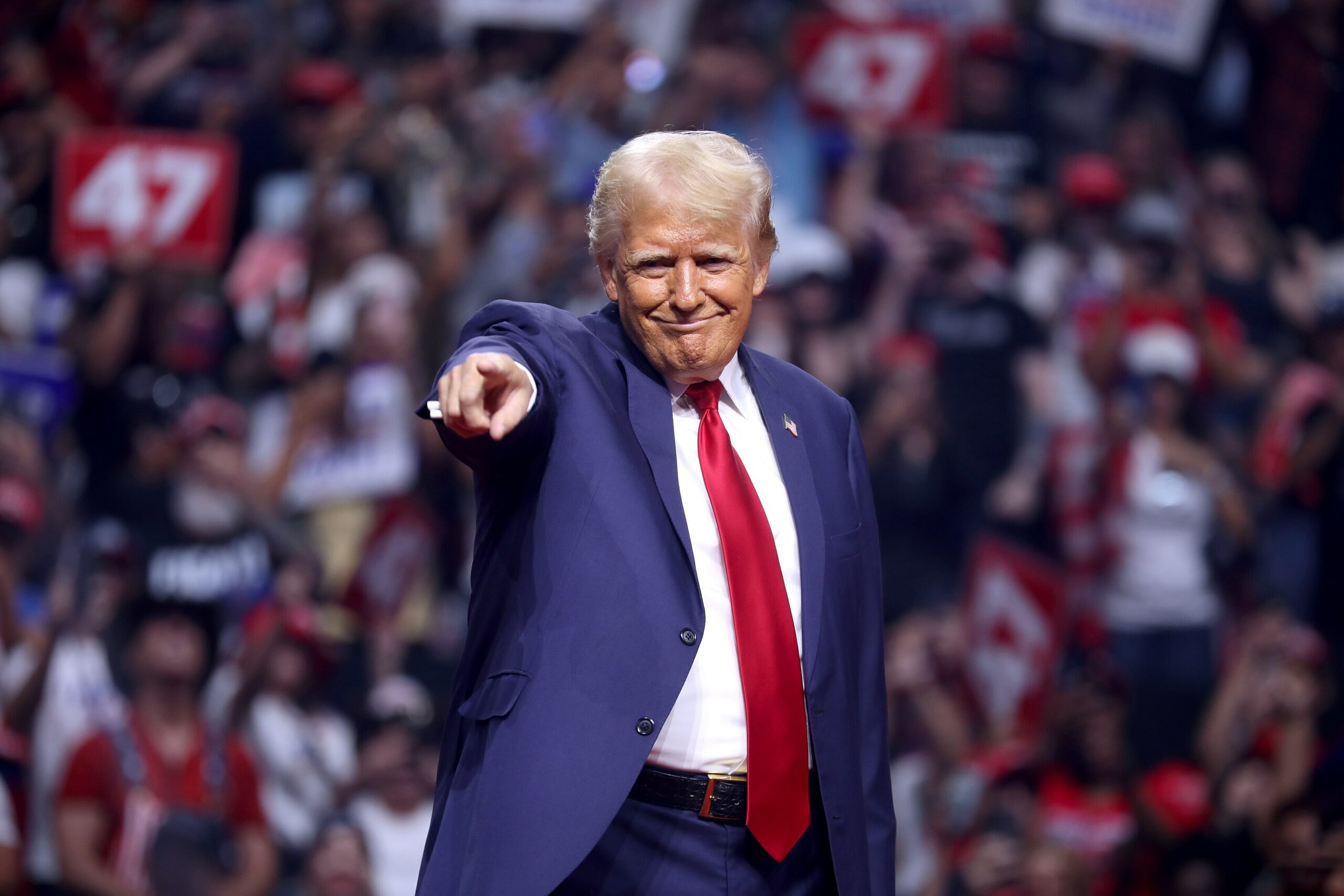
There is a related contradiction in his relationship with democracy. Trump evidently relishes elections. He loves the rallies, the crowds, the contest and the direct relationship with voters. Yet his attempts to overturn the 2020 result revealed a profoundly troubling attitude towards the constitutional restraints that make democratic competition legitimate.
Last night’s election is therefore important for reasons beyond the Democratic victories. It demonstrates that the American electorate can still impose limits upon an unusually powerful political personality. What matters now is whether those limits are respected.
Trump may yet leave behind a stronger America, a more self-reliant Europe and a different strategic balance with China. He may also leave behind damaged institutions, weakened alliances and a political culture in which disagreement has become almost impossible.
The two possibilities are not mutually exclusive.
For the moment, one thing is clear. The midterms have diminished Trump’s freedom of action at home. They have not necessarily diminished his appetite for historical consequence.
And with two years remaining, the president who has already changed the nature of American politics may increasingly turn his attention to changing the world beyond it.
Cuba, just ninety miles from Florida, may be one place to watch.