



 BBC News
Borrowing was £17.4bn last month, the second highest October figure since monthly records began in 1993.
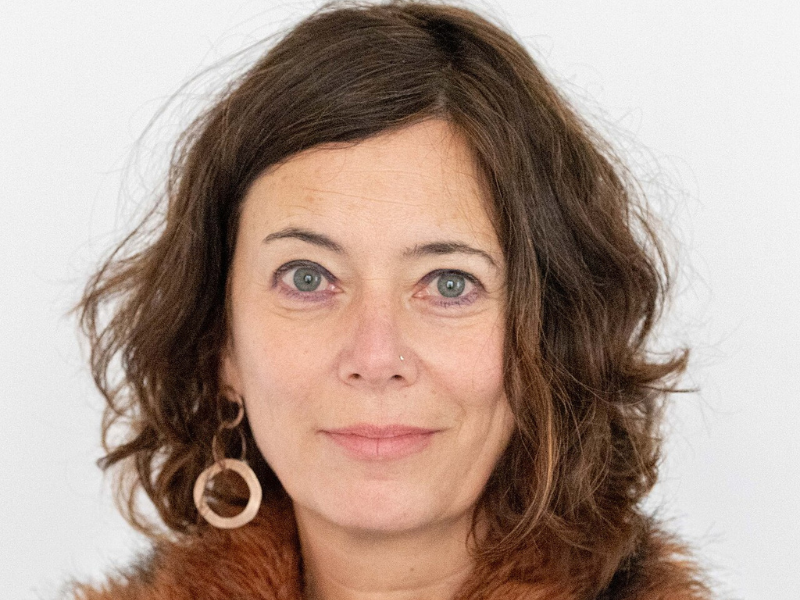
Eva Menasse
I feel qualified to discuss the question of rebuilding communities from a practical angle, because I am someone who has actually tried to do it. A few years ago, a small group of us founded a new organisation in Germany alongside the existing PEN Germany. We called it PEN Berlin. Around two or three hundred colleagues joined at the time, which was a striking number, and there was real enthusiasm and real hope attached to it. In hindsight, that wave of enthusiasm should probably have made me suspicious from the start.
I became spokesperson of the new association together with the German journalist of Turkish origin Deniz Yücel, who had himself once appeared on PEN’s own list of imprisoned writers, having spent time in solitary confinement in one of Erdogan’s prisons in Turkey. Together with a board of nine people, we set out with two goals: to carry on the human rights work that PEN organisations exist to do, and to build a genuine platform for open debate in Germany, which I felt was missing.
The human rights work found us before we had even opened a bank account. The acclaimed Turkish-Kurdish novelist and poet Meral Şimşek needed to leave her country immediately or face prison, so we flew her to Berlin and found a school place for one of her sons, all before PEN Berlin technically had the means to pay for any of it. Today the organisation supports at least five writers in exile, from Morocco, Afghanistan, Turkey and Iran, still without any stable funding to speak of.
The second goal, the one that mattered most to me personally, seemed for a while to be going remarkably well. We had a presence at both of Germany’s major book fairs, curated a full programme of panels and discussions, and opened our first PEN Berlin congress with a keynote from Ayad Akhtar. Then came the seventh of October, and everything turned over.
I say with some pride that in the weeks immediately afterward, PEN Berlin was one of the only organisations still willing to put discussions of Israel and antisemitism on a public stage. We were also the first association to protest the cancellation of Adania Shibli’s appearance at the Frankfurt Book Fair, where she had been due to speak about her novel Minor Detail. When she was disinvited, we took her allotted slot and filled it with a group of well known German writers reading passages from the book aloud, so that the work, at least, had the space she had been denied.
That was not the end of it. Not long after, we invited A. L. Kennedy to give the keynote at our second congress, and she was abruptly recast in German public opinion as a supporter of the BDS movement. I was told we should withdraw the invitation. I said that if we did, I would resign instead. We did not withdraw it.
Through all of this I watched the particular toxicity that social media adds to institutional life. People who had been proud, only months before, to say they belonged to this new and hopeful project began publicly announcing their departure from it on Facebook and on X, and once a few began leaving, others felt they had no choice but to follow, if only so they would not have to explain to themselves why they had stayed. It is a kind of mass hysteria that moves at the speed of a feed rather than the speed of thought. We survived it.
The most recent crisis, not so long ago, nearly ended PEN Berlin altogether, when we attempted to pass a resolution condemning the killing of journalists and writers in Gaza. Fifty members resigned over it in the end, twenty five because they felt the resolution was too sympathetic to Israel, and twenty five because they felt it was too sympathetic to Palestine. I have come to think that if neither side can agree on why they left, we probably arrived at something close to a fair compromise, though I still argue about this with close friends, and I am not entirely sure they are wrong.
So did I fail? Yes, I think in some ways I did, and I probably invested more hope in this project than it could reasonably bear. Was it worth it? Also yes. The organisation still exists. It still cares for its exiled writers. What I take from the experience, in the end, is that there is an enormous appetite among writers to organise and to build something together, and that this same appetite does not always come with the discipline to live up to what free expression actually demands of a person when it is inconvenient. I said it so often it began to feel like a broken record: PEN Berlin should be a place where everything can be said, and where nothing is cancelled before it has even been spoken aloud. I worked at this for more than two years, largely without pay, and at real cost to my own writing. Deniz set aside his journalism to do the same. And for most of that time, the major German press treated us as something faintly suspect, as though we were a political faction to be watched rather than a cultural project trying, imperfectly, to hold a room open for disagreement. I still do not entirely understand why. But that, in the end, is what I have learned about building communities among writers.
Eva Menasse was talking at an event in memory of Pope Francis