




 BBC News
Borrowing was £17.4bn last month, the second highest October figure since monthly records began in 1993.
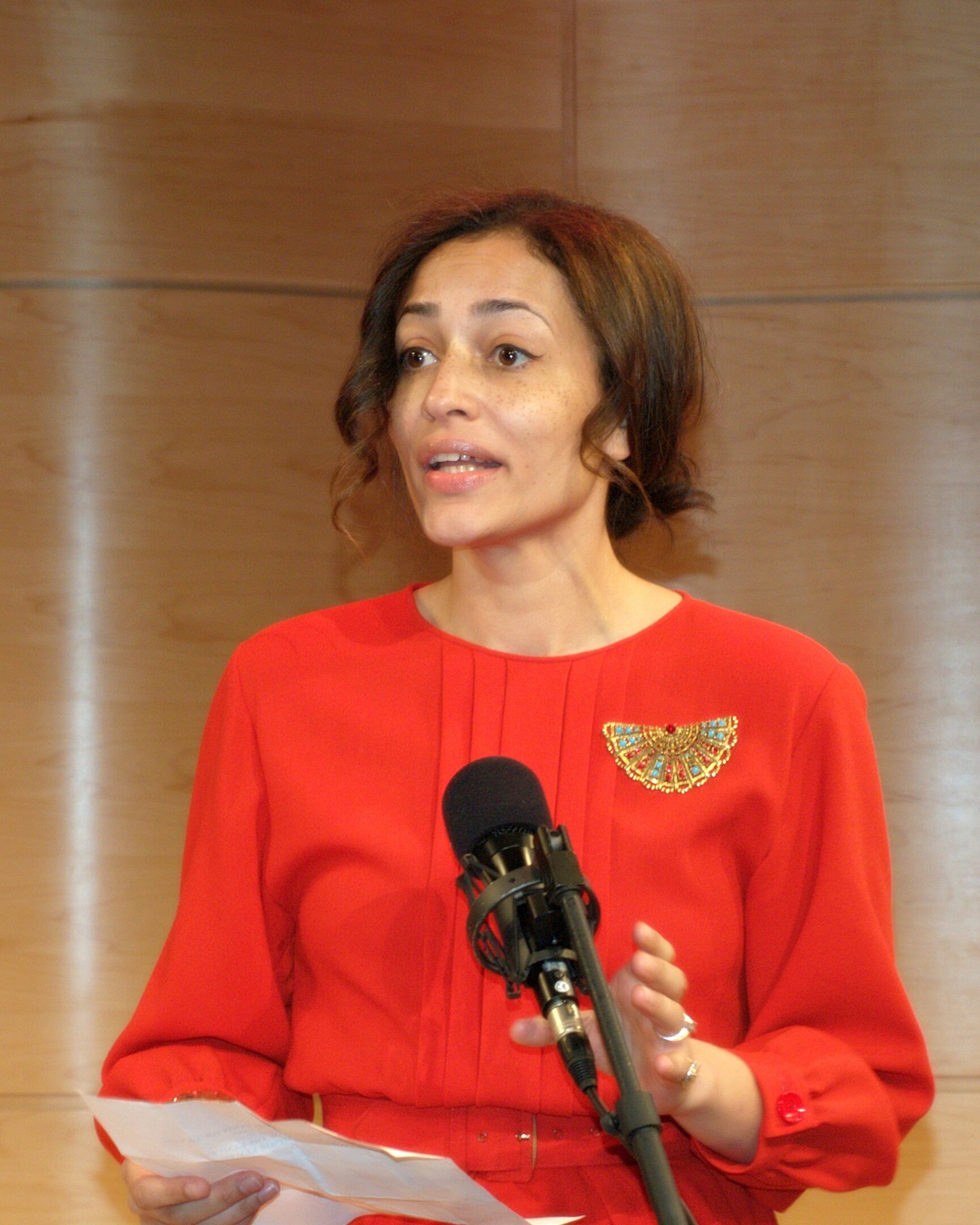
Zadie Smith
The novelistic approach to the human subject begins with the premise that power is not an identity. It moves. It shifts. To imagine otherwise—to imagine fixed categories of victim and oppressor, static and eternal—is to misunderstand the political world entirely. We see this most vividly in the present moment: if your model of history presumes permanent victims, then you are wholly unprepared when those victims become aggressors. Novelistic imagination, at its best, makes such moral and psychological movement conceivable.
Over the past fifteen years, so much public discourse has insisted on permanent identities—on citizens who are forever this or forever that—that entire realities become unintelligible. I saw this in my classroom during the height of Black Lives Matter. When police violence in Nigeria erupted, my students could not comprehend it. Their mental model was fixed: white police, Black victims. Nigeria did not fit the script; therefore, for them, it could not happen. That rigidity is profoundly apolitical. Politics demands a capacity to imagine power relocating itself, inhabiting new bodies, expressing itself in new forms.
But as I listened to this conversation about imagination, another worry arose: where will the readers of such imaginative work come from? What is happening to the people capable of reading? For more than two decades I have lived without a mobile phone—an accidental experiment whose results are painful. The loneliness of existing outside the dominant mediation system is overwhelming. Every train carriage, every bus, every queue: 100% captured. People submerged entirely elsewhere. I understand the impulse; I, too, was once a reader avoiding reality on public transport. But the question now is not why we escape, but who is mediating the escape. Personally, I prefer to be mediated by Tolstoy rather than Musk.
What strikes me most, however, is the disappearance of the commons. There has always been a space—physical, public—where human beings shared a more or less unified reality, a place of noise and irritation and ordinary life. That commons no longer exists anywhere. The most heartbreaking evidence comes from children. A British subway carriage in my youth was full of noise: arguments, jokes, mischief, children pointing at strangers and whispering outrageous things. Now there is silence. Absolute silence. Every child on every bus, every train, every street—absorbed, solitary.
If you still walk in the commons, as I do—since I live spiritually in 1992—you see the desolation clearly. It feels like Mars. I have travelled to tiny villages in The Gambia and found the same silent absorption. The same small, glowing rectangles replacing the unpredictable chaos of public life.
This denuded commons does not produce readers. Anyone raising children will recognize the pattern: a child may read passionately until about age twelve; then the phone arrives, and the reading life vanishes. If you are lucky, and wealthy, and middle class, you might coax it back at fifteen or sixteen. Everyone else is lost. My mother, a social worker, describes visiting the same crowded flats she visited thirty years ago—homes full of Somali families, once cacophonous with voices, siblings shouting, parents debating. Now those houses are silent too. Entire childhoods, lived in mute isolation.
From such conditions, what kind of interiority can emerge?
Still, the novel must remain new; novelty is built into the form. And every so often a book appears that meets the moment. Recently, David Szalay’s Flesh struck me for this reason. Its protagonist is one of these denuded figures—a young Eastern European man with no nineteenth-century soul, no cultivated interior life, no capacity for reflection. He might be the man at the door of a club, the supermarket cashier, the gym devotee with the thick neck and blank expression. His consciousness is stark. Time barely passes for him. He lives inside his phone. And then, through a sexual misadventure, he drifts into marriage with an extraordinarily wealthy woman. The revelation of her world comes casually: her son takes a helicopter to school.
The book’s style is equally stripped. No Tolstoyan largesse. No Carveresque transcendence. Yet it worked. When I finished it and walked through my neighbourhood, I saw that man everywhere—at the corner shop, outside the club, driving my cab. I saw him for the first time. That is the empathetic miracle the novel can still perform, even in a world whose readers have razor-thin bandwidth. As Szalay himself said, you must work with the bandwidth you have. The modern reader cannot process indulgent expansiveness; the writer must find a new form, a new clarity, a new mode of communicating consciousness.
The commons is vanishing. Attention is collapsing. But the novelistic imagination remains one of the few tools we have left—one that insists upon the mutability of human beings, the possibility of seeing one another anew, even across the silent gulf of our mediated age.